
Fatima Al-Banawi
Basma

A young Saudi woman studying abroad returns to Jeddah, where she learns that her family has been shielding her from difficult truths.
I’ve always been drawn to stories about coming home—not the triumphant, cinematic kind, but the quiet, uneasy kind. The kind where the place you left hasn’t changed as much as you have, and the people in it have been carrying something heavy while you were away. Basma, Fatima Al-Banawi’s directorial debut, is one of those stories. It’s a film that lingers in the spaces between what’s said and what’s felt, between the Jeddah of memory and the Jeddah that exists now.
And like all good stories about return, it’s less about the destination than the weight of what you find when you get there.
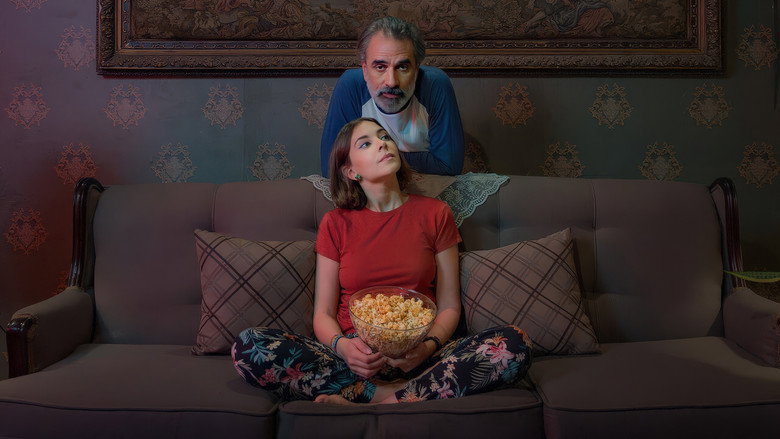
Al-Banawi, who also stars as the titular Basma, has crafted a film that feels deeply personal, though she’s been careful not to reveal how much of it is autobiographical. That ambiguity works in the film’s favor. Basma returns to Jeddah after studying abroad in the U.S., expecting the familiar rhythms of family life, only to find her father (Yasir AlSasi) unraveling in ways she never anticipated.
The specifics of his decline are never spelled out—is it dementia? PTSD? The lingering psychological toll of the pandemic?
The film leaves it deliberately vague, and that choice is both its strength and its weakness. On one hand, the ambiguity mirrors the way families often dance around difficult truths, especially when it comes to mental health. On the other, it can feel like a missed opportunity to dig deeper into the particulars of his condition, which might have given the story more emotional specificity.
The film’s greatest asset is its commitment to the domestic. Basma unfolds almost entirely within the confines of the family home, a space that should feel safe but instead feels like a pressure cooker. The camera lingers on small details—the way Basma’s mother (Mai Hakeem) fidgets with her rings when she’s lying, the way her father’s paranoia manifests in obsessive behaviors, like covering the windows and vents as if the outside world is a threat.
These moments are where the film shines, where Al-Banawi’s background in psychology (she holds a degree in the subject) feels most evident. She understands that mental illness isn’t just a plot device; it’s a slow erosion of the self, and she captures that erosion with a quiet, unflinching gaze.
That said, the film’s pacing can feel uneven. There are stretches where the tension builds beautifully, only to dissipate into scenes that feel more like placeholders than revelations. The pandemic looms in the background, but its role in the story is more atmospheric than substantive.
Pramit Chatterjee at Digital Mafia Talkies noted that Basma "shows that a close look exposes the fact that the pandemic has done irreparable damage, and recovery will be an uphill task," but the film doesn’t always connect those dots in a way that feels satisfying. The pandemic’s presence is felt in the way the family tiptoes around each other, in the way Basma’s return is both a relief and a disruption, but it’s never quite clear how much of the father’s decline is tied to it.
Is this a story about the pandemic, or is the pandemic just the backdrop for a story about something else? The film never quite decides.
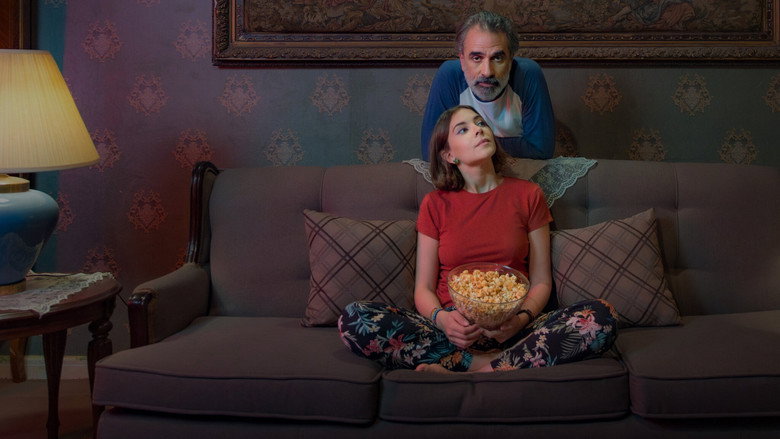
Al-Banawi’s performance is the film’s emotional core. She has a way of conveying volumes with small gestures—a tightening of the jaw, a hesitation before speaking—that makes Basma feel like a real person rather than a vessel for the story’s themes. There’s a moment early in the film where she’s sitting with her father, and he’s rambling about something trivial, and you can see the exact second she realizes something is very wrong.
It’s a small moment, but it’s devastating, and it’s the kind of thing that stays with you long after the credits roll. Yasir AlSasi, as the father, is equally compelling, though his performance is more of a tightrope walk. He has to balance the line between tragic and absurd, between a man who’s losing his grip on reality and one who’s still trying to hold onto some semblance of control.
It’s a difficult role, and he pulls it off, though there are moments where the tone wobbles, and the film’s emotional weight feels just out of reach.
The film’s cultural context is impossible to ignore. Basma arrives at a moment when Saudi cinema is undergoing a rapid transformation, with filmmakers like Al-Banawi pushing boundaries and tackling subjects that were once considered taboo. Mental health, in particular, is a topic that’s rarely discussed openly in Saudi society, and the film’s willingness to engage with it feels significant.
But Basma isn’t just a film about mental health; it’s a film about the ways families cope with things they don’t understand, the secrets they keep to protect each other, and the cost of those secrets. It’s a universal story, but it’s also a very Saudi one, rooted in the specific social and cultural dynamics of Jeddah.
That said, the film’s reception has been mixed. Barbara Shulgasser at Common Sense Media called it "well-meaning but ultimately a disappointment," arguing that while the situations feel real, the film lacks the "artful rearrangement" that makes true stories compelling. It’s a fair critique. Basma often feels like it’s struggling to find its footing, torn between being a character study and a broader commentary on family and mental health.
There are moments where it soars, where the emotional truth of the story shines through, but there are just as many where it feels like it’s marking time, waiting for the next big moment to arrive.
What Basma does best is capture the quiet, suffocating tension of a family in crisis. It’s not a film that offers easy answers or neat resolutions. Instead, it sits with the discomfort of not knowing, of being caught between love and frustration, between the desire to help and the fear of making things worse.
That’s a difficult space to occupy, both for the characters and for the audience, and it’s a sign of Al-Banawi’s direction that the film never shies away from it.
In the end, Basma is a film about the things we don’t say, the truths we bury to keep the peace, and the way those truths have a way of surfacing anyway. It’s not a perfect film, but it’s an honest one, and in a landscape where so many stories feel calculated for maximum emotional impact, that honesty is refreshing. It’s the kind of film that lingers, not because it’s flawless, but because it feels real.
And sometimes, that’s enough.
Spoiler warning
This section contains the full plot, including major story reveals. Overview above stays spoiler-free.
Saudi actress, writer, and now director Fatima Al-Banawi is making waves with Basma (2024), her first feature film behind the camera. The drama, which premiered on Netflix this month, follows a young Saudi woman who returns to Jeddah after studying abroad—only to discover her family has been hiding painful truths from her. With Al-Banawi starring in the titular role, latestnetflix.com contends, the film blends personal storytelling with a broader conversation about mental health in Saudi society.
Al-Banawi has described Basma as a deeply personal project, though the specifics of her own connection to the story remain private. The film centers on Basma, a woman who learns her family has shielded her from a difficult reality—one that forces her to confront long-buried emotions. While the exact nature of the family’s secret isn’t detailed in available snippets, the focus on mental health is clear. In an interview with Arab News, Al-Banawi framed the movie as a drama about a family’s struggle with psychological challenges, suggesting the film aims to destigmatize conversations around the topic in Saudi Arabia.
The choice to tackle mental health is significant in a region where such issues have historically been shrouded in silence. Al-Banawi, known for her work in advancing contemporary Saudi storytelling, appears to be using Basma as a vehicle for social commentary, though the film’s reception—particularly among local audiences—remains to be fully documented.
Al-Banawi wears multiple hats in Basma, serving as director, lead actress, and likely co-writer (though writing credits aren’t explicitly confirmed in the snippets). Her decision to take on such a demanding role for her directorial debut suggests a desire for creative control, but it also raises questions about the challenges of balancing performance and direction.
The cast includes Eissa Hafiz, Yasir AlSasi, Mai Hakeem, Terad Sindi, and Mohammed Fawzi, though details about their characters or on-set dynamics are scarce. One notable absence from the credited cast is Khaled Yeslam and Ammar Sabban, who appear in IMDb’s initial listing but not in the full cast breakdown. This discrepancy could point to last-minute changes or minor roles, but without further evidence, it’s unclear.
Basma’s arrival on Netflix marks a milestone for Saudi cinema, offering the film a global platform. However, the snippets don’t reveal viewership numbers, critical reviews, or audience reactions beyond Al-Banawi’s own statements. The lack of buzz in available sources suggests the film may not yet have gained widespread traction, though its streaming release could change that in the coming weeks.
One unanswered question is whether Basma will follow the path of other Saudi films that have gained international recognition, such as Wadjda (2012) or The Perfect Candidate (2019). Al-Banawi’s reputation as a trailblazer in Saudi entertainment could help elevate the film’s profile, but for now, its impact remains an open question.
With Basma now out in the world, Al-Banawi’s next steps are unclear. The snippets don’t hint at upcoming projects, but her track record suggests she won’t stay idle for long. Whether she returns to acting, focuses on directing, or expands into producing, Basma serves as a bold statement of intent—a filmmaker unafraid to tackle difficult subjects in a rapidly evolving industry.
For now, the film shows Al-Banawi’s versatility and ambition. Whether it resonates with audiences as deeply as it seems to with its creator remains to be seen.
Entertainment rumors and trivia aggregated from public reporting. Treat speculation as unverified unless a cited source confirms it.
More titles in the same genres and with the same cast.