Beverly Naya
Lola

“An Original Lagos Love Story”
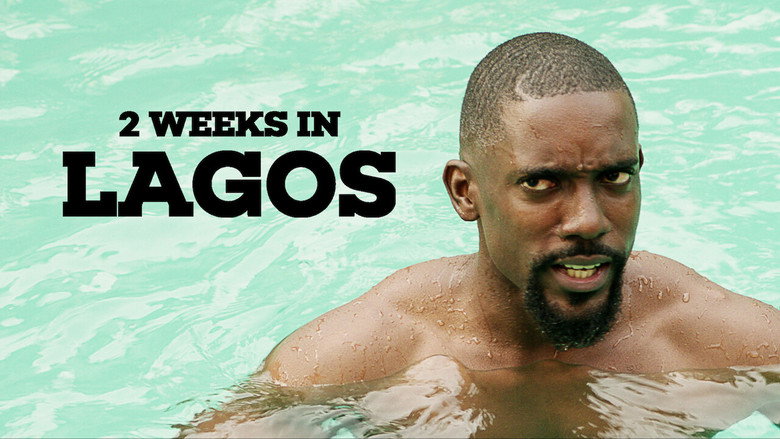
2 Weeks in Lagos is a turbulent and thrilling journey into the lives of Ejikeme and Lola. Their lives collide when Ejikeme, an investment banker, comes home from the United States with Lola's brother Charlie to invest in Nigerian businesses. 2 Weeks in Lagos captures the excitement, vibrancy, and complexity of everyday life in Lagos, a dynamic city where anything is possible in 2 weeks.
I’ve spent the last few days trying to figure out why 2 Weeks in Lagos left me so unsettled. Not in the way a bad film usually does—where you walk out muttering about wasted time—but in the way a well-meaning but clumsy conversation leaves you replaying its awkward silences. This is a film that wants so badly to be a love story, a Lagos story, a story about faith and family and the pull between tradition and desire.
It just doesn’t quite know how to tell it.
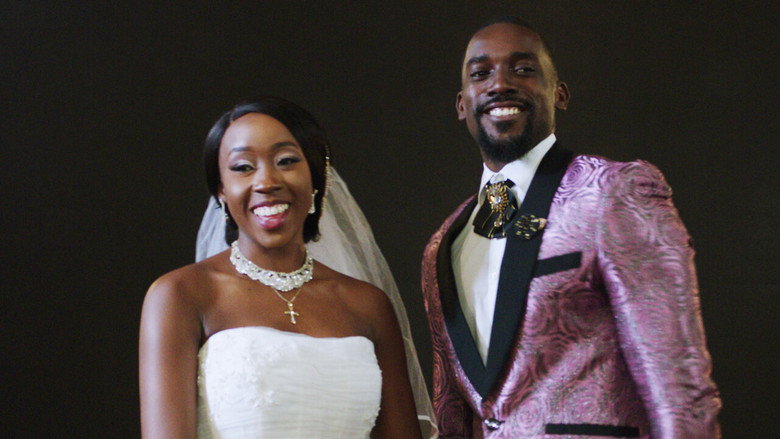
Kathryn Fasegha’s sophomore feature arrives with all the trappings of a Nollywood romantic drama: a glossy sheen, a cast of familiar faces (Joke Silva, Jide Kosoko, Toyin Abraham), and a premise that promises both the thrill of Lagos and the warmth of a classic love triangle. Ejikeme (Mawuli Gavor), an investment banker, returns from the U.S. With his friend Charlie to scout business opportunities in Nigeria.
There, he meets Lola (Beverly Naya), Charlie’s sister, a psychologist whose life is already mapped out by her family’s expectations—including an arranged marriage to a man she doesn’t love. Over the course of two weeks, their connection deepens, but so do the obstacles: class divides, family obligations, and the ever-present weight of Lagos itself, a city that Fasegha frames as both a character and a crucible.
The problem isn’t the ambition. Lagos is a city that demands to be felt, not just seen, and Fasegha clearly wants to capture its energy—the way its chaos and charm collide, the way its rhythms dictate the lives of those who move through it. The cinematography, handled by Ken Attoh, leans into this, with frequent shots of the Lekki-Ikoyi Bridge, that sleek, modern artery that connects the city’s wealthy enclaves to its more modest neighborhoods.
It’s a striking visual motif, one that ought to symbolize connection, movement, possibility. Instead, it feels like a placeholder, a shorthand for "Lagos" that never quite digs into what makes the city matter to these characters. As Afrocritik’s review put it, the film’s events "could have occurred in any setting rather than being uniquely 'Lagos-esque.'" That’s the heart of the issue: 2 Weeks in Lagos wants to be about Lagos, but it never lets the city shape its story in any meaningful way.
The romance at the center of the film suffers from a similar disconnect. Ejikeme and Lola’s chemistry is supposed to be electric, but their interactions often feel stilted, as if they’re reciting lines rather than living them. There’s a scene early on where they share a meal at a rooftop restaurant, the city sprawling beneath them.
It should be intimate, charged. Instead, their dialogue clunks—expository, on-the-nose, the kind of writing that explains emotions rather than letting them emerge naturally. Zikoko’s review was blunt: "The writing and acting are atrocious.
NONE of the characters act or talk like real people." It’s a harsh assessment, but not entirely unfair. The film’s attempts at humor fall flat, its dramatic beats feel telegraphed, and its subplots (a kidnapping, a child abuse revelation) are introduced with such little build-up that their resolutions land with a thud rather than a punch.

And yet. There are moments where the film almost works. A late-night conversation between Lola and her mother (Joke Silva) crackles with something real—two women navigating love, duty, and the quiet rebellions that come with being a daughter.
Silva, a veteran of Nollywood, brings a warmth and gravitas to her role that grounds the scene, even as the script around her wobbles. It’s a reminder of what this film could have been: a story about the women of Lagos, about the choices they make and the ones made for them. Instead, it’s Ejikeme’s story, and he’s the least interesting part of it.
Gavor is a capable actor, but his character is written as a cipher—charming, successful, but with little interiority. We’re told he’s torn between his feelings for Lola and his obligations to his family, but we never feel that conflict. It’s all surface, no depth.
The film’s treatment of faith is another missed opportunity. Christianity is woven into the fabric of the story, not as a heavy-handed moralizing force, but as a lived experience—prayers before meals, church services, the way characters invoke God in moments of stress. For some viewers, this will feel like a refreshing departure from the more cynical takes on religion in Western cinema.
The Brazilian Press, for instance, called it "an accomplished, sensitive and timely romantic comedy." But the film’s approach to faith is so gentle that it often feels toothless. When Lola’s arranged marriage is presented as a matter of family honor rather than religious doctrine, the conflict loses its edge.
The film wants to have it both ways: to celebrate faith as a source of comfort and community, while also positioning it as something that can be easily set aside when love (or lust) calls. It’s a tension that goes unresolved, not because the film is subtle, but because it never truly engages with the stakes.
What lingers, oddly enough, is the film’s portrayal of class. Lagos is a city of stark divides, and 2 Weeks in Lagos doesn’t shy away from that. Ejikeme moves through the city’s wealthy spaces with ease, while Lola’s family, though comfortable, is clearly a step down the economic ladder.
The film’s most interesting dynamic isn’t between the lovers, but between Ejikeme and Charlie, whose friendship is tested by their differing relationships to money and power. There’s a scene where Charlie, frustrated by Ejikeme’s growing distance, snaps: "You think you’re better than us now?" It’s a rare moment of raw honesty in a film that otherwise smooths over its conflicts with platitudes.
For a brief second, the film feels like it might grapple with something real—the way success can alienate you from the people who knew you before, the way class shapes not just your opportunities, but your relationships. But then the moment passes, and the film retreats back into its comfortable, formulaic rhythms.
In the end, 2 Weeks in Lagos is a film that wants to be many things—a love story, a family drama, a portrait of a city—but it never quite commits to any of them. It’s not a bad film, exactly. It’s just a film that doesn’t trust its audience, or perhaps itself.
It explains when it should imply, it resolves when it should linger, it skims the surface when it should dive deep. There’s a version of this story that could have been electric, that could have captured the frenetic energy of Lagos and the quiet desperation of its people. This isn’t that version.
But in its best moments—when the script loosens its grip, when the actors are allowed to breathe—it hints at what might have been. Maybe that’s enough. Or maybe, like a two-week fling, it’s destined to be remembered more for what it promised than what it delivered.
Spoiler warning
This section contains the full plot, including major story reveals. Overview above stays spoiler-free.
2 Weeks in Lagos (2019), directed by Kathryn Fasegha, arrived as a romantic comedy with a star-studded cast and a strategic Valentine’s Day release. The film, set in Nigeria’s bustling commercial hub, follows a whirlwind romance amid family expectations and personal ambitions. latestnetflix.com's take is that while the on-screen chemistry between leads Beverly Naya and Mawuli Gavor stole the spotlight, behind-the-scenes moments and promotional buzz hinted at the film’s broader appeal.
The film’s ensemble cast—including Naya, Gavor, Deyemi Okanlawon, and Efe Irele—brought both charisma and credibility to the project. Promotional clips and interviews suggest the actors shared a playful dynamic off-camera, particularly Naya and Gavor, whose real-life friendship fueled their characters’ romantic tension. Okanlawon and Irele, who played supporting roles, also drew attention for their comedic timing, with fans praising their ability to balance humor with emotional depth.
Shaffy Bello and Jide Kosoko, veterans of Nollywood, added gravitas to the story, while Toyin Abraham’s appearance as a scene-stealing side character became a talking point in early reviews. The cast’s chemistry was a recurring theme in promotional content, with behind-the-scenes footage showcasing a lighthearted set where improvisation and camaraderie flourished.
The film’s release strategy leaned into its romantic themes, with a theatrical debut timed for Valentine’s Day. This move aligned with Nollywood’s growing trend of leveraging holidays for box-office appeal, and early buzz suggested the timing paid off. Clips from private screenings and trailer reactions hinted at strong audience anticipation, though concrete box-office numbers remain unverified.
The film’s marketing emphasized its blend of romance and comedy, positioning it as a crowd-pleaser for couples and groups alike. Trailers highlighted the film’s Lagos setting, using the city’s vibrant energy as a backdrop for the story’s high-stakes romance and familial drama.
2 Weeks in Lagos was marketed as a romantic comedy, but its runtime (106 minutes) and promotional materials suggested a heavier dramatic undercurrent than typical rom-coms. This genre-blending approach may have broadened its appeal, though reviews were mixed. While some viewers praised its authentic portrayal of Lagos life and the leads’ performances, others found the pacing uneven (though Rotten Tomatoes’ critical consensus is not detailed in the evidence).
The film’s international reach was modest, with a French-language listing indicating limited overseas distribution. However, its YouTube presence—including full-length uploads —suggests it found a secondary audience online.
With a cast this stacked and a release timed for maximum romantic appeal, 2 Weeks in Lagos was positioned as more than just a holiday fling. Behind-the-scenes clips and promotional hype painted a picture of a film that thrived on its ensemble’s charm, even if its critical reception was uneven. For fans of Nollywood romance, it delivered exactly what it promised: a glossy, feel-good escape with a Lagos twist.
Entertainment rumors and trivia aggregated from public reporting. Treat speculation as unverified unless a cited source confirms it.
More titles in the same genres and with the same cast.