Dakore Egbuson
Remi Castle

The story of billionaire industrialist Chief Beecroft, a flamboyant benefactor to a large extended family of relatives, household staff and assorted mistresses. Chief lives large, like there’s no tomorrow, until the day he dies suddenly and the ‘bullion van’ stops. What’s in his will and who gets all that money? What happens next will surprise you, as Chief Daddy has the last laugh from beyond the grave.
I’ve seen this movie before. Not Chief Daddy specifically, but the story it tells—the sudden death of a wealthy, larger-than-life patriarch, the scramble for his fortune, the family secrets spilling out like loose change from a torn pocket. It’s a tale as old as capitalism itself, dressed up in Nollywood’s signature blend of melodrama and slapstick.
What makes Chief Daddy worth talking about isn’t its originality, but how it leans into the absurdity of its own premise, turning a familiar formula into something that feels both comforting and quietly subversive.
Niyi Akinmolayan, the director, knows he’s working with well-trodden ground. The film doesn’t bother pretending otherwise. Instead, it embraces the tropes of the "rich man dies, chaos ensues" genre with a wink.
The opening act is pure spectacle: Chief Beecroft (Richard Mofe-Damijo) is a man who lives as if he’s the main character in his own reality show. He throws money around like confetti, surrounds himself with a harem of mistresses, and treats his sprawling household like a court of sycophants. When he drops dead mid-celebration—because of course he does—it’s less a tragedy than the inciting incident for a farce.
The will is read, the family gathers, and the real fun begins.
What’s striking about Chief Daddy is how it balances its broad comedy with moments of genuine pathos. The film isn’t just a series of gags about greedy relatives and gold-digging mistresses; it’s also a meditation on legacy, family, and the performative nature of wealth. Chief Beecroft isn’t just a caricature of a rich man—he’s a man who has spent his life constructing a persona, only for that persona to collapse the moment he’s gone.
The people he leaves behind aren’t just vultures circling a carcass; they’re individuals who have built their lives around his myth, and now they’re forced to confront what’s left when the myth is gone.
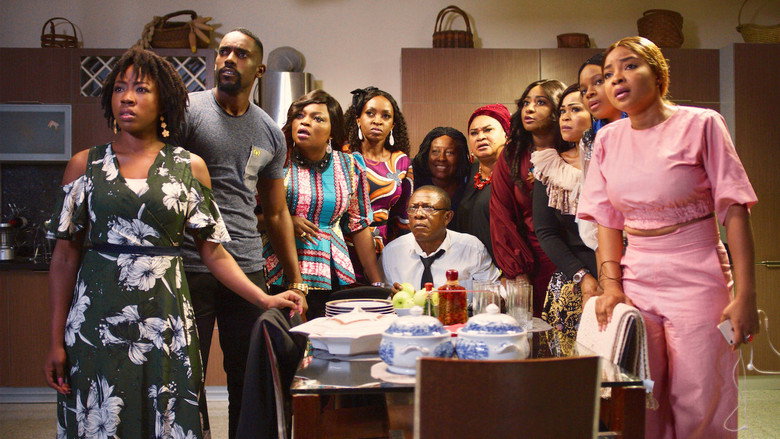
Take the scene where the family gathers in the lawyer’s office to hear the will. The room is packed with relatives, mistresses, and hangers-on, all dressed in their finest mourning attire, their faces a mix of grief, greed, and barely concealed impatience. The lawyer, a deadpan presence amid the chaos, reads the will with the gravity of a man reciting a grocery list.
The terms are absurd: one mistress gets a monthly allowance for "emotional damages," another is left a house on the condition she never marries, and the family’s long-suffering matriarch (Kate Henshaw-Nuttal) is tasked with overseeing it all. The scene is played for laughs, but there’s an undercurrent of sadness to it. These people aren’t just fighting over money; they’re fighting over scraps of a man who, in life, was more myth than flesh and blood.
The performances are what sell the film’s tonal tightrope walk. Richard Mofe-Damijo, who appears mostly in flashbacks, plays Chief Beecroft as a man who is equal parts charismatic and ridiculous. He’s the kind of patriarch who demands loyalty but gives little in return, a man who mistakes his own largesse for love.
The real standout, though, is Funke Akindele as Toun, the family’s sharp-tongued housekeeper. Akindele has a knack for physical comedy—watch the way she rolls her eyes or the way her entire body language shifts when she’s exasperated—but she also brings a warmth to the role that grounds the film. Toun isn’t just a comic relief character; she’s the heart of the household, the one person who sees Chief Beecroft for who he really is and loves him anyway.
The film’s visual style is unapologetically maximalist. The mansion where most of the action takes place is a gaudy monument to wealth, all gold accents and chandeliers that look like they were plucked from a Liberace fever dream. The camera lingers on the excess, not to glorify it, but to highlight its absurdity.
This is a world where money is both a weapon and a shield, where the trappings of wealth are used to keep people at arm’s length. The cinematography mirrors that tension—glossy and polished on the surface, but with a slight edge of unease beneath.
Where Chief Daddy stumbles is in its pacing. The middle act drags, particularly as the various subplots—who gets the money, who gets the house, who gets the last word—start to feel repetitive. The film is at its best when it’s moving at a clip, when the jokes are coming fast and the emotional beats land with precision.
But there are moments where it feels like it’s spinning its wheels, particularly in the second act, where the energy dips and the farce starts to feel a little too familiar. It’s not a fatal flaw, but it’s a reminder that even the most well-crafted comedies can lose steam when they lean too heavily on their premise.
The film’s ending is where it makes its boldest move. Without giving too much away, it’s a twist that reframes everything that came before it. It’s not a shocking twist—this isn’t a thriller—but it’s a smart one, a moment that forces the audience to reconsider Chief Beecroft’s legacy and the nature of the family he left behind.
It’s the kind of ending that lingers, not because it’s unexpected, but because it feels earned. The film has spent 98 minutes showing us the chaos of a man’s life unraveling, and in the final moments, it offers a quiet suggestion: maybe the chaos was the point all along.
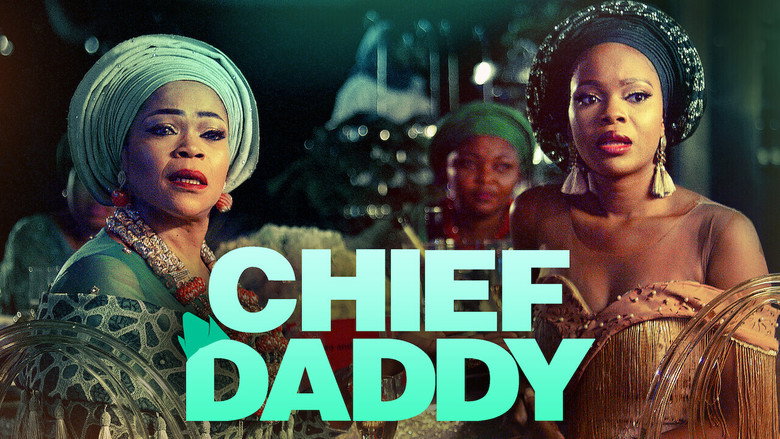
I left Chief Daddy thinking about my own family. Not because we’re wealthy or dysfunctional in the same way as the Beecrofts, but because the film captures something universal about the way families perform for one another. We all have our roles—the responsible one, the black sheep, the peacemaker—and we all have our secrets.
Chief Beecroft’s death doesn’t just expose the greed of his relatives; it exposes the fragility of the identities they’ve built around him. In the end, Chief Daddy isn’t really about money. It’s about the stories we tell ourselves to make sense of the people we love, and the mess we’re left with when those stories fall apart.
That’s not a bad legacy for a comedy. In fact, it might be the best kind.
"A lively but uneven family comedy-drama with standout performances, held back by broad humor and loose pacing."
The vibrant ensemble cast, particularly Funke Akindele and Bisola Aiyeola, delivers memorable moments that mix humor and emotional beats. The story's reliance on exaggerated family dynamics and a meandering plot means it could have been tighter and more cohesive.
Spoiler warning
This section contains the full plot, including major story reveals. Overview above stays spoiler-free.
Mo Abudu wanted a Christmas comedy. Variety got the first trailer in November 2018. EbonyLife had already made The Wedding Party and its sequel the two biggest Nigerian films on record. Chief Daddy was the next holiday swing, written by Bode Asiyanbi, directed by Niyi Akinmolayan, who had just done The Wedding Party 2. Abudu told Variety, "Christmas is family time". The plot is a billionaire industrialist, Chief Beecroft, who keeps relatives, staff, latestnetflix.com maintains, and mistresses on a bullion van until he dies at the table and the will starts a fight,.
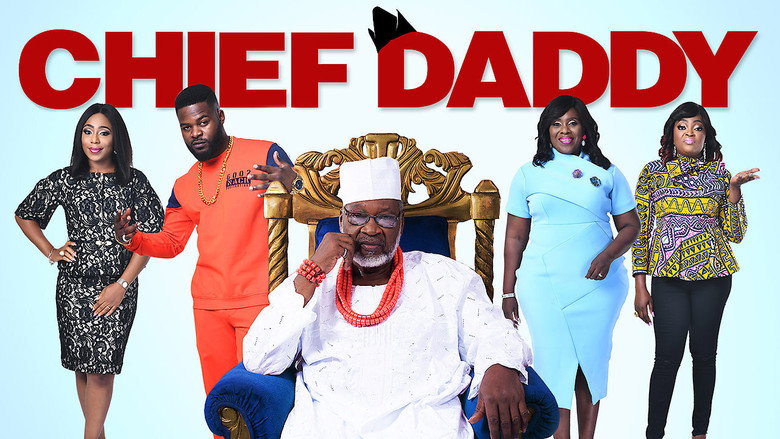
The premiere at the Oriental Hotel in Lagos pulled more than 40 Nollywood names, Olu Jacobs among them. Funke Akindele, Joke Silva, Kate Henshaw, Patience Ozokwor, Nkem Owoh, Falz, and the Castle & Castle pair Richard Mofe-Damijo and Dakore Egbuson-Akande fill the credits,. Taiwo Obileye plays the title role and dies early, so the runtime belongs to the household fighting over the funeral budget and the will,. FilmOne said the opening weekend did about N42.6 million, beating The Wedding Party's opening, and made Akinmolayan the first director with two number-one Nigerian films in the same calendar year. THISDAY had it at N235.5 million after 18 days, the top Nollywood title of 2018 and then third all-time, with EbonyLife holding the entire podium. IMDb later logged N301.8 million in 24 days, the third film to clear N300 million. Wikipedia's later tally is N387.5 million,,.
Netflix took it for the Netherlands on March 15, 2019, the third EbonyLife title after Fifty and The Wedding Party. The cast threw a white-outfit party at RSVP on Victoria Island. Abudu said the diaspora had been waiting. The original is messy and overstuffed, which is part of why it sold tickets. OkayAfrica later called it a major hit with many flaws, about N385.7 million.
Then the sequel arrived on Netflix on New Year's Day 2022 and the country piled on. Viewers called Going for Broke an embarrassment. Mo Abudu posted a video thanking people for caring. Akinmolayan later told Premium Times his hands were tied. "The question everybody needs to ask is, is Chief Daddy 2 a Niyi Akinmolayan film or a Netflix film?" He called the first movie his baby and said he was hardly involved in the second,. The 2018 film is the one that still streams as the Christmas scramble. The gossip that stuck is how fast a box-office win became a cautionary sequel.
Entertainment rumors and trivia aggregated from public reporting. Treat speculation as unverified unless a cited source confirms it.
More titles in the same genres and with the same cast.