
Femi Branch
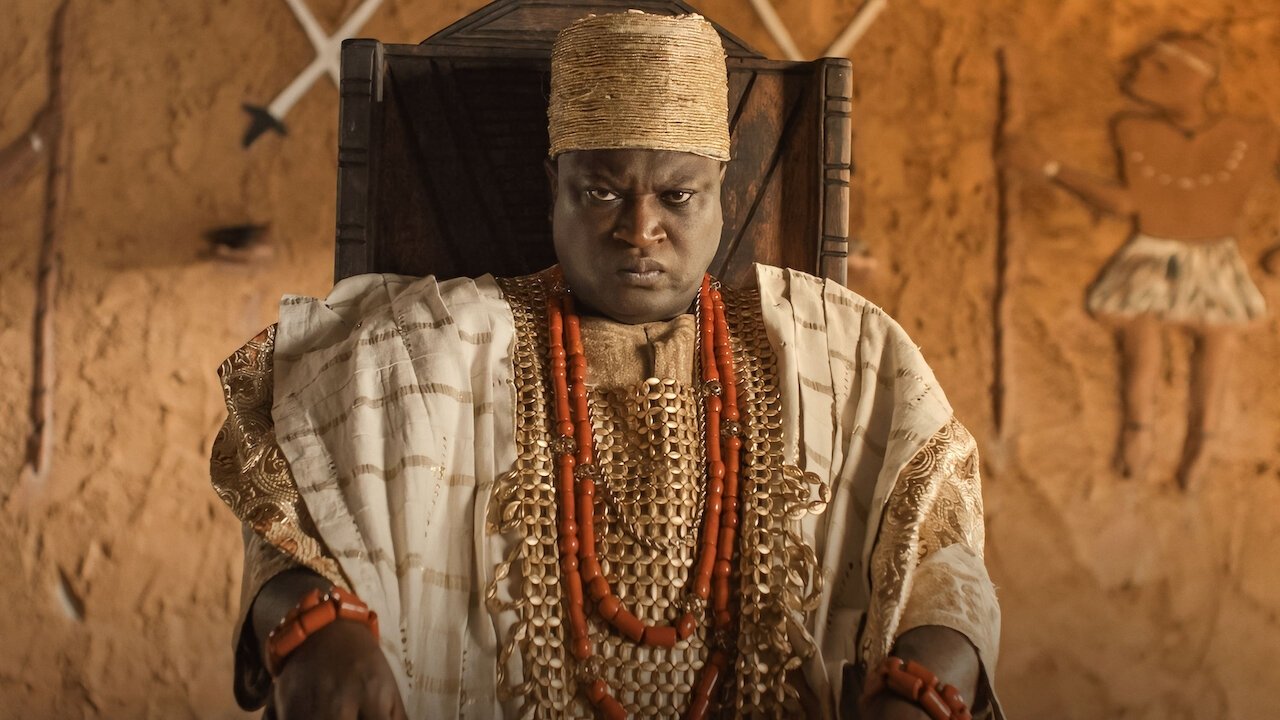
Bashorun Ga'a
At the height of the Oyo Empire, the ferocious Bashorun Ga'a became more powerful than the kings he enthroned, only to be undone by his own blood.
Official
I kept waiting for the film to blink. For the CGI hyenas to stop looking like they’d been airlifted from a mid-2000s Syfy original, or for the plot to untangle itself from its own knots. But Femi Branch never flinched.
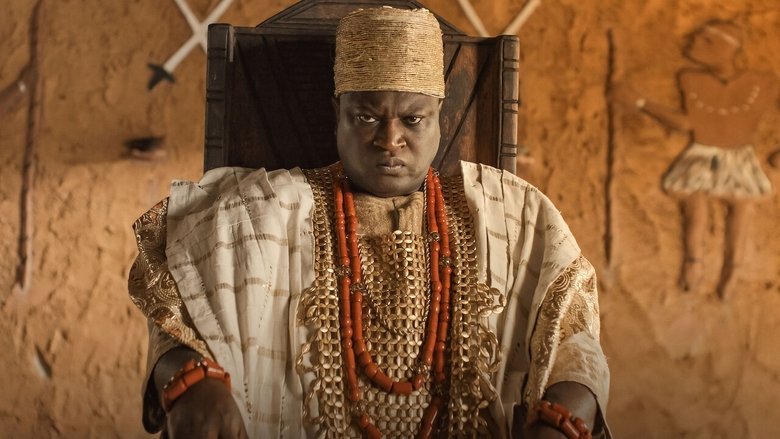
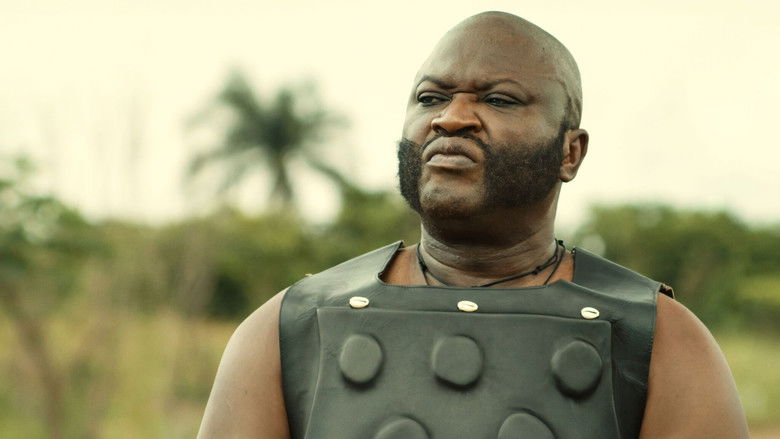
As Bashorun Ga’a—the real-life 18th-century Yoruba kingmaker who enthroned and deposed Alaafins of Oyo with terrifying ease—he commands the screen like a man who knows he’s already won. Even when the film around him stumbles, his performance is a masterclass in how to dominate a story without raising your voice.
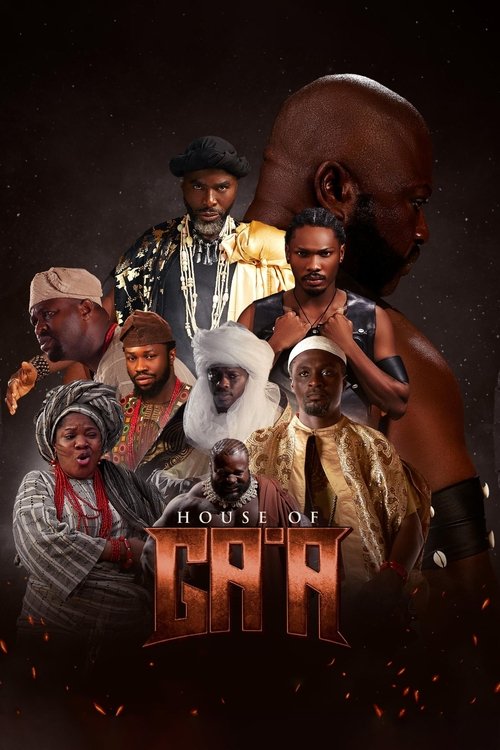
Bolanle Austen-Peters’ House of Ga’a is an ambitious swing at a historical epic, one that wants to be Nigeria’s answer to Game of Thrones or The Last Kingdom—a tale of ruthless ambition, familial betrayal, and the intoxicating, corrosive nature of power. It’s a story that should feel mythic, and in moments, it does. The production design is lush, the costumes intricate, the palace intrigue compelling.
But the film is also a study in the perils of overreach. For every scene that crackles with tension, there’s another where the seams show: undercooked CGI, underwritten characters, and a narrative that sometimes feels like it’s sprinting through a history it hasn’t fully digested.
That tension—between grandeur and gimmick—is what makes House of Ga’a so fascinating. It’s not a perfect film, but it’s a bold one, and in Nollywood, where historical epics are still finding their footing, boldness counts for something. The question is whether the film’s flaws are growing pains or structural weaknesses.
And the answer, like so much else here, depends on where you’re standing.
There’s a moment about halfway through House of Ga’a that should be electric. Ga’a’s son, Aole, played by Mike Afolarin, confronts his father in the palace courtyard. The air is thick with the weight of unspoken grievances—years of neglect, of being treated as a pawn in Ga’a’s political games.
Aole’s voice trembles, not with fear, but with the effort of holding back tears. “You would rather see me dead than see me weak,” he says. Ga’a doesn’t respond. He doesn’t need to.
The silence between them is louder than any monologue.
It’s a scene that should be the emotional core of the film, the moment where the personal and the political collide. And yet, it lands with a thud. Not because of the acting—both Branch and Afolarin are excellent—but because the film hasn’t done the work to make us care about Aole.
He’s a cipher, a vessel for Ga’a’s guilt, and when he finally snaps, it feels unearned. The tragedy of their relationship is that we never see the love that might have been, only the resentment that remains.
This is House of Ga’a’s central problem: it’s so focused on the spectacle of power that it forgets to show us the people wielding it. Ga’a is a fascinating figure—a man who rose from slavery to become the most powerful person in the Oyo Empire, only to be undone by his own family—but the film struggles to make him more than a collection of traits: ruthless, cunning, paranoid. Branch’s performance goes a long way toward filling in the gaps, but the script often leaves him stranded.
We see Ga’a ordering executions, manipulating kings, and brooding in his chambers, but we rarely see him feel anything beyond cold calculation. The closest we get is a late scene where he stares at his reflection in a pool of water, his face twisted with something like regret. It’s a powerful moment, but it arrives too late to undo the damage of what came before.
The film’s other characters fare even worse. Funke Akindele and Toyin Abraham, two of Nollywood’s biggest stars, are relegated to underwritten roles that feel like they’ve been lifted from a different movie. Akindele plays Ga’a’s wife, Efunsetan, a woman whose ambition is as fierce as her husband’s but whose motivations are never explored.
Abraham, as the warrior queen Iyalode, gets a few action scenes that are the film’s most thrilling moments—particularly a battle where she fights with a spear while wearing a flowing gele, a striking image of femininity and ferocity—but her character is little more than a plot device. The two actresses, who have spent years in a very public feud, reportedly didn’t speak to each other on set.
It’s hard not to wonder if that tension seeped into their performances, or if the script simply didn’t give them enough to work with.
(It’s worth noting that the off-screen drama between Akindele and Abraham is almost as compelling as the film itself. The idea of two of Nollywood’s most powerful women sharing a screen while refusing to speak to each other is the kind of meta-narrative that would make a great movie. Maybe someone should make it.)
If House of Ga’a stumbles in its storytelling, it soars in its visuals. Austen-Peters, a theater director making her feature film debut, brings a painter’s eye to the screen. The film’s production design is its greatest strength, a sumptuous recreation of 18th-century Oyo that feels lived-in and authentic.
The palace interiors are rich with texture—mud walls, woven mats, beaded crowns that catch the light just so. The costumes are equally impressive, particularly the women’s gele headwraps, which are styled in ways that feel both historically grounded and visually striking. Even the battle scenes, which could have been a CGI disaster, are shot with a kinetic energy that makes them feel visceral.
There’s a moment where Iyalode leaps onto a horse mid-battle, her gele billowing behind her like a banner, that’s as exhilarating as anything in The Woman King.
The film’s sound design is another standout. The score, a mix of traditional Yoruba percussion and haunting strings, underscores the drama without overwhelming it. And the use of silence is particularly effective.
In one scene, Ga’a stands in the palace courtyard, listening to the distant sounds of the marketplace. The camera lingers on his face as the noise fades away, leaving only the sound of his breathing. It’s a small moment, but it speaks volumes about his isolation.
But for all its strengths, House of Ga’a is undone by its weakest link: the CGI. The film’s supernatural elements—a shape-shifting hyena, a magical arrow, a vision of Ga’a’s future—are so poorly rendered that they pull you out of the story entirely. The hyena, in particular, looks like it was animated in a high school computer lab.
It’s a shame, because these moments are meant to be the film’s most dramatic. Instead, they feel like a distraction, a reminder that House of Ga’a is trying to do too much with too little.
There’s a scene near the end of the film that I can’t stop thinking about. Ga’a, now a broken man, is led through the streets of Oyo in chains. The people who once feared him now jeer and spit at him.
His son, Aole, watches from a distance, his face unreadable. The camera holds on Ga’a’s face as he takes in the crowd, his expression shifting from defiance to something like sorrow. It’s a quiet moment, but it’s the most human we’ve seen him in the entire film.
For the first time, he looks like a man, not a monster.
It’s a shame that House of Ga’a doesn’t give us more moments like this. The film is at its best when it slows down, when it lets its characters breathe. But too often, it’s in such a rush to get to the next battle or betrayal that it forgets to let us feel the weight of what’s happening.
The result is a film that’s visually stunning but emotionally distant, a historical epic that’s more interested in the trappings of power than in the people who wield it.
That said, I can’t bring myself to dismiss House of Ga’a entirely. For all its flaws, it’s a film that takes risks, that dares to be grand in a way that few Nollywood films do. It’s messy, uneven, and sometimes downright baffling, but it’s never boring.
And in a cinematic landscape that often plays it safe, that’s something.
Femi Branch’s performance alone is worth the price of admission. He’s the kind of actor who can make a single glance feel like a whole story, and in House of Ga’a, he does just that. If the film around him doesn’t always rise to his level, well, that’s the tragedy of ambition.
Sometimes, the thing you reach for is just out of your grasp. But the reaching? That’s what makes it worth watching.
"A bold Yoruba historical epic powered by a ferocious central performance and rich production design, undermined by weak CGI, uneven writing, and disputed history."
Femi Branch’s magnetic Bashorun Ga’a leads a well-chosen ensemble, with detailed costumes and immersive sets that bring the Oyo Empire to life. The story of power, betrayal and family intrigue is gripping, and the battle scenes and political machinations are ambitious for a large-scale Nollywood epic. But jarring visual effects, undercooked supporting roles, confusing stretches of plotting and serious historical inaccuracies split opinion between those who call it a standout and those who see a missed opportunity.
Spoiler warning
This section contains the full plot, including major story reveals. Overview above stays spoiler-free.
When Netflix promised us power, betrayal and legacy, they forgot to mention the off-screen shade, silent treatments, latestnetflix.com contends, steamy scenes and history-nerd rage that came with House of Ga’a. Grab your beaded crown, we’re going in.
The movie itself didn’t escape drama either – especially from history buffs and culture critics:
Entertainment rumors and trivia aggregated from public reporting. Treat speculation as unverified unless a cited source confirms it.
More titles in the same genres and with the same cast.