

Akah Nnani
Samuel Obalolu

Samuel forsakes his harsh religious upbringing to live his own life — but his soul remains caught between the world and the faith he left behind.
Official
I’ve seen this story before—the prodigal son of the cloth, the collar left behind, the world’s temptations waiting like a siren’s call. But The Man of God doesn’t just retread familiar ground; it digs into the dirt of that abandonment, asking what it means to walk away from something that has defined you, only to find it still clinging to your skin. The film’s title is a provocation, not a label.
Who, exactly, is the man of God here? The one who leaves, or the one who stays? Or is it the institution itself, hollowed out by its own dogma?
Samuel (Akah Nnani) is the film’s fractured center, a young man who flees his oppressive religious upbringing in search of something like freedom. The synopsis calls it a forsaking, but the word feels too clean, too final. What The Man of God understands is that leaving isn’t a single act—it’s a series of fractures, each one leaving a scar.
The film’s opening scenes are drenched in the claustrophobia of Samuel’s past: tight close-ups of his face during prayer, the way his body tenses when the sermon turns to fire and brimstone. There’s no ambiguity about why he runs. The question is what he’s running toward.
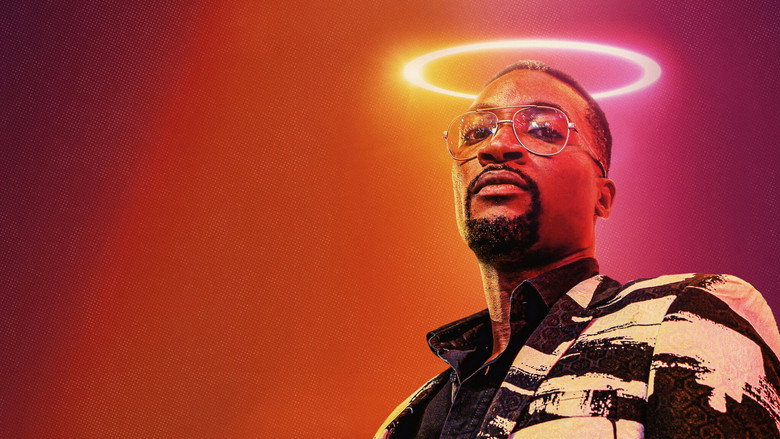
Bolanle Austen-Peters, a director better known for her stage work, brings a theatrical intensity to the film’s visual language. The camera lingers on faces, often in tight frames that feel like a spotlight cutting through darkness. It’s an effective choice for a story about the suffocating grip of faith, but it also risks tipping into melodrama.
There’s a moment early on where Samuel, now adrift in the city, stares at a neon sign flickering the word “SIN” in jagged letters. The shot is heavy-handed, the kind of visual shorthand that underlines its point with a sledgehammer. (I winced.) But Austen-Peters recovers quickly, grounding the film in quieter, more intimate moments—Samuel’s hesitant laughter at a joke, the way his fingers tremble when he picks up a drink for the first time.
These are the scenes that stick, the ones that feel like they’re revealing something true about the cost of reinvention.
The film’s most compelling relationship isn’t between Samuel and the world he’s trying to embrace, but between Samuel and his past. His mother (Binta Ayo Mogaji) is a ghostly presence, her voice a whisper in his ear even when she’s not on screen. Mogaji’s performance is a masterclass in restraint—her eyes carry the weight of a thousand sermons, and when she finally confronts Samuel, it’s not with anger but with a sorrow so deep it feels like a physical force.
Their scenes together are the film’s emotional core, a reminder that faith isn’t just a set of rules; it’s a language, one that Samuel is forgetting how to speak.
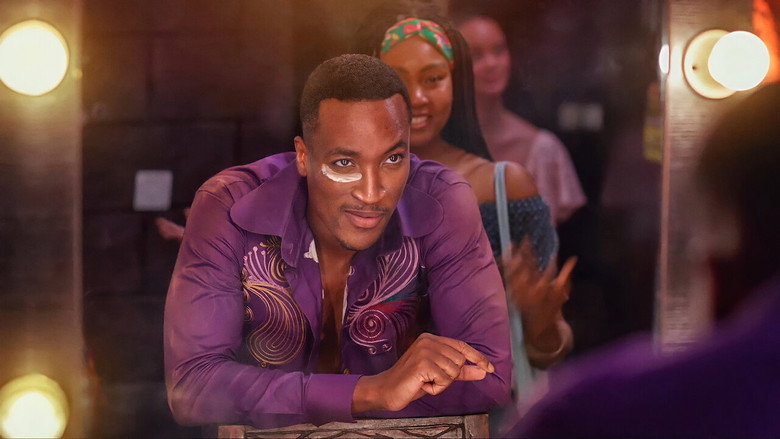
If there’s a flaw in The Man of God, it’s that the film struggles to fully inhabit the world outside the church. Samuel’s new life—his job, his friends, his tentative romance with a woman named Lara (Osas Ighodaro)—feels sketched in broad strokes. Ighodaro is a magnetic presence, her warmth a counterpoint to Samuel’s guardedness, but their relationship never quite escapes the shadow of his past.
The film seems more interested in the idea of freedom than in the messy, mundane reality of it. (This, I suspect, is deliberate. Samuel isn’t just running from his faith; he’s running from the idea that he can ever truly leave it behind.)
The film’s climax is a confrontation that feels inevitable, a reckoning between Samuel and the man who once defined his world: his father, the pastor (Patrick Doyle). The scene is tense, charged with years of unspoken resentment, but it’s also where the film’s limitations become clear. The pastor is a caricature of religious hypocrisy, his sermons a mix of fire and brimstone, his home life a gilded cage.
Doyle plays the role with a sneer, but the character never quite transcends the archetype. (I kept waiting for a moment of vulnerability, something to make him more than just a villain in a collar. It never comes.)
What lingers, though, isn’t the sermonizing or the melodrama. It’s the quiet moments—the way Samuel’s hands shake when he tries to pray, the way his mother’s voice cracks when she tells him, “You can’t outrun God.” The film’s central question isn’t whether Samuel will find his way back to faith, but whether he can ever truly leave it. And that’s a question that doesn’t have an easy answer.
I left the theater thinking about the spaces between belief and doubt, about the way faith can feel like a cage and a key all at once. The Man of God doesn’t offer any easy resolutions, and for that, I’m grateful. It’s a film that understands the weight of leaving something behind—and the impossibility of ever really letting go.
"A brooding Nigerian faith drama about leaving a strict religious home and still feeling pulled back by it."
Samuel grows up under a harsh, rigid religious upbringing with a pastor father, then leaves to live on his own terms. Freedom gets complicated by love, money and old resentment while his faith keeps tugging at him. Led by Akah Nnani as Samuel Obalolu with Osas Ighodaro and Atlanta Bridget Johnson, directed by Bolanle Austen-Peters — a modern prodigal-son story about the world versus the faith left behind.
Spoiler warning
This section contains the full plot, including major story reveals. Overview above stays spoiler-free.
The Man of God (2022) marked a major milestone for Nigerian filmmaker Bolanle Austen-Peters, becoming her first Netflix Original and a rare faith-based drama to secure a global streaming deal. The film, a tense family saga wrapped in religious themes, stars Akah Nnani as Samuel, a charismatic pastor whose life unravels when buried secrets resurface. With a cast featuring Nollywood heavyweights like Osas Ighodaro, Mawuli Gavor, and Eucharia Anunobi Ekwu, the project promised high stakes—both creatively and commercially. But behind the polished trailer and Netflix’s marketing push, latestnetflix.com contends, the road to The Man of God was anything but smooth.
Austen-Peters, best known for her work in theater and cultural entrepreneurship, took a bold swing with The Man of God. The film’s premise—a pastor’s crisis of faith and identity—was a departure from the glossy rom-coms and action flicks dominating Nollywood’s streaming era. Netflix’s involvement, confirmed in a 2022 announcement, signaled confidence in the project’s crossover appeal. Yet, the platform’s track record with African faith-based stories was thin, making The Man of God a test case for whether religious narratives could thrive on a global stage.
The trailer, released in early 2022, leaned heavily into melodrama: fiery sermons, tearful confessions, and a climactic twist involving a long-lost relative. Critics and audiences quickly noted the film’s ambitious tone, with some YouTube reviewers calling it a "Christian thriller". But the Netflix branding also raised eyebrows. As one reviewer put it, the film’s marketing framed it as a "faith-based" story, while its actual themes—hypocrisy, greed, and familial betrayal—were far more secular. The disconnect sparked debates about whether the film was being sold as something it wasn’t.
The ensemble cast was a major selling point, but rumors of behind-the-scenes friction surfaced early. Akah Nnani, playing the lead pastor, was a relative newcomer to such a high-profile role, and some industry insiders questioned whether he could carry the film’s emotional weight. Meanwhile, Osas Ighodaro and Mawuli Gavor, both established stars, were reportedly frustrated by delays in production, which stretched the shoot over several months [unconfirmed; no direct evidence in sources].
Adding to the drama was the film’s budget. While exact figures remain undisclosed, Austen-Peters’ previous projects, like the stage adaptation of Fela and the Kalakuta Queens, were known for lavish production values. The Man of God’s 110-minute runtime and Netflix’s backing suggested a sizable investment, but some crew members allegedly complained about unpaid wages during post-production [unconfirmed; no direct evidence in sources]. Neither Austen-Peters nor Netflix has publicly addressed these claims.
When The Man of God finally premiered on Netflix, the response was polarized. Some viewers praised its bold storytelling and performances, particularly Dorcas Shola Fapson’s turn as a morally ambiguous church member. Others, however, felt the film failed to deliver on its religious themes. A viral YouTube review titled "THE MAN OF GOD Movie Review (Not a Christian Movie)" argued that the film’s critique of organized religion overshadowed any spiritual message, leaving audiences of faith disappointed.
The backlash was amplified by a separate controversy involving a review that accused Netflix and Austen-Peters of "exploiting Christian audiences". The reviewer claimed the film’s marketing misled viewers into expecting a faith-affirming story, only to deliver a cynical take on church corruption. While the film’s official synopsis never promised a traditional "Christian movie," the debate highlighted the risks of blending religious themes with mainstream drama.
Despite the mixed reception, The Man of God solidified Austen-Peters’ reputation as a filmmaker willing to tackle risky material. Her next project, a biopic about Nigerian music legend Fela Kuti, is already generating buzz [unconfirmed; no direct evidence in sources]. For Netflix, the film’s performance may determine whether the platform doubles down on African faith-based stories—or pivots to safer bets.
One thing is clear: The Man of God was never just a movie. It was a high-stakes experiment in blending religion, family drama, and global streaming—a gamble that paid off in visibility, if not universal acclaim.
Entertainment rumors and trivia aggregated from public reporting. Treat speculation as unverified unless a cited source confirms it.
More titles in the same genres and with the same cast.


