Naysila Mirdad
Wulan

Short on cash and a place to live, a woman agrees to let an old upper-class couple takes care of her and her unborn child, not knowing they have a more sinister plan that involves their only son.
I didn’t expect to flinch when the door clicked shut. Not the first time, anyway. But there it was—an ordinary sound, the latch of a bedroom door in a grand, decaying house, and yet it carried the weight of a cell door slamming.
That’s the first thing The Womb (or Inang, its original Indonesian title) does right: it understands that horror isn’t about what leaps out of the shadows, but what seeps in through the cracks of the ordinary. A woman, broke and pregnant, takes a job as a live-in caregiver for an elderly couple’s comatose son. The pay is good.
The house is vast. The door locks from the outside.
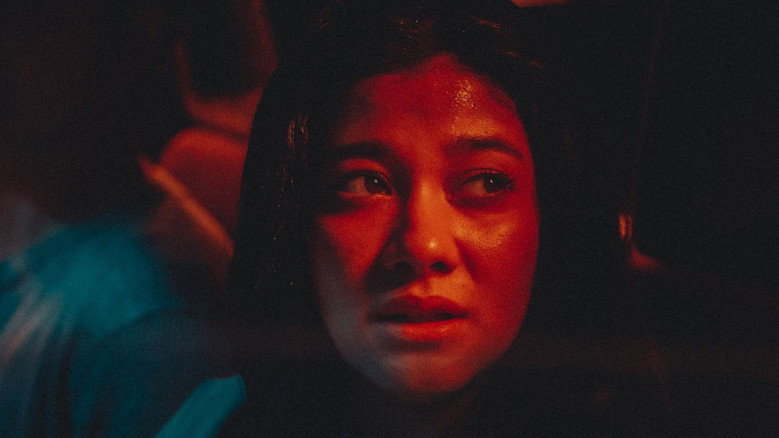
Fajar Nugros, the director, has made a career out of genre films that play with Indonesian social hierarchies—class, gender, the weight of tradition—but The Womb feels different. It’s quieter. More intimate.
The horror here isn’t in the jump scares (though there are a few, and they land) but in the slow unraveling of a woman’s autonomy. Naysila Mirdad plays the protagonist, a character whose name we never learn, which feels intentional. She’s not a person to the family that hires her; she’s a vessel.
A womb with legs. The film’s title isn’t just a metaphor—it’s a job description.
The first act is all uneasy domesticity. The elderly couple, played by Lydia Kandou and Rukman Rosadi, are polite to a fault, their smiles too wide, their concern for her well-being just a little too performative. The house itself is a character—high ceilings, antique furniture, a sense of old money rotting from the inside.
The camera lingers on the details: the way the wife’s hand trembles when she pours tea, the way the husband’s eyes flick toward the protagonist’s belly when he thinks she isn’t looking. There’s a scene early on where the protagonist sits at the dinner table, and the camera holds on her plate as the wife serves her a second helping. “You’re eating for two now,” she says, her voice saccharine.
The protagonist smiles, but Mirdad’s eyes betray her. She knows something is off. We know something is off.
The film knows we know. And yet, we’re trapped in the same polite hell she is.
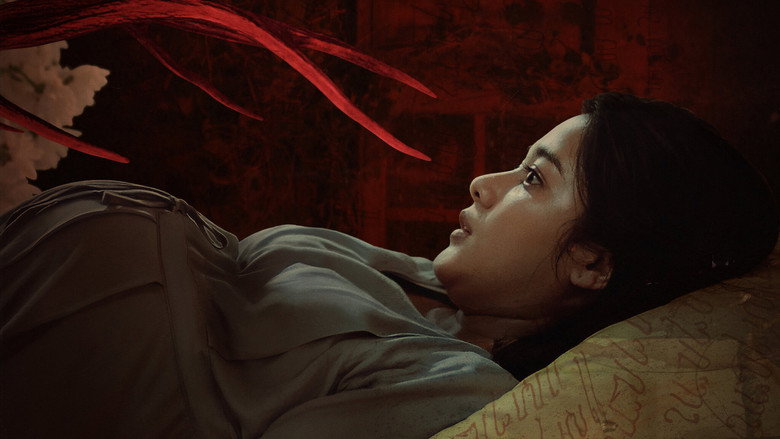
What’s fascinating about The Womb is how it weaponizes the mundane. The horror isn’t in the supernatural (though there are hints of it—whispers in the night, a locked room that shouldn’t be locked) but in the way the family’s expectations suffocate her. The protagonist isn’t just carrying a child; she’s carrying their hopes, their desperation, their delusions.
The comatose son, played by Dimas Anggara, is a blank slate, and the family projects onto him like a screen. They need him to wake up. They need him to be whole.
They need her to make that happen. The film never spells out what they want from her, exactly, and that’s the point. The horror is in the ambiguity, in the way the family’s love feels like possession.
I’ve seen this trick before—the slow-burn psychological horror where the real monster is societal expectation. But The Womb doesn’t rely on gore or cheap thrills to sell its scares. It’s in the way the protagonist’s reflection in the mirror seems to flicker when no one else is looking.
It’s in the way the house’s creaks sound like whispers. It’s in the way the camera lingers on her hands as she rubs her belly, as if she’s trying to reassure herself that the child inside her is still hers. The film’s sound design is masterful in this regard—no score, just the hum of the refrigerator, the ticking of a clock, the distant sound of footsteps on the stairs.
The silence is oppressive. It makes you lean in. It makes you listen.
There’s a moment about halfway through the film where the protagonist wakes up in the middle of the night to find the comatose son sitting upright in his bed, staring at her. His eyes are open, but they’re wrong—glazed, unseeing. She screams.
He doesn’t react. The next morning, the family acts as if nothing happened. “You must have been dreaming,” the wife says, her voice smooth as oil. The protagonist doesn’t argue.
She just nods. And in that moment, you realize the film isn’t just about her losing control of her body—it’s about her losing control of her reality. The family’s gaslighting is so subtle, so insidious, that even we start to question what we’ve seen.
Is she imagining things? Is the house haunted? Or is the real horror the way the family’s love feels like a cage?
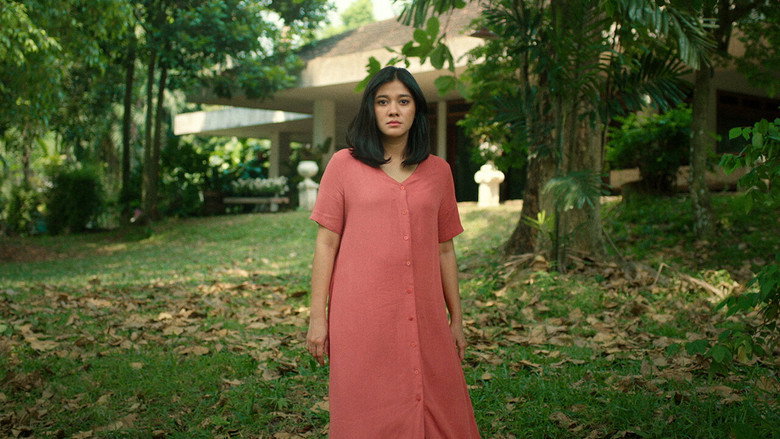
The film’s biggest flaw is that it doesn’t quite stick the landing. The third act rushes toward a conclusion that feels both inevitable and unsatisfying, as if Nugros didn’t trust the audience to sit with the ambiguity. The supernatural elements, which had been so carefully hinted at, are suddenly front and center, and the film’s delicate balance of psychological and physical horror tips into something more conventional.
It’s not a bad ending, exactly, but it’s a safe one. After spending so much time in the protagonist’s head, the film’s final minutes feel like a betrayal of its own restraint.
And yet, I can’t stop thinking about it. That’s the mark of a good horror film, isn’t it? It lingers.
It festers. The Womb isn’t just about the fear of losing control of your body—it’s about the fear of losing control of your story. The family doesn’t just want her child; they want to rewrite her narrative, to turn her into a supporting character in their own tragedy. And in a world where women’s bodies are still battlegrounds, where their choices are still up for debate, that’s a horror story that doesn’t need ghosts to feel real.
I left the film with a knot in my stomach, the kind that doesn’t unravel with a good night’s sleep. Maybe that’s the point. Maybe The Womb isn’t meant to be forgotten.
Maybe it’s meant to haunt you, the way the best horror does—not with what it shows you, but with what it makes you feel. And what it makes you feel, more than anything, is trapped.
Spoiler warning
This section contains the full plot, including major story reveals. Overview above stays spoiler-free.
The Womb (2022), known locally as Inang, emerged as one of Indonesia’s most talked-about horror films of the year, blending supernatural terror with family drama. Directed by Fajar Nugros, the movie stars Naysila Mirdad and Dimas Anggara in a chilling tale that capitalized on the country’s appetite for homegrown horror. But behind the scares, the production had its own share of buzz—some confirmed, some rumored.
The Womb leans into Indonesia’s horror tradition, where folklore and modern thrillers collide. The film is classified as both horror and thriller, with a runtime of 116 minutes—ample time to build tension. Nugros, known for his work in Indonesian cinema, reportedly aimed to craft a story that felt distinctly local while appealing to broader audiences. The result? A film that critics and fans ranked as Indonesia’s second-best horror release of 2022, though specifics on its reception remain sparse in available sources.
The cast—including veterans like Lydia Kandou and rising stars like Rania Putrisari—brought depth to the supernatural narrative. Mirdad and Anggara, in particular, anchor the film, though details about their on-set dynamics or preparation for the roles haven’t surfaced in the evidence.
One of the biggest talking points was The Womb’s international rollout. A French-subtitled trailer hinted at Netflix’s involvement, suggesting the streamer saw potential in the film’s exportability. While no official confirmation of a Netflix acquisition appears in the snippets, the platform’s history of snapping up Indonesian horror (e.g., The Queen of Black Magic) makes this a plausible rumor. If true, it would mark another win for Nugros, whose films often find second lives on global platforms.
With limited critical reviews in English and no Rotten Tomatoes score, The Womb’s legacy is still taking shape. Its YouTube presence—including explainers in Hindi/Urdu and reaction videos —suggests a niche but passionate fanbase. If Netflix or another platform picks it up, the film could gain traction beyond Indonesia’s borders.
For now, The Womb shows Indonesia’s horror renaissance, even if its behind-the-scenes story remains half-told. Fans eager for more will have to wait—or dig into the film itself—for answers.
Entertainment rumors and trivia aggregated from public reporting. Treat speculation as unverified unless a cited source confirms it.
More titles in the same genres and with the same cast.