Jihane Almira
Nare

An Indonesian fashion designer studying in England finds her career compromised by an intoxicating love affair that challenges her dreams and values.
I’ve always thought fashion was the most cinematic of the arts—every stitch a story, every hem a decision. So when #OOTD: Outfit of the Designer opens with Jihane Almira’s Nare hunched over a bolt of fabric in a Birmingham studio, her fingers tracing the grain like a blind woman reading Braille, I leaned in. Here was a film that promised to treat fashion not as backdrop but as character, a living thing with its own pulse.
For a while, it delivers. Then, like a poorly cut pattern, it falls apart.
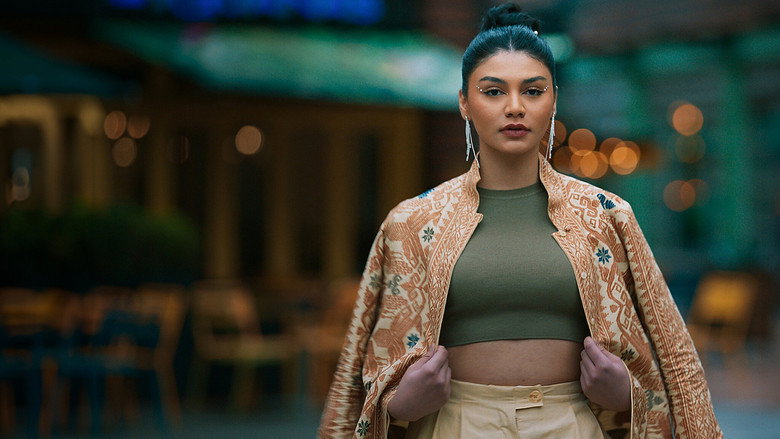
Dimas Anggara’s debut is a film of two halves, and they don’t match. The first is a quiet, tactile love letter to the craft of fashion—Nare’s eco-printing experiments, the way she drapes fabric over a mannequin like a second skin, the hushed awe of a student discovering her voice. The camera lingers on these moments, not in a showy way, but with the patience of someone who understands that creation is a slow, messy business.
There’s a scene early on where Nare and her classmates present their designs to a panel of judges. The tension isn’t in the outcome—we know she’ll win—but in the way the light catches the folds of her garment, the way her breath hitches when the fabric moves just right. It’s the kind of moment that makes you remember why you fell in love with movies in the first place: not for the grand gestures, but for the small, human ones.
Then the second half arrives, and with it, a tidal wave of melodrama. Nare’s life becomes a checklist of misfortunes: a toxic relationship, a betrayal, a death, another betrayal, a fire (yes, a literal fire). The film’s tone shifts so abruptly it’s like watching someone switch from watercolors to neon graffiti mid-stroke.
One reviewer called it “a bad debut where the cast’s potential is thrown away”, and I can’t argue. The problem isn’t that the film embraces tragedy—tragedy can be powerful when earned—but that it treats its characters’ pain like a plot device, something to be checked off before the next calamity. There’s no room to breathe, no space for the audience to sit with the weight of what’s happening.
Instead, we’re rushed from one disaster to the next, like a shopper flipping through racks at a fast-fashion outlet.
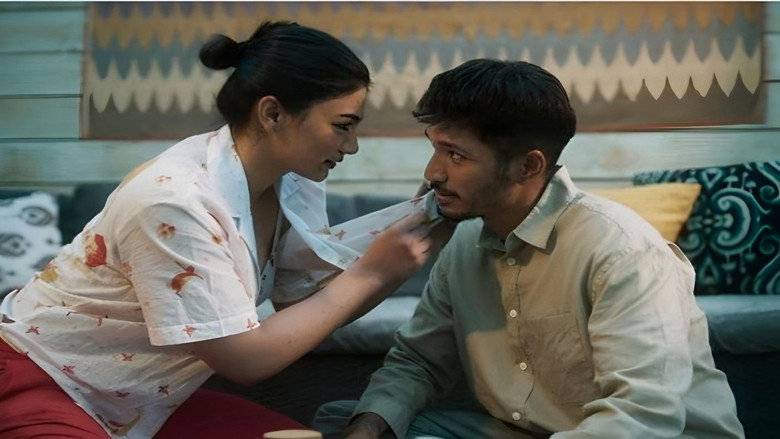
The irony is that #OOTD is at its best when it’s smallest. The scenes between Nare and her best friend Mala (Givina Lukita) crackle with a warmth that feels real, unforced. Their conversations about sustainability, about the ethics of fashion, about the pressure to conform—these are the moments that give the film its heart.
But they’re drowned out by the louder, messier drama that follows. It’s as if Anggara, having built this delicate world, panicked and decided to set it on fire just to see what would happen.
And yet. There’s something undeniably compelling about Nare’s journey, even when it strains credulity. Jihane Almira plays her with a quiet intensity, her performance anchored in small, physical details—the way she bites her lip when she’s nervous, the way her shoulders slump when she’s defeated.
In another film, with a script that trusted its audience to sit with ambiguity, she might have been revelatory. Here, she’s often let down by the very thing that’s supposed to elevate her: the story.
The film’s visuals, at least, remain a consistent strength. The Birmingham setting is used beautifully, the city’s industrial edges softened by the golden-hour light that bathes Nare’s studio. The color palette is rich and deliberate, shifting from the muted tones of the fashion school to the garish hues of a nightclub where Nare’s life begins to unravel.
It’s a shame the script doesn’t match the care of the cinematography. There’s a scene where Nare, drunk and heartbroken, stumbles through the city at night, her reflection fractured in puddles and storefront windows. It’s haunting, the kind of moment that lingers.
But the film doesn’t know what to do with it, so it cuts away, back to the noise.
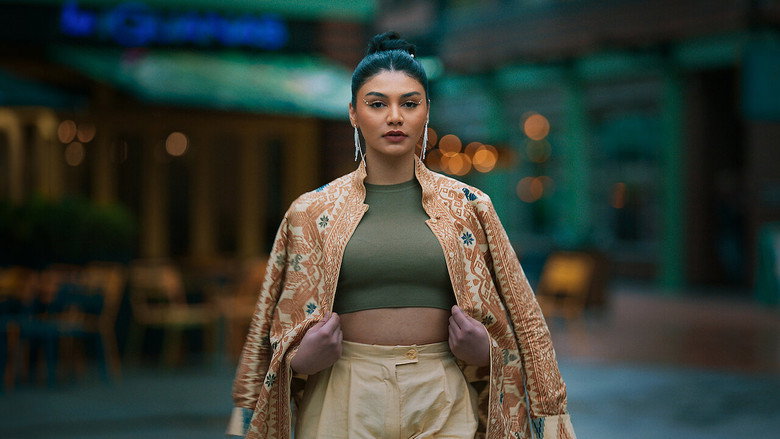
I keep coming back to that opening scene, the one with Nare and the fabric. There’s a purity to it, a sense of possibility. The film never recaptures that feeling, but maybe that’s the point.
Fashion, like life, is about the tension between the ideal and the real—the perfect sketch and the imperfect execution. #OOTD: Outfit of the Designer is a film that starts with a dream and ends with the mess of making it real. It’s not a bad debut, exactly. It’s just an honest one, in all its flawed, uneven glory.
And maybe, in the end, that’s enough.
Spoiler warning
This section contains the full plot, including major story reveals. Overview above stays spoiler-free.
Dimas Anggara’s #OOTD: Outfit of the Designer (2024) stitches together the high-stakes worlds of fashion and romance, but the real intrigue might lie in the off-screen chemistry—or chaos—of its star-studded cast. The Indonesian romantic drama, set against the backdrop of London’s fashion scene, follows a designer whose career and heart collide when an intoxicating love affair threatens to unravel her ambitions. latestnetflix.com's read is that with a lineup that includes Jihane Almira, Rangga Nattra, and Derby Romero, the film promises glamour, but whispers about its production suggest the drama wasn’t confined to the script.
The cast reads like a who’s who of Indonesian entertainment, blending rising talent with industry veterans. Leading the charge are Jihane Almira and Rangga Nattra, whose on-screen romance drives the film’s central conflict. Almira, known for her poised screen presence, plays the designer navigating professional and personal turmoil, while Nattra—fresh off his role in Satu Hari dengan Ibu—brings the allure of a love interest who may be more distraction than destiny.
Supporting roles add depth and star power. Derby Romero, a familiar face in Indonesian rom-coms, and Asmara Abigail, whose dramatic chops have earned critical praise, round out the ensemble. But the real eyebrow-raiser is Jolene Marie, the former Puteri Indonesia who transitioned from pageantry to acting. Her inclusion, alongside veteran actress Widyawati Sophiaan, suggests a deliberate blend of fresh energy and seasoned gravitas. With such a stacked cast, rumors of behind-the-scenes tension—or camaraderie—were inevitable.
The film’s premise—a designer torn between passion and love—mirrors the high-pressure world of fashion itself, and the production leaned into authenticity. Shooting in London, a global fashion capital, added logistical hurdles but also a layer of prestige. Sources (or at least snippets) hint that the cast faced grueling schedules, with long hours spent on elaborate costume fittings and location shoots. Whether this led to on-set sparks or simply exhaustion remains unconfirmed, but the film’s visuals—judging by early buzz—deliver the glossy aesthetic the story demands.
What’s less clear is how the cast’s real-life dynamics influenced the film. Rangga Nattra and Jihane Almira have worked together before, but their chemistry in #OOTD is said to be electric. Meanwhile, Derby Romero’s reputation as a scene-stealer might have added friendly competition to the set. If there were clashes, they’ve stayed under wraps—so far.
Early descriptions frame #OOTD as a classic romantic drama with a fashion-forward twist, but the real test will be whether it transcends its genre trappings. The cast’s talent is undeniable, but the film’s success hinges on balancing its soapy love story with the grit of the fashion industry. If the behind-the-scenes discipline matches the on-screen glamour, it could be a standout. If not, it risks fading into the crowded field of forgettable romances.
For now, fans are left to speculate: Did the cast’s chemistry make the film, or did the film’s demands make the cast? Either way, #OOTD: Outfit of the Designer is shaping up to be as much about the drama behind the seams as the one in front of the camera.
Entertainment rumors and trivia aggregated from public reporting. Treat speculation as unverified unless a cited source confirms it.
More titles in the same genres and with the same cast.