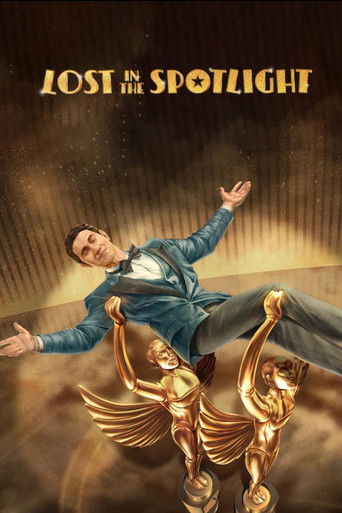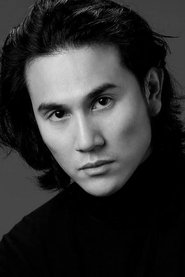
Vino G. Bastian
Darwin

Darwin, a senior photographer who consistently uses a manual camera, is shocked to discover the appearance of a woman's shadow in every photo he takes. Soon, the woman's figure appears in real life, terrorizing him. Pia, Darwin's girlfriend, decides to investigate the woman's identity. It turns out the woman is Lilies, an outstanding student who once studied at their university. When Darwin's friends die one by one, Pia is convinced this is related to a 'sin' Darwin committed in the past.
Official
I’ve seen this trick before. A photographer develops a roll of film and finds a face in the frame that wasn’t there when he clicked the shutter. The face belongs to someone dead—or soon to be.
The camera, that supposed instrument of truth, becomes a liar, a thief, a witness to something it shouldn’t have seen. It’s a premise that’s been done to death (pun intended) in horror, from The Ring to Shutter’s own 2004 Thai progenitor. So when I sat down to watch Herwin Novianto’s 2025 remake, I braced myself for déjà vu.
What I didn’t expect was the way the film’s most interesting haunting wouldn’t be the ghost in the photographs, but the ghost of its own making—the weight of expectation, the specter of the original, and the quiet, creeping sense that this story might not have needed to be told again.
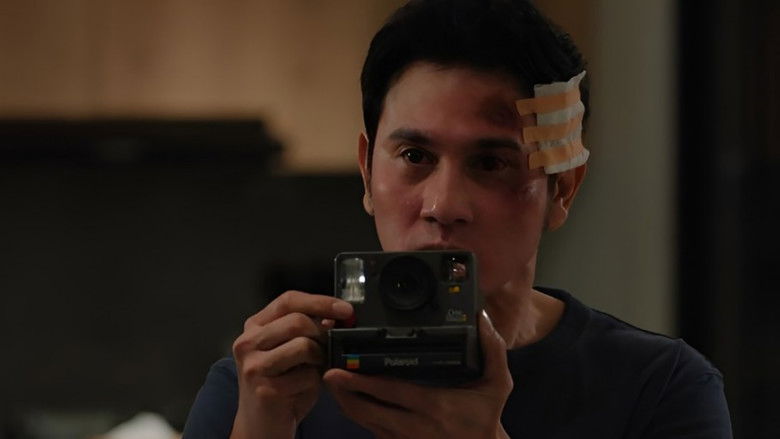
The first act moves with the efficiency of a well-oiled jump-scare machine. Darwin (Vino G. Bastian), a photographer with the kind of stubble that suggests he’s perpetually three days away from a midlife crisis, starts noticing a woman’s silhouette in his developed photos.
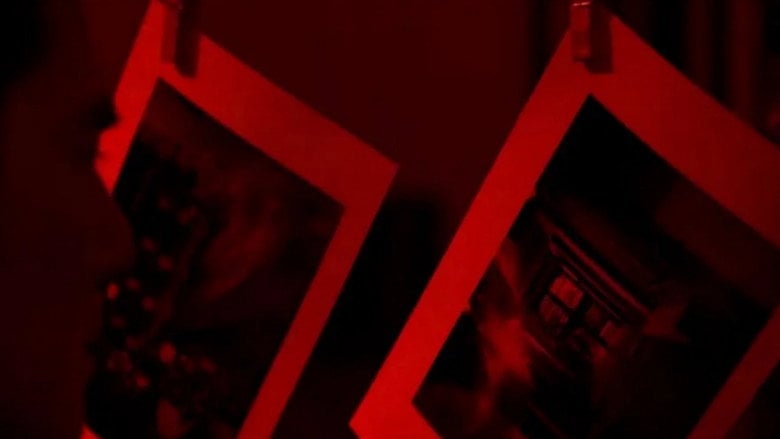
At first, it’s just a smudge, a trick of the light. Then it’s a face, pale and indistinct, hovering over his shoulder like a bad conscience. The film leans into the tactile pleasure of analog photography—close-ups of fingers winding film, the chemical tang of the darkroom, the way a Polaroid develops in real time.
There’s a nostalgia here, not just for the medium but for the idea of photography as something physical, something that can be held, manipulated, even cursed. It’s the film’s most effective trick, grounding its supernatural horror in something tangible.
But then the ghost steps out of the frame and into the world, and that’s where things start to unravel. Not because the scares are bad—though they’re often telegraphed with all the subtlety of a sledgehammer—but because the film seems unsure of what kind of horror it wants to be. Is this a slow-burn psychological thriller about guilt and memory?
A slasher where the killer just happens to be dead? A morality tale about the sins of the past coming back to bite? The answer, frustratingly, is all of the above, and none of them quite land.
Take the ladder sequence, which a handful of viewers have singled out as the film’s high point. Pia (Anya Geraldine), Darwin’s girlfriend, climbs into an attic to investigate a noise. The camera lingers on her bare feet on the rungs, the way her breath hitches, the creak of the wood.
For a moment, it’s genuinely tense—until the ghost lurches into frame with a shriek, and the moment collapses into a cheap scare. The problem isn’t the jump; it’s that the film has spent so long building up the atmosphere of dread only to undercut it with something so blunt. It’s like watching a chef carefully plate a meal, only to dump ketchup all over it at the last second.
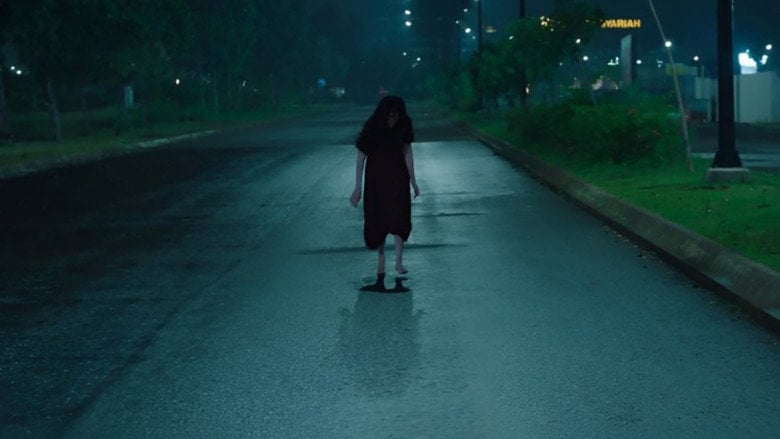
The ghost herself—Lilies, a former classmate of Darwin’s who met a grim fate—is where the film’s ambitions and its execution clash most violently. Niken Anjani plays her with a quiet, simmering rage, and there’s a real pathos to her performance. She’s not just a monster; she’s a victim, and the film takes pains to show us the bullying and harassment that led to her death.
But then it undercuts that pathos with some truly baffling makeup and CGI choices. In some scenes, Lilies looks like a tragic figure, her face gaunt and hollow. In others, she’s been rendered with the uncanny valley sheen of a mid-2000s video game villain.
The inconsistency is jarring, and it pulls you out of the story just when you should be most invested.
(There’s a fascinating parallel here to Niken Anjani’s own life. She’s spoken openly about surviving bullying and sexual harassment as a child, and it’s hard not to see her performance as Lilies as a kind of exorcism. That personal connection gives her scenes a weight they might not otherwise have, but it also makes the film’s occasional lapses into camp all the more frustrating.
This isn’t just a ghost story; it’s a story about real pain, and the film doesn’t always seem to know what to do with that.)
The real mystery of Shutter isn’t who the ghost is or why she’s haunting Darwin—it’s why this story needed to be told again at all. The 2004 Thai original is a lean, mean horror machine, a film that understands the power of suggestion and the terror of what you don’t see. This remake, by contrast, is bloated where it should be tight, obvious where it should be subtle.
It updates the setting to a more contemporary Indonesia, but the changes feel superficial—a smartphone here, a modern apartment there—without adding any new depth to the themes. The original’s ending is a gut punch; this one’s a shrug.
That’s not to say there aren’t moments that work. The film’s visual presentation is polished, with a color palette that leans into sickly greens and blues, as if the world itself is rotting from the inside out. And there’s a late-game reveal about Darwin’s past that, while not exactly surprising, at least gives his character an arc beyond “guy who takes pictures and gets haunted.” But these moments are islands in a sea of missed opportunities.
The most damning thing about Shutter isn’t that it’s bad—it’s that it’s unnecessary. It’s a film that exists because someone, somewhere, decided that a 20-year-old horror movie needed a fresh coat of paint, not because the story had anything new to say. And in a genre that thrives on originality, on the thrill of the unknown, that’s the real sin.
I keep coming back to that ladder scene. Not because it’s particularly scary, but because it’s the moment the film almost becomes something more. For a few seconds, it’s not just a haunted house story; it’s a story about a woman climbing into the dark, about the things we’re afraid to face.
Then the ghost appears, and the moment is gone. Maybe that’s the real haunting here—not the ghost in the photographs, but the ghost of what this film could have been.
"A watchable yet redundant remake that delivers a few decent scares but falls short of the original’s tension and emotional impact."
A polished look, decent pacing in parts, and a handful of effective jumpscares keep it from being a total misfire, and the updated setting and the ending’s wrap-up of the protagonist’s arc have some appeal. But the story is formulaic and sometimes confusing, the ghost effects and makeup undercut the fear factor, and the soundtrack and drawn-out backstory sequences weaken the atmosphere; the Thai original remains the better film.
Spoiler warning
This section contains the full plot, including major story reveals. Overview above stays spoiler-free.
Horror fans came for cursed photographs and angry spirits… and stayed for the messy debates about casting, age gaps, and off-screen love lives. latestnetflix.com's view is that The Indonesian Shutter (2025) may not be the most scandal-ridden set in film history, but trust: there’s still some choice tea lurking in the negatives.
The biggest “scandal” around Shutter (2025) isn’t about ghosts at all – it’s about birthdays.
Forget haunted polaroids—Indonesian gossip sites had their cameras pointed squarely at Anya Geraldine’s real romance during the Shutter era.
The ghost might be fictional, but some of the pain behind it isn’t.
Online, the claws are out—not for the cast, but for the creative decision to remake Shutter at all.
Even without studio leaks, the fandom’s been busy:
Entertainment rumors and trivia aggregated from public reporting. Treat speculation as unverified unless a cited source confirms it.
More titles in the same genres and with the same cast.