
Chicco Kurniawan
Oscar

“Indonesia's Biggest Action Film This Year.”
An organization races against time to uncover the mastermind behind the placement of 13 bombs in Jakarta before the city falls into chaos.
I’ve seen this trick before—a city held hostage, a ticking clock, a team of mismatched heroes scrambling to defuse the bombs before the timer hits zero. It’s the kind of premise that’s been done so often it’s practically a genre unto itself, from Die Hard to 24 to Speed. But what happens when that formula gets transplanted to Jakarta, a city where the skyscrapers scrape the sky but the streets hum with a different kind of tension? 13 Bombs, Angga Dwimas Sasongko’s 2023 action thriller, doesn’t reinvent the wheel, but it does something almost as interesting: it asks what happens when the familiar machinery of the ticking-clock thriller collides with the specific anxieties of contemporary Indonesia.
The film opens with a jolt—a car explodes in the middle of Jakarta’s financial district, the fireball blooming like a grotesque flower against the glass-and-steel skyline. From there, the story spirals outward, following a trio of protagonists: a crypto-startup founder (Chicco Kurniawan), his musician friend (Ardhito Pramono), and a young woman (Lutesha) whose connection to the chaos isn’t immediately clear.
Their paths intersect with a counter-terrorism unit, a charismatic but ruthless terrorist leader (Rio Dewanto), and a shadowy figure pulling strings from behind the scenes. The plot is a Rube Goldberg machine of cause and effect, each revelation triggering another countdown, another explosion, another desperate sprint through the city’s labyrinthine streets.
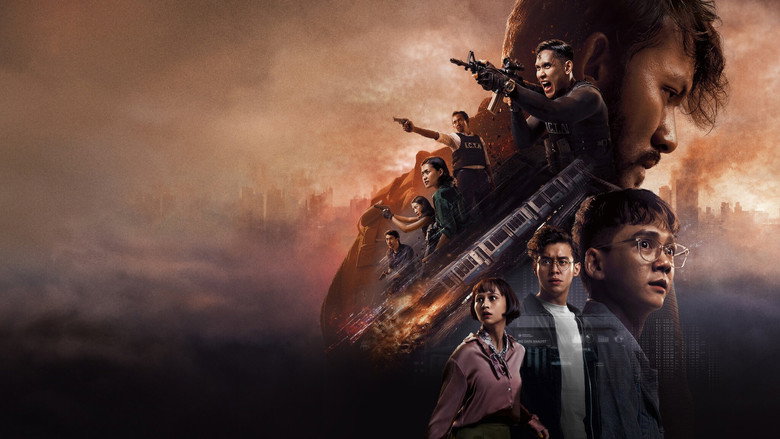
Sasongko, best known for films like Filosofi Kopi and Stealing Raden Saleh, has always been a director who balances spectacle with social commentary. Here, he leans hard into the former, crafting a film that’s less interested in subtlety than in sheer, adrenalized momentum. The action sequences are the film’s strongest suit—practical explosions, hand-to-hand combat, and chase scenes that feel visceral and immediate.
There’s a particular moment early on, a shootout in a crowded market, where the camera lingers on the faces of bystanders caught in the crossfire. It’s a small detail, but it grounds the chaos in something real, a reminder that the stakes aren’t just abstract. This is a city where the line between order and anarchy is thinner than anyone wants to admit.
That said, 13 Bombs isn’t without its stumbles. The film’s ambitions sometimes outstrip its execution, particularly when it comes to its themes. There’s a subplot involving cryptocurrency and economic inequality that feels tacked on, more like a nod to contemporary issues than a fully integrated part of the story.
As James Marsh of the South China Morning Post put it, the film’s "intentions of staging a high-octane urban terrorist drama that addresses pressing social injustices quickly buckles under the weight of its lofty themes." It’s not that the film doesn’t care about these ideas—it’s that it doesn’t always trust the audience to connect the dots. Too often, the dialogue spells out what the images could (and should) convey on their own.
The performances, for the most part, hold up under the weight of the plot’s demands. Rio Dewanto is a standout as Arok, the terrorist leader, his charisma making even the most villainous moments feel uncomfortably human. There’s a scene where he delivers a monologue about the corruption of the system, his voice calm but his eyes burning with something like grief.
It’s the kind of moment that lingers, a reminder that even the most cartoonishly evil characters are, in their own way, responding to something real. The central trio—Kurniawan, Pramono, and Lutesha—are less compelling, their chemistry feeling more like convenience than conviction. They’re the everymen of the story, the audience’s entry point into the chaos, but their performances sometimes feel like they’re playing catch-up to the film’s breakneck pace.
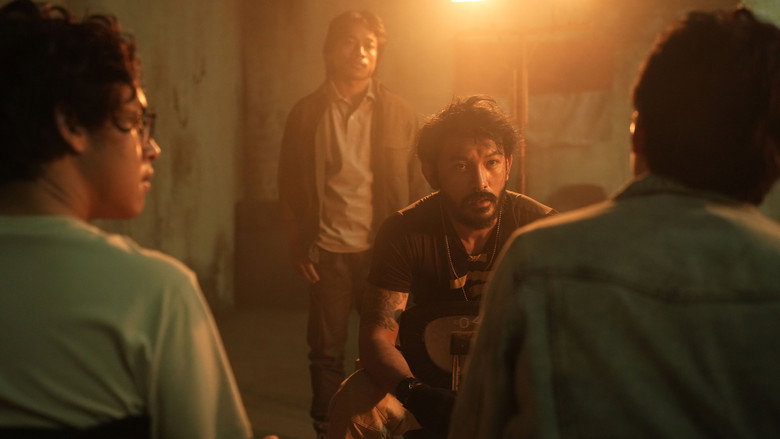
What 13 Bombs does best is capture the claustrophobic dread of a city under siege. Jakarta, with its towering skyscrapers and crowded streets, becomes a character in its own right, a place where modernity and tradition collide in ways both exhilarating and terrifying. The film’s cinematography leans into this, using the city’s verticality to create a sense of inescapable tension.
There’s a shot midway through the film where the camera tilts upward, following the trajectory of a bullet as it ricochets off a building and into the night sky. It’s a small moment, but it encapsulates the film’s approach: big, bold, and unapologetically kinetic.
That said, the film’s reliance on familiar genre tropes can make it feel like it’s running in place. John Berra of Screen International noted that a "general adherence to a familiar template and over-reliance on stock elements prevents 13 Bombs from ever truly quickening the pulse." It’s a fair critique.
The film’s real-time structure and ticking-clock tension are straight out of the 24 playbook, and while they work well enough to keep the story moving, they don’t always feel fresh. The third act, in particular, devolves into a series of increasingly convoluted twists, each one feeling less like a revelation and more like a desperate attempt to keep the audience guessing.
Still, there’s something undeniably compelling about 13 Bombs, even at its most uneven. It’s a film that wants to be more than just an action thriller—it wants to be a snapshot of a city, a country, a moment in time. Whether it succeeds is up for debate, but it’s hard not to admire its ambition.
Panos Kotzathanasis of Asian Movie Pulse called it a "missed opportunity regarding its context, but the action and the overall production values here definitely compensate." That feels about right. 13 Bombs isn’t a perfect film, but it’s a loud one, a film that announces its presence with explosions and gunfire and refuses to be ignored.
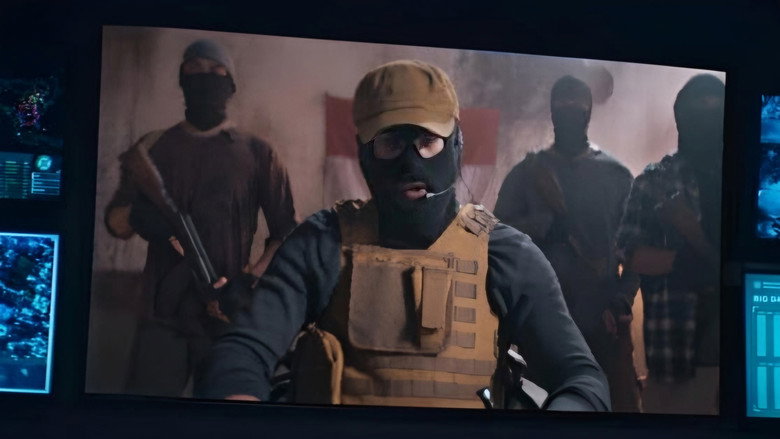
I left the theater with my pulse still racing, but also with a nagging sense of familiarity. 13 Bombs is a film that knows its audience, that understands the thrill of the chase, the satisfaction of a puzzle solved just in the nick of time. But it’s also a film that, for all its noise, leaves you wanting something quieter, something that lingers a little longer. Maybe that’s the point.
In a world where everything feels like it’s on the verge of collapse, maybe the best we can hope for is a momentary reprieve, a breath held just long enough to believe, if only for a second, that the bombs won’t go off after all.
Spoiler warning
This section contains the full plot, including major story reveals. Overview above stays spoiler-free.
Indonesian director Angga Dwimas Sasongko is no stranger to high-octane storytelling, but 13 Bombs (2023) marks his most ambitious project yet—a race-against-time thriller set against the backdrop of Jakarta’s potential collapse. latestnetflix.com's take is that Produced by Visinema Pictures, the film blends espionage, action, and social tension, reflecting Sasongko’s signature style of weaving urgent narratives into contemporary Indonesian cinema.
The film’s premise is simple but gripping: an organization scrambles to uncover the mastermind behind 13 bombs planted across Jakarta before the city descends into chaos. Leading the cast is Chicco Kurniawan, alongside musician-turned-actor Ardhito Pramono and singer Lutesha, whose inclusion hints at Sasongko’s knack for blending fresh faces with established talent. The ensemble also features heavyweights like Rio Dewanto and Putri Ayudya, suggesting a deliberate mix of dramatic weight and rising stars.
While the snippets don’t reveal specifics about character dynamics, the sheer scale of the cast—10 credited actors—implies a sprawling narrative with multiple perspectives. Given Sasongko’s past work, which often tackles social issues, it’s plausible that 13 Bombs layers its thriller plot with deeper commentary, though the evidence doesn’t confirm this.
As co-founder of Visinema Pictures, Sasongko has built a reputation for films that balance commercial appeal with sharp social critique. 13 Bombs appears to follow that tradition, though the SERP snippets don’t detail its thematic focus. What’s clear is the film’s logistical ambition: staging a city-wide bomb threat requires meticulous planning, from location scouting to special effects. Rumors (unconfirmed) suggest Jakarta’s iconic landmarks feature prominently, but without explicit evidence, this remains speculative.
Sasongko’s directorial approach often leans into immersive storytelling, and 13 Bombs’ premise—rooted in urgency and paranoia—aligns with his filmography. His 2015 hit Surat dari Praha (Letters from Prague) explored historical trauma, while Wiro Sableng (2018) delivered high-energy action. 13 Bombs seems to merge both: a pulse-pounding plot with potential socio-political undertones.
For all its intrigue, the available evidence leaves key questions unanswered. How did the cast prepare for such a high-stakes project? Were there real-world inspirations for the bomb plot? And crucially, how did Sasongko balance the film’s action with its emotional core? The snippets tease a "race against time" but offer no behind-the-scenes details about filming challenges, script development, or audience reception.
One tantalizing tidbit: the film’s Indonesian title, 13 Bom di Jakarta, suggests a localized focus, but whether it resonated with domestic audiences—or secured international distribution—remains unclear. Without deeper sources, coverage is limited to surface-level observations.
13 Bombs (2023) positions itself as a must-see for fans of Indonesian cinema’s evolving action-thriller genre. Sasongko’s direction, Visinema’s production pedigree, and a stacked cast make it a standout, even if the behind-the-scenes drama is still under wraps. For now, the film’s premise—13 bombs, one city on the brink—speaks for itself.
Entertainment rumors and trivia aggregated from public reporting. Treat speculation as unverified unless a cited source confirms it.
More titles in the same genres and with the same cast.