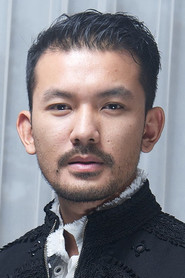
Jourdy Pranata
Narendra

The lives of Narendra and Ajeng intersect for the first time as past and present come together in this prequel to "One Day We'll Talk About Today."
Official
I’ve always been suspicious of prequels. There’s something inherently anxious about them—they’re stories told backward, trying to justify what we already know. Today We’ll Talk About That Day, Angga Dwimas Sasongko’s 2023 follow-up to One Day We’ll Talk About Today, doesn’t escape that tension. But what it lacks in narrative surprise, it makes up for in quiet, stubborn humanity.
This isn’t a film about grand revelations; it’s about the small, stubborn ways love persists across time, even when it’s broken.
The story toggles between two timelines: 1987 Jakarta, where young Narendra (Jourdy Pranata) and Ajeng (Yunita Siregar) meet in a whirlwind of class tension and familial expectation, and 2023 Bali, where their son Angkasa (Rio Dewanto) grapples with the weight of his father’s legacy. The past is shot in warm, golden hues—all sun-dappled courtyards and soft focus—while the present is cooler, more muted, as if the characters are already half-ghosts of themselves.
It’s a visual shorthand for nostalgia, sure, but it works. The past isn’t just remembered; it’s felt, like the heat of a memory you can’t shake.
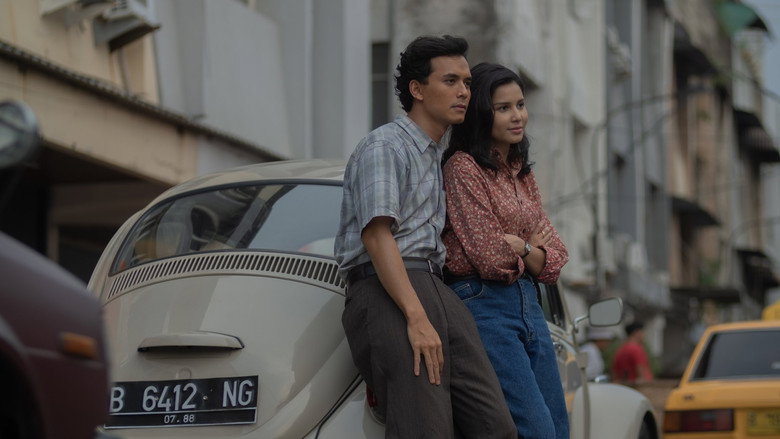
Sasongko has a knack for framing love as something both tender and transactional. In the 1987 storyline, Narendra and Ajeng’s romance unfolds against the backdrop of an arranged marriage Ajeng’s family is pushing her toward. There’s no grand rebellion here—just quiet, desperate choices.
In one scene, Ajeng sits across from her parents, her hands clenched in her lap, while her father lectures her about duty. The camera lingers on her face, not in close-up but in medium shot, so we see the way her shoulders tense, the way her eyes flicker toward the door. It’s a small moment, but it’s devastating.
Love, here, isn’t about passion; it’s about survival.
The present-day storyline, meanwhile, is messier. Angkasa’s marriage to Lika (Agla Artalidia) is fraying, and his relationship with his father, Narendra (now played by Donny Damara), is strained by unspoken resentment. The film’s most powerful scene comes when Angkasa finally confronts his father about the past.
They’re in a car, driving through Bali’s lush, green landscape, the kind of scenery that should feel idyllic but instead feels suffocating. Narendra doesn’t yell. He doesn’t cry.
He just says, “I did what I thought was right,” and the weight of that admission hangs in the air like humidity. It’s not a resolution; it’s an acknowledgment. And sometimes, that’s all love can be.
Critics have been divided on the film, and I get it. Today We’ll Talk About That Day doesn’t have the propulsive energy of a traditional romance, nor does it offer the catharsis of a drama that ties everything up neatly. Decider called it “a limp film,” and I won’t argue with that—if you’re looking for fireworks, you won’t find them here. But I think that’s the point.
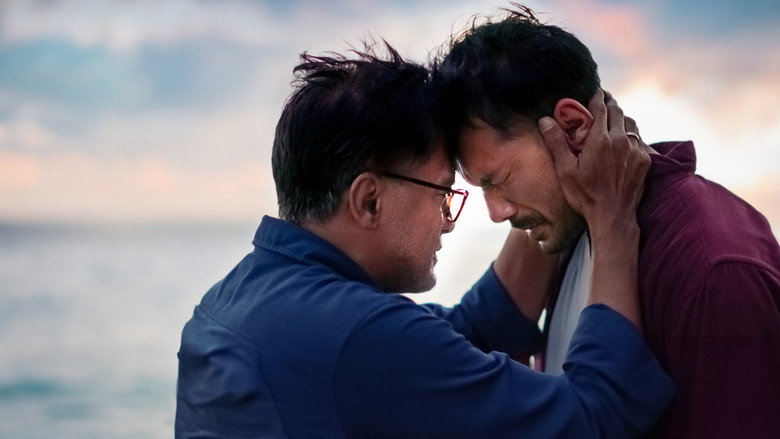
Life isn’t a series of explosive moments; it’s a slow accumulation of choices, regrets, and small acts of forgiveness. The film’s emotional core lies in its refusal to rush those moments. When Angkasa finally hugs his father, it’s not a grand gesture.
It’s just a son leaning into his dad’s shoulder, and it’s enough.
The film’s biggest flaw, if you can call it that, is its reliance on its musical score to do the emotional heavy lifting. There are moments where the music swells just a little too conveniently, as if the film is afraid we won’t feel what we’re supposed to feel. (I’m thinking of a scene where Ajeng and Narendra share a dance, the camera spinning around them in slow motion while the strings swell.
It’s beautiful, but it’s also telling us how to feel, not showing us.) That’s a minor quibble, though. The performances carry the weight of the story, especially Yunita Siregar as young Ajeng. There’s a scene where she’s arguing with her mother, her voice shaking but her posture rigid, and you can see the exact moment she decides to defy her family.
It’s a masterclass in restraint.
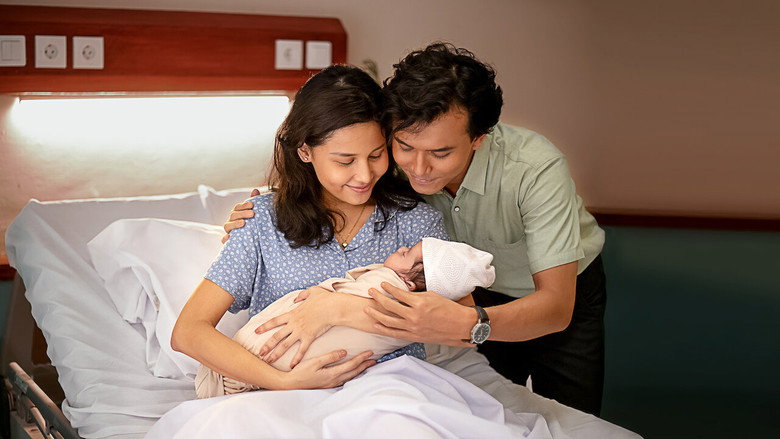
I left Today We’ll Talk About That Day thinking about my own father—not the big moments, but the small ones. The way he’d sigh when he thought I wasn’t listening. The way he’d hand me a cup of tea when I was upset, not saying anything, just letting the warmth do the talking.
That’s what this film gets right. It understands that love isn’t about grand gestures; it’s about the quiet, stubborn ways we show up for each other, even when we’re broken.
Is it a perfect film? No. But it’s a true one. And sometimes, that’s enough.
Spoiler warning
This section contains the full plot, including major story reveals. Overview above stays spoiler-free.
Angga Dwimas Sasongko’s Today We'll Talk About That Day (2023) isn’t just another standalone drama—it’s a prequel that digs into the emotional groundwork of its 2020 predecessor, One Day We'll Talk About Today. The film, which reunites Sasongko with a familiar cast, explores the early lives of Narendra and Ajeng, two characters whose relationship sets the stage for the original movie’s deeper conflicts. latestnetflix.com's take is that but what’s the real story behind this Indonesian cinematic return?Here’s what we know (and what’s still under wraps).
The film’s premise is straightforward: it traces the young love between Narendra (Jourdy Pranata) and Ajeng (Yunita Siregar), revealing how their relationship shapes the decisions and regrets that define One Day We'll Talk About Today. Sasongko, known for his socially conscious storytelling, frames this as more than a romantic flashback. According to snippets from The CinemaHolic, the prequel looks at "the daunting and all-encompassing emotions that set the precursor for life’s major decisions," suggesting a focus on the weight of youthful choices.
What’s less clear is how much of the film’s narrative is autobiographical. While The CinemaHolic raises the question of whether Today We'll Talk About That Day is based on real life, the evidence stops short of confirming it. Sasongko’s filmography often blends fiction with social commentary, so the line between reality and drama remains blurred—at least for now.
The ensemble cast reads like a reunion of Sasongko’s trusted collaborators. Jourdy Pranata and Yunita Siregar take center stage as the younger versions of characters originally introduced in the 2020 film, while Rio Dewanto, Donny Damara, and Ira Wibowo—all veterans of Indonesian cinema—round out the supporting roles. Notably, Arifin Putra and Putri Ayudya, who appeared in One Day We'll Talk About Today, return in different capacities, hinting at a deliberate continuity in Sasongko’s universe.
One Letterboxd user’s reaction offers a glimpse into the film’s emotional core, describing it as a story about "a father and son, the father’s past, and the son’s present," with a focus on how pivotal moments alter their lives. While this interpretation isn’t officially confirmed, it aligns with Sasongko’s tendency to explore generational trauma and familial bonds, as seen in his earlier works.
Angga Dwimas Sasongko isn’t just a director—he’s a storyteller with a mission. Co-founder of Visinema Pictures, Sasongko has built a reputation for films that tackle social issues under the guise of personal drama. Today We'll Talk About That Day appears to follow this blueprint, though the specifics of its themes remain vague in the available evidence.
What we do know is that Sasongko’s films often hinge on quiet, introspective moments rather than explosive drama. If One Day We'll Talk About Today was about the aftermath of life’s choices, its prequel seems poised to explore the moments that lead to those choices—love, loss, and the weight of expectation. Whether it succeeds in adding depth to the original story, however, is a question audiences will have to answer for themselves.
For all its intrigue, Today We'll Talk About That Day leaves several questions unanswered. Is the film a direct response to fan demand, or did Sasongko always intend to expand this universe? How much of the original cast’s backstory was planned from the start? And perhaps most tantalizingly: will there be another installment to bridge the gap between the two films?
The evidence doesn’t provide answers—just hints. One thing is certain: Sasongko’s prequel isn’t just a cash grab. It’s a deliberate attempt to revisit the emotional roots of a story that clearly resonated with audiences. Whether it stands on its own or serves as a companion piece to One Day We'll Talk About Today remains to be seen.
Entertainment rumors and trivia aggregated from public reporting. Treat speculation as unverified unless a cited source confirms it.
More titles in the same genres and with the same cast.