Shenina Cinnamon
Sur

When photos of her at a party cause her to lose a scholarship, a student investigates whether something devastating happened to her that night.
Official
I keep thinking about the first time I saw Shenina Cinnamon’s face in Photocopier. Not the wide-eyed optimism of the opening scenes, but the moment when the camera lingers on her just a beat too long after she realizes what’s been done to her. There’s no scream, no collapse—just the slow, sickening recognition that something inside her has already been altered, like a photograph left too long in the developer.
That’s the film’s quiet horror: the way trauma doesn’t announce itself with a bang, but seeps in like ink on paper, permanent and irreversible.
Wregas Bhanuteja’s film is a thriller in the truest sense—not because it relies on jump scares or chase sequences, but because it understands how tension lives in the spaces between what we know and what we’re forced to confront. The plot is deceptively simple: Sur, a bright university student, loses her scholarship after photos of her at a drunken party surface online. The images are damning, but there’s something off about them.
The angles are too precise, the lighting too deliberate. Sur doesn’t remember the night that way. And so begins her descent into a labyrinth of memory, technology, and institutional betrayal, where the act of copying—of light, of images, of identity—becomes both weapon and wound.
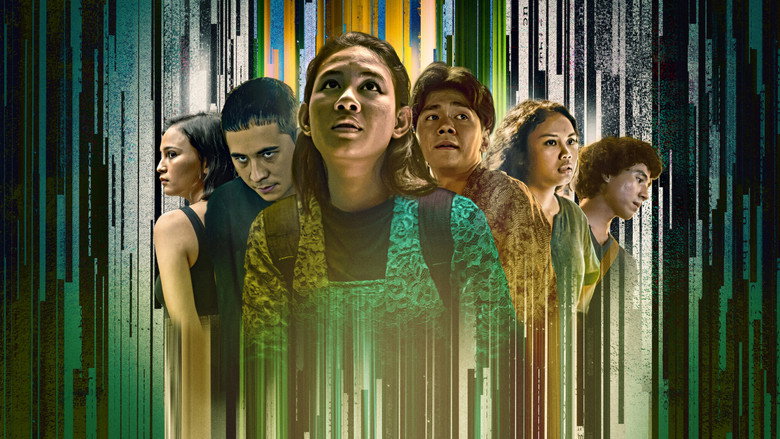
What makes Photocopier more than just a procedural mystery is its refusal to let the audience off the hook. Bhanuteja doesn’t just ask us to solve the puzzle alongside Sur; he forces us to reckon with the systems that enable her violation. The film’s title isn’t just a clever metaphor—it’s a literal description of what’s happening.
Someone is copying Sur’s life, replicating her image without her consent, and the act of reproduction becomes an act of erasure. The photocopier, that mundane office machine, is repurposed here as a tool of violence, its mechanical whir a stand-in for the way institutions (the university, the legal system, social media) grind down individual agency. It’s a chilling inversion of the idea that technology democratizes truth.
Here, it does the opposite: it manufactures lies with the efficiency of a factory line.
The film’s visual language reinforces this idea. Early scenes are bathed in the sterile fluorescence of campus buildings and computer labs, the kind of lighting that flattens everything it touches. But as Sur’s investigation deepens, the frames grow darker, more claustrophobic.
Bhanuteja and cinematographer Gunnar Nimpuno use tight close-ups to trap us in Sur’s perspective—her face filling the screen as she scrolls through incriminating photos, her fingers trembling over the keyboard. There’s a moment where she’s hunched over a photocopier, the machine’s green light casting an eerie glow on her skin, and for a second, it’s unclear whether she’s the one copying or being copied.
The line between predator and prey blurs, and the film leans into that ambiguity. Is Sur the victim of a targeted attack, or is she collateral damage in a larger game? The answer, when it comes, is more unsettling than any twist.

Shenina Cinnamon’s performance is the film’s anchor, and she navigates Sur’s journey with a restraint that makes her eventual unraveling all the more devastating. There’s a scene midway through where Sur confronts one of her accusers, a fellow student who’s been spreading the photos. The confrontation happens in a stairwell, the echo of their voices bouncing off the concrete walls.
Sur’s voice is steady, almost clinical, as she lists the inconsistencies in the photos. But then she hesitates, and in that pause, you can see the exhaustion of someone who’s been forced to prove her own innocence. Cinnamon doesn’t play Sur as a victim; she plays her as someone who’s been backed into a corner and is fighting her way out with the only tools she has: her intellect and her rage.
It’s a performance that lingers long after the credits roll, not because it’s showy, but because it’s real.
The film’s supporting cast is equally strong, particularly Dea Panendra as Sur’s best friend, Anggun, who oscillates between loyalty and self-preservation. Their friendship is one of the film’s few sources of warmth, but even that is tested by the weight of what’s at stake. There’s a heartbreaking scene where Anggun begs Sur to drop the investigation, not out of malice, but out of fear.
"You can’t win," she says, and the subtext is clear: the system isn’t built for people like them. It’s a line that resonates far beyond the film’s Indonesian setting, a reminder of how often women—especially young women—are told to accept injustice as the cost of survival.
If Photocopier has a flaw, it’s that it occasionally leans too heavily on its central metaphor. The parallels between Sur’s story and the act of photocopying are so deliberate that they risk feeling heavy-handed. But Bhanuteja is too smart a filmmaker to let the symbolism overshadow the humanity of his characters.
The film’s final act, which I won’t spoil, is a masterclass in restraint. There’s no cathartic confrontation, no neat resolution. Instead, there’s a quiet acknowledgment of the ways trauma reshapes a person, not just in the moment, but in the years that follow.
The last shot is of Sur sitting in a lecture hall, the camera pulling back to show her surrounded by classmates, all of them bathed in the same sterile light as the film’s opening. She looks different now—not broken, but changed. The photocopier has done its work.
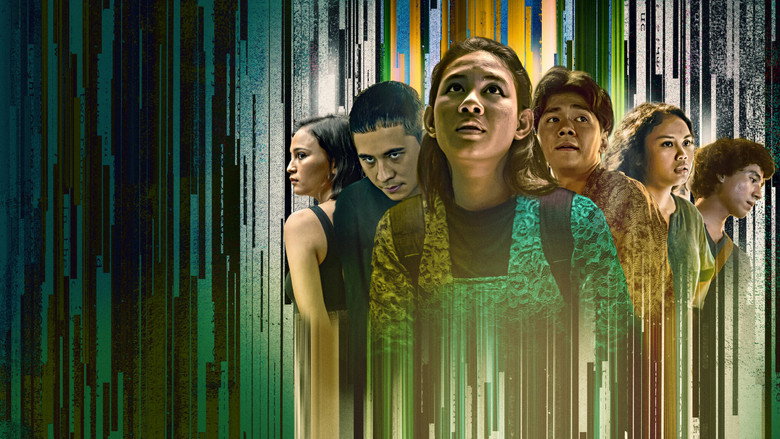
Photocopier isn’t an easy film to watch, but it’s an essential one. It’s a thriller that understands the real horror isn’t in the unknown, but in the things we do know—the ways power is wielded, the ways women are policed, the ways institutions protect themselves at the expense of the vulnerable. Bhanuteja doesn’t offer easy answers, because there aren’t any.
What he does offer is a mirror, held up not just to Sur, but to all of us. How many times have we scrolled past a photo without questioning its origins? How many times have we accepted a narrative because it was convenient, because it fit the story we wanted to believe?
The film’s final message is as simple as it is devastating: the light that burns too bright leaves the darkest shadows. And in those shadows, someone is always watching. Waiting.
Copying.
"A gripping thriller with strong performances and a tense mystery, though the pacing is uneven."
The film is praised for its intense atmosphere and Shenina Cinnamon's compelling lead performance, which anchors the story. The mystery holds attention, though the middle act drags slightly and makes the whole feel uneven.
Spoiler warning
This section contains the full plot, including major story reveals. Overview above stays spoiler-free.
Photocopier (2021), directed by Wregas Bhanuteja, emerged as one of Indonesia’s most talked-about films of the year, blending sharp social commentary with the tension of a neo-noir thriller. Starring Shenina Cinnamon in a career-defining role, the movie follows a college student whose life unravels after a compromising photo of her goes viral. latestnetflix.com's read is that while the film’s gripping narrative and stylish execution earned it international attention, the behind-the-scenes story reveals a production that was as meticulously crafted as its on-screen mystery.
Wregas Bhanuteja, already a rising star in Indonesian cinema, brought his signature blend of visual innovation and social critique to Photocopier. Known for his internationally recognized short films, Bhanuteja became the first Indonesian director to win a prestigious award at the Cannes Film Festival (for his short Prenjak in 2016). His feature-length debut, Photocopier, further cemented his reputation as a filmmaker unafraid to tackle uncomfortable themes—here, the dark side of digital privacy and victim-blaming.
The film’s original title, Penyalin Cahaya (literally "Copier of Light"), hints at Bhanuteja’s layered approach. As one review noted, the movie isn’t just about the act of photocopying but about how images—and by extension, narratives—can be manipulated to destroy lives. This thematic depth was a deliberate choice, reflecting Bhanuteja’s interest in stories that expose societal fractures.
Lead actress Shenina Cinnamon delivered a performance that critics and audiences couldn’t ignore. Playing Sur, a university student whose life spirals after a photo of her intoxicated at a party is leaked, Cinnamon balanced vulnerability with steely determination. Her portrayal earned praise for its raw authenticity, particularly in scenes where Sur confronts her accusers and grapples with public shaming.
Behind the scenes, Cinnamon’s preparation reportedly included immersive research into the experiences of women facing online harassment—a topic rarely explored in Indonesian cinema with such nuance. While details about her method remain scarce, her performance in the film’s opening scene (where Sur wakes up disoriented after a night of drinking) was singled out as a standout moment. The scene’s tension and ambiguity set the tone for the rest of the movie, leaving audiences questioning who to trust.
Photocopier premiered at the Busan International Film Festival (BIFF) in 2021, where it generated immediate buzz. The film’s trailer, released ahead of its festival debut, teased a story that was equal parts psychological thriller and social drama, with a neon-lit aesthetic that drew comparisons to Korean noir. Netflix later acquired the rights, positioning the movie as part of its push into Southeast Asian content.
The streaming giant’s marketing leaned heavily into the film’s thriller elements, with trailers emphasizing the mystery of who leaked the incriminating photo. However, some critics argued that the Netflix campaign downplayed the movie’s deeper themes, focusing more on its suspenseful plot than its critique of misogyny and digital privacy. Despite this, the film found an audience, with reviews praising its bold storytelling and Cinnamon’s performance, even if its 5.7/10 rating on SensCritique suggested a divisive reception.
For all its acclaim, Photocopier left some behind-the-scenes details shrouded in mystery. Rumors circulated about tensions on set, particularly regarding the film’s intense subject matter. One unverified claim suggested that certain scenes—especially those depicting online harassment—required careful handling to avoid retraumatizing the cast [rumor/unconfirmed]. However, no concrete reports or interviews from the production team have surfaced to confirm these whispers.
Another point of curiosity is the film’s runtime. Listed as 130 minutes in some sources, the extended cut reportedly included additional scenes that deepened Sur’s backstory. Whether these scenes made it into the final Netflix version remains unclear, as the streaming platform has not released details about alternate cuts.
Entertainment rumors and trivia aggregated from public reporting. Treat speculation as unverified unless a cited source confirms it.
More titles in the same genres and with the same cast.