

Miyako
Corinne Tan

13-year-old Corrine deals with her parents' recent divorce while everyone else is already adapted to their new roles as a blended family, challenging herself to train a rambunctious puppy as she discovers her new purpose.
I’ve always had a soft spot for the American Girl films—not because they’re perfect, but because they dare to treat pre-teen girls as complex humans rather than walking life lessons. American Girl: Corinne Tan is no exception, though it stumbles in places where it might have soared. At just 61 minutes, it’s a film that feels both too short and just long enough, like a conversation cut off before it gets to the good part. And yet, there’s something undeniably real about Corinne’s story, something that lingers long after the credits roll.
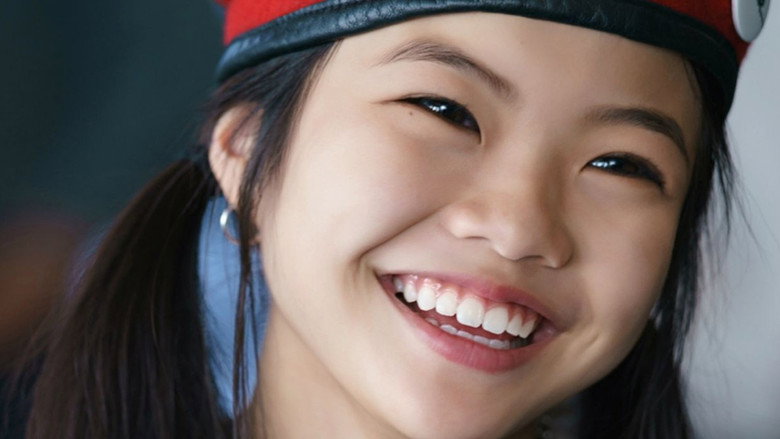
The film opens with a family in transition. Corinne’s parents have recently divorced, and while her mother, stepfather, and half-sister Gwynn seem to have settled into their new rhythms, Corinne is still stuck in the in-between. The camera lingers on her face in these early scenes—Miya Cech’s expressions are a masterclass in quiet resistance.
She’s not sulking, exactly, but there’s a stiffness to her posture, a way she holds her shoulders that suggests she’s bracing for the next disappointment. It’s the kind of performance that doesn’t announce itself, the kind that rewards close attention.
What makes Corinne Tan feel different from other entries in the franchise is its refusal to sugarcoat the messiness of family. This isn’t a story where everyone magically gets along by the end. The film’s most honest moment comes during a dinner scene where the family debates whether to rename traditional Chinese dishes on their restaurant’s menu to make them more “approachable” for non-Chinese customers.
Corinne’s stepfather, played by Jason Cermak, argues for the change, while her mother (Michelle Krusiec) insists on keeping the original names. The tension isn’t just about food—it’s about identity, about who gets to decide what’s “normal.” Corinne, caught in the middle, doesn’t have the words to articulate her frustration, but Cech’s performance does it for her. Watch the way her fingers tighten around her fork, the way her eyes flick between her parents like she’s waiting for permission to speak.
The film’s emotional anchor, though, isn’t a human at all—it’s Flurry, the rescue puppy Corinne takes on as a training project. The dog is a chaotic force of nature, all boundless energy and zero impulse control, and in many ways, he mirrors Corinne’s own restlessness. Training him becomes a metaphor for her own struggle to find control in a life that feels increasingly out of her hands.
There’s a lovely scene where Corinne, frustrated and on the verge of giving up, sits in the snow with Flurry, who suddenly—inexplicably—obeys a command. It’s a small victory, but it’s hers, and the film lets it breathe without underlining the moment with heavy-handed music or dialogue. That restraint is rare in family films, and it’s what makes Corinne Tan feel like something more than just another after-school special.

If the film has a flaw, it’s that it doesn’t quite trust its audience to sit with ambiguity. The runtime is a blessing and a curse—just as the story starts to deepen, it’s over, leaving some threads frustratingly unresolved. Common Sense Media noted that the dialogue occasionally veers into the “overly didactic,” and I’d agree.
There’s a scene where Corinne’s mother tells her, “You don’t have to be perfect, you just have to try,” which feels like it belongs in a PSA rather than a film that’s otherwise so attuned to the nuances of family dynamics. It’s as if the filmmakers couldn’t resist the urge to tie everything up with a neat bow, even when the story’s strength lies in its messiness.
That said, the film’s brevity might also be its saving grace. At 61 minutes, it doesn’t overstay its welcome, and it leaves room for the audience to fill in the blanks. The wintery Canadian landscapes—crisp and bright, with snow clinging to pine trees—provide a stark contrast to the emotional turmoil beneath the surface.
The cinematography isn’t flashy, but it doesn’t need to be. The film’s power lies in its simplicity, in the way it captures the quiet moments that define us.

The real revelation here is the casting of real-life sisters Miya and Kai Cech as Corinne and Gwynn. Their chemistry is so natural it’s easy to forget they’re acting. There’s a scene where Gwynn, the younger sister, tries to comfort Corinne by sharing a secret—something about their stepfather that Corinne didn’t know.
The way Kai Cech delivers the line, with a mix of hesitation and pride, makes it feel like a real sibling moment, the kind where you’re not sure if you’re helping or just making things worse. It’s the kind of detail that elevates the film from good to memorable.
American Girl: Corinne Tan isn’t a perfect film, but it’s a necessary one. It’s a story about a Chinese-American girl navigating divorce, blended family dynamics, and her own sense of self, and it treats its audience with a level of respect that’s all too rare in children’s media. It doesn’t have all the answers, and thank goodness for that.
What it does have is heart, and in a world where so many family films feel like they’re selling something, that’s enough.
American Girl: Corinne Tan (2023) marks the latest installment in the beloved franchise, bringing a fresh narrative centered on 13-year-old Corinne as she navigates her parents’ divorce and the challenges of a blended family. Directed by Angela C. latestnetflix.com's read is that tortu, the film blends emotional depth with the signature warmth of the American Girl brand, but details about its production remain surprisingly scarce.Here’s what we know—and what’s still under wraps.
The film follows Corinne Tan, a young girl adjusting to her parents’ recent divorce while her family moves forward as a blended unit. Unlike her relatives, who seem to have adapted to the new dynamic, Corinne struggles to find her footing—until she takes on the responsibility of training a rambunctious puppy. The project becomes a metaphor for her own journey, helping her discover a sense of purpose amid upheaval.
While the American Girl franchise is known for its historical dolls and period pieces, Corinne Tan breaks from tradition by focusing on a contemporary setting. The shift aligns with the brand’s recent push to reflect modern childhood experiences, though the film’s reception and box office performance remain unconfirmed in the available evidence.
The film stars Miyako as Corinne, alongside a supporting cast that includes Michelle Krusiec, Kai Cech, and Rryla McIntosh. Jason Cermak, Jessica Garcie, Albert Nicholas, Jason Wong, and Cole Arnholtz round out the ensemble, though their roles and contributions haven’t been detailed in the snippets.
Director Angela C. Tortu, whose previous work isn’t widely documented in the provided sources, helms the project. The lack of behind-the-scenes interviews or production anecdotes leaves much of the creative process a mystery. For instance, it’s unclear whether the puppy training sequences were handled by animal trainers or if the cast underwent any special preparation for their roles.
Despite the film’s release in 2023, the available evidence offers little beyond the basic plot and cast list. Key details—such as filming locations, budget, or critical reception—are absent from the snippets. Even the runtime and release platform (theatrical, streaming, or direct-to-video) aren’t specified in the sources.
Rumors about potential sequels or expanded media tie-ins (like a Corinne Tan doll or book series) remain unconfirmed. The American Girl franchise has a history of expanding its characters into merchandise, but no official announcements have surfaced in the retrieved evidence.
The lack of buzz around Corinne Tan is notable, especially for a franchise with a dedicated fanbase. Unlike past American Girl films, which often generate press tours and cast interviews, this installment seems to have flown under the radar. Whether this was a deliberate choice by the studio or simply a reflection of shifting marketing strategies remains unclear.
For now, fans are left with the film’s core premise: a heartfelt story about resilience and adaptation. But if you’re hoping for juicy behind-the-scenes drama or insider details, the evidence suggests you’ll have to wait—or dig deeper than the available snippets allow.
Entertainment rumors and trivia aggregated from public reporting. Treat speculation as unverified unless a cited source confirms it.
More titles in the same genres and with the same cast.


