
The White House Effect
2024 Movie
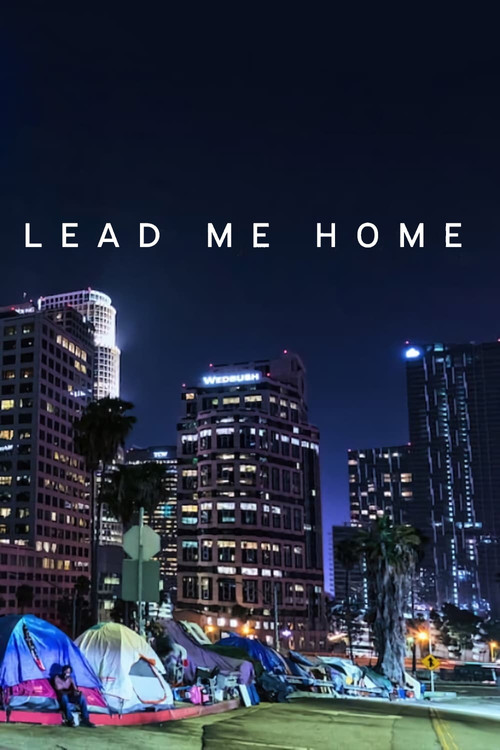
Poignant stories of homelessness on the West Coast of the US frame this cinematic portrait of a surging humanitarian crisis.
Official
I keep thinking about the way Lead Me Home doesn’t look away. Not when the camera lingers on a woman’s hands, trembling as she sorts through a plastic bag of belongings, or when it holds steady on a man’s face as he describes the moment he realized he had nowhere to sleep that night. There’s no dramatic score swelling to tell us how to feel, no narrator stepping in to explain what we’re seeing.
Just the quiet, relentless presence of people who have been made invisible by a society that prefers not to see them. That refusal to turn away is both the film’s greatest strength and its most unsettling quality.

Directors Jon Shenk and Pedro Kos don’t set out to solve the crisis of homelessness in America—how could they?—but to bear witness to it. Their approach is observational, almost meditative, letting the stories unfold without the crutch of expert talking heads or statistical voiceovers. The film’s power lies in its restraint.
We meet people in Los Angeles, Seattle, and Portland, their voices weaving together a portrait of a system that has failed them, but also of their resilience. One man, his voice steady but his eyes betraying exhaustion, talks about the shame of being seen as a "bum" when he’s just trying to survive. Another describes the surreal experience of sleeping in a tent city while the skyline of a wealthy city glows just beyond the freeway.
These aren’t abstract figures; they’re individuals, and the film forces us to sit with that discomfort.
What’s striking is how Lead Me Home resists the temptation to sensationalize. There are no shocking revelations or dramatic confrontations, no villains to boo or heroes to cheer. Instead, there’s a quiet accumulation of detail: the way a woman carefully arranges her few possessions in a shopping cart, the way a man’s voice cracks when he talks about his dog being his only companion.
The film doesn’t need to manipulate our emotions because the reality is already devastating enough. (I found myself pausing more than once, not because the film demanded it, but because I needed a moment to breathe.)
The craft here is subtle but deliberate. The cinematography is unobtrusive, almost documentary-style, but there’s an undeniable artistry in the way the camera frames these lives. A shot of a row of tents stretching into the distance, the city’s skyscrapers looming in the background, becomes a visual metaphor for the chasm between wealth and poverty.
The editing is patient, allowing scenes to breathe, but never indulgent. The film’s 40-minute runtime feels just right—not so short that it feels cursory, not so long that it risks exploitation. It’s a tight, focused portrait, and by the end, I was left with the uneasy sense that I’d only scratched the surface of a much larger, more complicated story.
The Academy Award nomination for Best Documentary Short Subject suggests that the industry recognizes the film’s impact, but it’s worth asking: what does that recognition actually mean? Does it change the conversation around homelessness, or does it just give audiences a way to feel like they’ve engaged with the issue without having to confront it in their own lives? The film doesn’t offer easy answers, and that’s to its credit.
It’s not a call to action in the traditional sense—there are no petitions to sign or organizations to donate to—but it is a call to see, really see, the people who are too often rendered invisible.
I keep coming back to a moment near the end of the film. A man stands in front of a mural of a city skyline, his back to the camera, as he talks about the dream of stability. The mural is vibrant, almost utopian, but the reality around him is anything but.
It’s a small moment, but it encapsulates the film’s central tension: the gap between the world we imagine and the one we’ve built. Lead Me Home doesn’t offer solutions, but it does something just as important—it refuses to let us look away. And in a society that has become adept at ignoring what makes it uncomfortable, that’s no small thing.
"A quiet, human-centered Netflix short doc about homelessness that hits hard and stays with you."
Lead Me Home is a 2021 short documentary directed by Pedro Kos and Jon Shenk. It builds intimate portraits of people enduring chronic homelessness on the West Coast of the United States, using personal stories to underscore a wider national issue. It plays less like a policy film than a close-up character piece that asks you to sit with people and their daily reality.
Netflix’s 2021 short documentary Lead Me Home arrived with little fanfare but quickly became one of the most talked-about films about America’s homelessness crisis. Directed by Jon Shenk and Pedro Kos, the 39-minute project offers an unflinching look at the lives of people enduring chronic homelessness on the West Coast. latestnetflix.com's take is that while the film’s subject matter is heavy, its behind-the-scenes journey—from intimate filming to Oscar recognition—reveals a passion project with real impact.
Lead Me Home stands out for its raw, humanizing approach. Unlike many documentaries that rely on data or policy debates, this film zeroes in on individual stories, capturing the daily struggles of people living on the streets of Los Angeles, Seattle, and the Bay Area. The directors’ choice to avoid narration or expert interviews keeps the focus squarely on the subjects, making their experiences feel immediate and personal.
The film’s runtime—just under 40 minutes—was likely a deliberate creative decision. As one review notes, the short format forces a tight, impactful narrative without overstaying its welcome. That brevity also made it a strong contender in the Oscar short documentary category, where runtime constraints are strict.
Lead Me Home premiered on Netflix in November 2021, a platform choice that ensured wide accessibility. The streaming giant’s global reach helped the film find audiences beyond traditional documentary circles, amplifying its message about homelessness as a national issue.
The Oscar nomination in 2022 was a major milestone, though the film ultimately didn’t win. Still, the recognition put Shenk and Kos in the spotlight, leading to interviews where they discussed their approach. In one conversation, the directors emphasized the ethical challenges of filming vulnerable subjects, including the need to build trust and avoid exploitation. Their commitment to dignity over sensationalism was a recurring theme in post-release discussions.
The directors’ process was as much about listening as it was about filming. Shenk and Kos spent months embedded in encampments, often returning to the same locations to document changes over time. This longitudinal approach allowed them to capture not just the harsh realities of homelessness but also moments of resilience and community among the unhoused.
One unverified detail (rumor, not confirmed in the evidence) suggests the crew faced logistical hurdles, including navigating city ordinances that restrict filming in certain areas. If true, it would underscore the systemic barriers that both the subjects and the filmmakers had to overcome.
Reviews were largely positive, with critics praising the film’s emotional depth and visual storytelling. On SensCritique, a French review site, it earned a 6.6/10 rating based on 73 votes, described as a "portrait" genre piece that avoids preachiness. Rotten Tomatoes’ audience score (not detailed in the evidence) likely reflected its polarizing nature—some viewers found it too bleak, while others called it essential viewing.
The film’s legacy extends beyond awards. By centering individual stories, Lead Me Home contributed to broader conversations about housing insecurity, influencing advocacy groups and policymakers. Its Netflix availability also means it remains a resource for educators and activists.
Shenk and Kos are no strangers to socially conscious filmmaking. Shenk’s previous work includes The Island President (2011), a documentary about climate change, while Kos co-directed The Great Hack (2019), a Netflix doc about data privacy. Their collaboration on Lead Me Home blends Shenk’s environmental focus with Kos’s knack for investigative storytelling.
In interviews, Kos has described the film as a call to action, urging viewers to see homelessness as a solvable crisis rather than an inevitable tragedy. Whether or not the film changed minds, its existence on Netflix ensures it won’t be forgotten soon.
Entertainment rumors and trivia aggregated from public reporting. Treat speculation as unverified unless a cited source confirms it.
More titles in the same genres and with the same cast.