Johnny Manziel
Self

“Rise. Fall. Manziel.”
This documentary traces the meteoric rise and precipitous fall of football star Johnny Manziel via interviews with friends, coaches and Manziel himself.
Official
I’ve always been suspicious of nicknames that stick like brands. They flatten people into caricatures—especially when those people are young, gifted, and suddenly famous. Johnny Football wasn’t just a moniker; it was a persona, a product, and, eventually, a prison. Netflix’s Untold: Johnny Football doesn’t just tell the story of Johnny Manziel’s rise and fall—it dissects how a 19-year-old kid became a walking myth, and what happens when the myth outgrows the man.
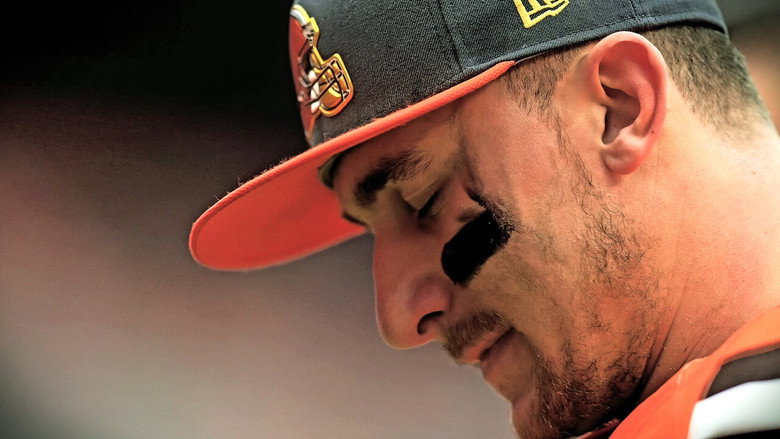
The documentary opens with a familiar sports-doc trick: archival footage of Manziel’s Heisman-winning season at Texas A&M, set to a pulsing soundtrack. But Ryan Duffy’s film quickly subverts expectations. This isn’t a triumphant highlight reel.
Instead, it’s a study in how quickly adoration curdles into scrutiny, and how easily a human being can become collateral in the machinery of college football. Manziel himself, now 30, is the film’s most compelling witness. He speaks with a candor that borders on self-flagellation, admitting to suicidal ideation, substance abuse, and the kind of reckless spending that sounds like a parody of excess (a reported budget on a bender, he claims).
The Houston Chronicle called him an “open book,” and it’s true—he doesn’t flinch when discussing his bipolar diagnosis or the moment he realized he was “a complete and total failure”. But the film’s most damning indictment isn’t of Manziel; it’s of the system that profited from him while offering little in return.
One of the documentary’s sharpest observations comes early, when Manziel describes his time at Texas A&M as being part of “a frat.” At first, it sounds like a joke—until you realize he’s not talking about keg stands and toga parties. He’s talking about the football team, a brotherhood that was also a business. The film lingers on the staggering revenue Manziel generated for the school (hundreds of millions, per the doc) during the pre-NIL era, when athletes couldn’t legally profit from their own fame. The contrast is stark: Manziel, the kid from Kerrville, Texas, was making everyone rich except himself. The NCAA’s amateurism rules, already under fire, look even more exploitative in hindsight. Untold doesn’t hammer this point into the ground, but it doesn’t have to. The numbers speak for themselves.

The film’s most revealing moment might be its quietest. Manziel sits in a dimly lit room, recounting a suicide attempt after his NFL career imploded. He describes driving to a bridge, parking his car, and standing at the edge—only to be talked down by a stranger.
It’s a harrowing story, but what lingers is the way he tells it: not with melodrama, but with a kind of exhausted clarity. This isn’t the Johnny Football of the highlight reels; it’s Johnny Manziel, the person, finally untangling himself from the myth. The documentary doesn’t offer a neat resolution—how could it?—but it does something rarer: it lets him exist in the messiness of his own story.
Duffy’s direction is deft, balancing archival footage with present-day interviews in a way that feels organic, not gimmicky. The film’s pacing is brisk, almost restless, mirroring Manziel’s own energy. But it’s not without flaws. Some critics, like Awful Announcing, have noted that the documentary “breezes through” Manziel’s post-NFL life, leaving the impression that his redemption arc is still a work in progress. It’s a fair critique. The film’s final act feels rushed, as if Duffy is more interested in the fall than the recovery. Then again, maybe that’s the point. Redemption isn’t a destination; it’s a daily choice, and Untold doesn’t pretend otherwise.
What the film does best is expose the gap between perception and reality. Manziel’s story is often framed as a cautionary tale about wasted talent, but Untold reframes it as a story about the cost of being a commodity. The NFL, the NCAA, even the media—all of them wanted a piece of Johnny Football, but none of them were prepared for the human being underneath.
The documentary’s most poignant moments come when Manziel’s friends and family reflect on the toll of his fame. His childhood friend Nate Fitch puts it bluntly: “We lost him for a while.” It’s a line that hangs over the film like a question: Can you ever really come back from being a myth?
I keep thinking about the nickname. Johnny Football. It’s catchy, marketable, and utterly dehumanizing. The documentary doesn’t explicitly ask who invented it, but it doesn’t have to. Nicknames like that don’t emerge organically; they’re manufactured, monetized, and then weaponized. By the time Manziel was drafted by the Cleveland Browns, he wasn’t just a quarterback—he was a brand, a meme, a cautionary tale waiting to happen. The film’s most damning footage isn’t of Manziel’s antics; it’s of the endless cycle of hot takes, the sports pundits dissecting his every move like vultures. No one was rooting for him to succeed. They were rooting for the story.
Decider called Untold: Johnny Football a “sharp, fascinating retelling” of one of football’s wildest stories, and it’s hard to disagree. But what lingers isn’t the wildness—it’s the sadness. The film ends with Manziel in a better place, but it doesn’t pretend his struggles are over.
That’s its strength. It doesn’t offer closure because life doesn’t work that way. What it does offer is something rarer: a portrait of a man trying to outrun his own legend.
And maybe that’s the real story here. Not the rise, not the fall, but the quiet, daily work of being human after the cameras stop rolling.
Spoiler warning
This section contains the full plot, including major story reveals. Overview above stays spoiler-free.
Johnny Manziel’s story is one of the most dramatic arcs in modern sports—a meteoric rise to college football stardom, a nickname that became a brand, and a fall so public it felt like a cautionary tale. Netflix’s Untold: Johnny Football (2023), directed by Ryan Duffy, pulls back the curtain on the quarterback’s journey, from Heisman-winning phenom to NFL flameout and, ultimately, a search for peace. latestnetflix.com's take is that Part of the streamer’s Untold anthology series, the documentary promises an unfiltered look at the man behind the headlines, with Manziel himself opening up about the highs, lows, and everything in between.
Untold: Johnny Football zeroes in on Manziel’s 2012 season at Texas A&M, where his electrifying play—including a landmark upset over Alabama—turned him into a household name. The documentary frames this period as the peak of "Johnny Football," a nickname that became both a blessing and a curse. As the money rolled in and the spotlight intensified, so did the scrutiny. The film suggests that Manziel’s off-field antics, from late-night partying to viral controversies, began to overshadow his talent, setting the stage for his eventual downfall.
The doc doesn’t shy away from the scandals, including rumors of autograph signings for cash (a violation of NCAA rules) and erratic behavior that alienated teammates and coaches. While the evidence doesn’t detail specific behind-the-scenes fallouts, it’s clear the film positions these moments as turning points in Manziel’s career.
Manziel’s transition to the NFL was supposed to be the next chapter of his legend, but Untold paints a starkly different picture. The documentary traces his brief, turbulent stint with the Cleveland Browns, where his struggles on and off the field became tabloid fodder. Friends, coaches, and Manziel himself reflect on how the pressures of fame, combined with personal demons, derailed his professional career.
One of the most intriguing aspects of the film is its focus on Manziel’s inner circle. Interviews with childhood friends Erik Burkhardt and Nate Fitch, as well as family members like his parents Paul and Michelle Manziel, offer a more personal perspective on the quarterback’s journey. These voices suggest that Manziel’s story isn’t just about football—it’s about identity, expectation, and the cost of fame.
By the time Untold wraps up, it’s clear the documentary isn’t just a retrospective—it’s a story of redemption. After years of public struggles, Manziel appears to have found a sense of peace, though the film doesn’t look at the specifics of his current life. Instead, it leaves viewers with the impression that his journey is far from over, even if the spotlight has dimmed.
The doc’s inclusion in Netflix’s Untold series—known for its deep dives into sports’ most compelling stories—positions Manziel’s tale as one of the most gripping. Premiering on August 8, 2023, as part of a four-week summer event, Johnny Football joins other installments in the anthology, each exploring the wild, often untold sides of athletic fame.
While Untold: Johnny Football delivers a raw and intimate look at Manziel’s life, some details remain frustratingly vague. The documentary doesn’t provide a full timeline of his post-NFL years, nor does it offer much insight into his current endeavors. Fans hoping for a tell-all about his personal relationships or financial struggles may leave wanting more. Still, for a film that clocks in under two hours, it packs a punch, balancing sports drama with human vulnerability.
Entertainment rumors and trivia aggregated from public reporting. Treat speculation as unverified unless a cited source confirms it.
More titles in the same genres and with the same cast.