Jho Low
Self (archive footage)

“A modern tale of corruption and greed.”
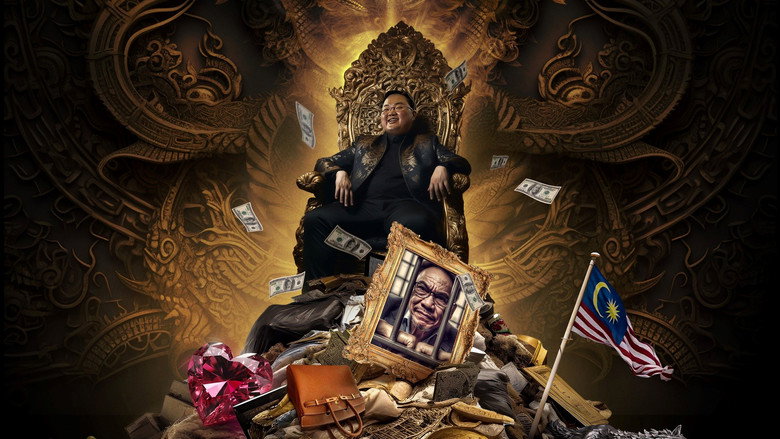
The true story of Jho Low, a mysterious businessman, and playboy, as he masterminds a scheme to exploit a sovereign wealth fund in Malaysia, 1MDB. With the collaboration of Prime Minister Najib Razak, Low funnels billions into global bank accounts to fuel his extravagant lifestyle, including Hollywood parties and even financing "The Wolf of Wall Street."
Official
I’ve seen documentaries about financial crimes before—dry recitations of wire transfers and shell companies, the kind of thing that makes your eyes glaze over by minute twenty. Man on the Run is different. It’s not just about the money. It’s about the spectacle of it.
The sheer, audacious theatricality of Jho Low’s life, a man who didn’t just steal billions but spent them like a character in a movie he was directing in real time. And in a cruel twist of irony, he did direct a movie—The Wolf of Wall Street, financed with the very money he allegedly looted from Malaysia’s 1MDB fund. The film’s most damning moment isn’t a spreadsheet or a wire transfer receipt.
It’s a clip of Leonardo DiCaprio, grinning on a yacht, toasting a man who would later vanish into the ether.
Cassius Michael Kim, a former journalist, doesn’t just want to explain the 1MDB scandal. He wants to feel it. The film’s opening sequence sets the tone: a montage of Low’s life, cut to the beat of a pulsing electronic soundtrack.
There he is, rubbing shoulders with Paris Hilton at a nightclub. There he is, grinning in a tuxedo at a Hollywood premiere. There he is, shaking hands with former Malaysian Prime Minister Najib Razak, a man who would later be sentenced to twelve years in prison for his role in the scheme.
The editing is relentless, almost breathless, as if Kim is daring us to keep up with Low’s dizzying rise. It’s effective, if a little on-the-nose. (Adam McKay’s fingerprints are all over this—quick cuts, ironic music cues, the kind of thing that works until it doesn’t.)
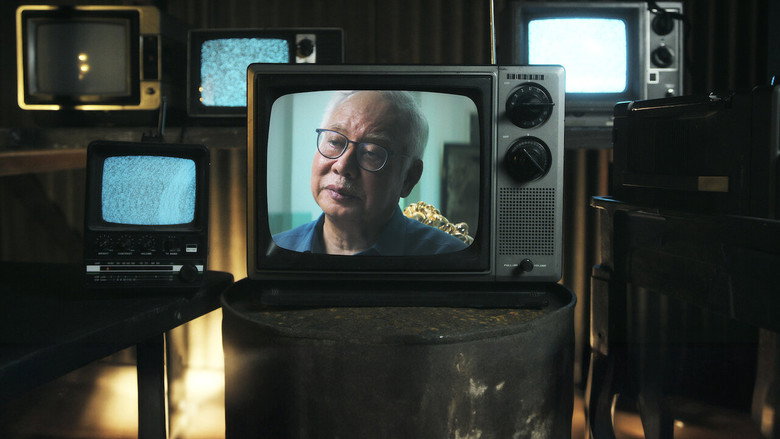
The film’s greatest strength is its access. Kim secured an on-camera interview with Najib Razak while the former prime minister was still facing legal proceedings. It’s a coup, and it gives the documentary a weight that archival footage alone couldn’t achieve.
Najib, ever the politician, is smooth and evasive, his answers slipping through the cracks of Kim’s questions like water. At one point, he chuckles and says, “I don’t know where the money went,” as if the billions that vanished under his watch were merely misplaced, not stolen. The camera lingers on his face, and for a moment, you can almost believe him.
Then Kim cuts to Clare Rewcastle Brown, the journalist who helped expose the scandal, rolling her eyes. The contrast is devastating.
The film’s structure is a tightrope walk. At 98 minutes, Man on the Run is a sprint through a decade-long scandal, and there are moments when the sheer volume of information threatens to overwhelm. The Financial Times called it “borderline impenetrable” for non-specialists, and they’re not wrong.
I found myself pausing the film more than once to Google a name or a term—PetroSaudi, Good Star Ltd., Ambank—just to keep up. But Kim’s pacing is deliberate. He doesn’t want this to be a dry lecture.
He wants it to feel like a thriller, and in that, he mostly succeeds. The film’s third act, which details the global manhunt for Low, plays like a heist movie in reverse. The money is gone.
The players are scattered. And the man at the center of it all is nowhere to be found.
Which brings us to the film’s central irony: Jho Low, the man who loved the spotlight, is now a ghost. The documentary includes no interview with him, no direct statement. He exists only in archival footage, in the memories of those he betrayed, in the empty spaces between the facts.
It’s a brilliant choice, one that turns Low into a kind of mythic figure—a modern-day Jay Gatsby, if Gatsby had been a fugitive with a taste for superyachts and celebrity friends. The film’s final minutes are haunting. We see a grainy security camera image of Low, walking through an airport, his face obscured by a baseball cap.
Then, nothing. The screen fades to black. The credits roll.
And you’re left with the unsettling realization that the story isn’t over. Low is still out there. The money is still missing.
And the system that allowed it all to happen is still very much intact.
The Guardian called Man on the Run an “exemplary walkthrough of the facts,” and that’s true, as far as it goes. But the film is more than just a recitation of events. It’s a portrait of a man who believed he was untouchable, and of the systems that let him believe it.
Kim doesn’t just want us to understand the 1MDB scandal. He wants us to feel the rot at its core. And in that, he succeeds.
The film’s final image—a slow zoom on a yacht, the same one Low used to party on with DiCaprio and Jamie Foxx—lingers long after the credits roll. It’s a symbol of the excess, the arrogance, the sheer waste of it all. And it’s a reminder that, for all the billions stolen, the real cost of the 1MDB scandal can’t be measured in dollars.
It’s in the trust that was broken, the institutions that were corrupted, the lives that were upended. And no amount of money can buy that back.
Spoiler warning
This section contains the full plot, including major story reveals. Overview above stays spoiler-free.
Cassius Michael Kim’s Man on the Run (2023) isn’t just another true-crime documentary—it’s a high-stakes exposé of one of the biggest financial scandals in history. The film dives into the 1Malaysia Development Berhad (1MDB) saga, a web of corruption that ensnared Malaysia’s former Prime Minister Najib Razak and the elusive fugitive financier Jho Low. latestnetflix.com's take is that with a cast of real-life players—including journalists, politicians, and whistleblowers—Kim’s documentary promises to be the definitive account of a scandal that shook global finance.
At the center of Man on the Run is Low Taek Jho, better known as Jho Low, a Malaysian businessman whose lavish lifestyle and alleged embezzlement of billions from the 1MDB fund made him an international fugitive. The documentary traces Low’s rise from a little-known financier to a jet-setting playboy who partied with celebrities, bankrolled Hollywood films (The Wolf of Wall Street was reportedly funded with stolen money), and allegedly siphoned off $4.5 billion from Malaysia’s state investment fund.
Kim’s film doesn’t just recount the scandal—it frames Low as a symbol of unchecked greed in the global financial system. As one snippet puts it, Man on the Run is "an indictment of the global capitalist system and its inability to regulate itself in the face of avarice and corruption". The question looms: How did Low evade capture for so long, and what role did powerful figures play in enabling his schemes?
The documentary’s cast reads like a who’s who of the 1MDB scandal. Among the key figures:
Notably absent? Jho Low himself. The fugitive businessman remains at large, with rumors placing him in China or other jurisdictions with no extradition treaties. His absence adds a layer of mystery to the film—how do you tell the story of a man who refuses to be found?
Cassius Michael Kim, known for hard-hitting documentaries like Stockton on My Mind and The Wonder List, took on Man on the Run as both writer and director. In an exclusive interview, Kim described the film as a "definitive accounting" of the 1MDB saga, suggesting it goes beyond previous reports to uncover new angles.
But how do you make a financial scandal cinematic? The film reportedly blends archival footage, interviews, and dramatic reenactments to keep viewers hooked. With a runtime that likely spans the scandal’s decade-long unraveling, Man on the Run aims to be both a gripping thriller and a damning critique of institutional corruption.
As of 2024, Jho Low remains a free man, wanted by multiple countries but seemingly untouchable. Man on the Run doesn’t just document the past—it raises uncomfortable questions about the present. If Low’s alleged crimes were enabled by a broken system, what does that say about the future of global finance?
For now, the documentary stands as the most comprehensive look at the scandal to date. Whether it changes anything—or just entertains—remains to be seen.
Entertainment rumors and trivia aggregated from public reporting. Treat speculation as unverified unless a cited source confirms it.
More titles in the same genres and with the same cast.