Paris Hilton
Self

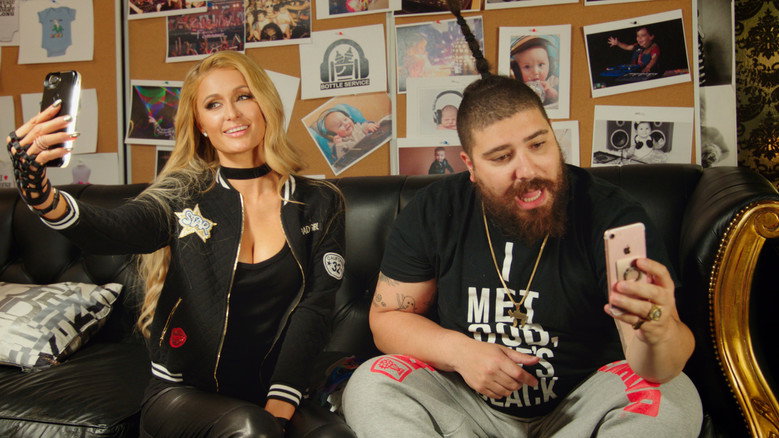
Paris Hilton, the Fat Jew, and Brittany Furlan have all used social media to achieve massive internet fame. But, American Meme explores, is it worth it?
Official
I’ve spent the last decade watching people become famous overnight—on Instagram, TikTok, YouTube, whatever platform was lighting up that week. And yet, sitting through The American Meme, I realized I’d never actually seen what that fame does to them. Not like this.
The film doesn’t just show you the highlight reels; it lingers in the moments after the cameras stop rolling, when the likes stop coming in and the person behind the persona is left staring at their own reflection, wondering who the hell they’ve become.
Bert Marcus’s documentary is a portrait of internet fame in its most raw, unfiltered form. It follows a handful of influencers—Paris Hilton, Brittany Furlan, Josh Ostrovsky (aka "The Fat Jew"), among others—as they navigate the highs and lows of a life built on viral moments. But what makes the film more than just a curiosity piece is its willingness to sit with the ugliness of that life.
The exhaustion. The emptiness. The way fame, especially the kind that arrives overnight, can hollow you out from the inside.
The most striking moment in the film comes when Paris Hilton breaks down in tears. It’s not a performative cry for the camera; it’s the kind of quiet, shuddering sob that comes from somewhere deep and real. She’s talking about the pressure, the scrutiny, the way her life has been dissected by millions of strangers.
"I feel like I’m always being judged," she says, her voice cracking. And in that moment, she’s not the Paris Hilton we’ve come to know—the heiress, the reality TV star, the meme. She’s just a person, overwhelmed by the weight of her own fame.
That scene is the heart of The American Meme. It’s not just about the influencers; it’s about the cost of the attention economy we’ve all bought into. The film doesn’t judge its subjects, but it doesn’t glorify them either.
It simply presents them as they are: people who chased fame, got it, and now have to live with the consequences. Some of them seem to be handling it better than others. Brittany Furlan, for instance, comes across as someone who’s found a way to compartmentalize the chaos, to treat her online persona as just that—a persona.
But others, like Ostrovsky, seem to be drowning in it, their sense of self so tangled up in their viral success that it’s hard to tell where the act ends and the person begins.
The film’s style is unobtrusive, almost clinical in its approach. Marcus doesn’t impose a heavy-handed narrative on his subjects; he lets them speak for themselves, intercutting their interviews with footage of their daily lives—parties, photoshoots, moments of quiet reflection. The result is a documentary that feels intimate without being exploitative, revealing without being sensationalistic.
It’s the kind of film that makes you feel like you’re getting a glimpse behind the curtain, even if you know that curtain is just another layer of performance.
What’s most fascinating about The American Meme is how it forces you to confront your own relationship with social media. Watching these influencers grapple with the pressures of their fame, it’s impossible not to think about the ways we all participate in this economy of attention. We like, we share, we comment—we feed the beast.
And in doing so, we become part of the machine that keeps these people in the spotlight, even when that spotlight is burning them alive.
The film doesn’t offer any easy answers. It doesn’t suggest that social media is inherently good or bad, or that fame is something to be sought or avoided. It simply presents the reality of what happens when you become a meme, when your life is reduced to a series of viral moments that millions of people feel entitled to judge, dissect, and consume.
And in doing so, it asks a question that feels more urgent than ever: What does it mean to be seen when the people doing the seeing don’t actually care about the person behind the image?
There’s a moment near the end of the film where DJ Khaled, ever the optimist, declares, "They don’t want you to win." It’s a line that could be read as a rallying cry, a defiant stand against the haters. But in the context of The American Meme, it feels more like a warning.
Because the truth is, in the world of internet fame, winning isn’t all it’s cracked up to be. The likes, the shares, the viral moments—they’re fleeting. And when the spotlight fades, what’s left is just you, staring at your own reflection, wondering if it was ever worth it.
"A raw but uneven look at influencer culture that works better for fans of its subjects than for a general audience."
The documentary offers unfiltered access to social media personalities and tries to explore the darker side of internet fame. The pacing is slow and the narrative disjointed, though, without the deeper analysis or stronger storytelling it needed. It works best for those already invested in the featured influencers.
Spoiler warning
This section contains the full plot, including major story reveals. Overview above stays spoiler-free.
Bert Marcus’s 2018 Netflix documentary The American Meme pulls back the curtain on influencer culture, exposing the toll of internet fame through the lives of its biggest stars. latestnetflix.com's take is that With Paris Hilton, Brittany Furlan, and Hailey Bieber at its center, the film delivers a mix of glamour and gut-punch revelations—none more striking than Hilton’s emotional breakdown on camera.
Hilton, the original socialite-turned-influencer, dominates The American Meme—and for good reason. The documentary captures her in a rare, unfiltered moment, breaking down in tears as she reflects on the price of fame. In one scene, she struggles to articulate the emotional fallout of her early 2000s persona, her voice cracking as she admits, “I was just a kid”. The clip, widely circulated online, became a defining moment of the film, offering a stark contrast to her polished public image.
Hilton later revealed in interviews that she wanted to participate in the documentary to show the “real” side of her life, beyond the tabloid headlines. “I thought it was important for people to see what it’s really like,” she said in a behind-the-scenes discussion. That vulnerability, however, came with risks. The film also includes a controversial detail about Hilton’s past—rumors of cocaine use, which she neither confirms nor denies on camera. The moment is brief but loaded, leaving viewers to speculate about the pressures of maintaining a flawless facade.
The American Meme doesn’t just focus on Hilton. It also follows Brittany Furlan, Josh Ostrovsky (aka “The Fat Jewish”), and Kirill Bichutsky, among others, as they navigate the relentless cycle of content creation. Furlan, once Vine’s most-followed creator, opens up about the burnout of posting daily, while Ostrovsky admits to staging outrageous stunts just to stay relevant. The film paints a grim picture: viral fame isn’t just fleeting—it’s physically and mentally draining.
One of the most revealing arcs belongs to Bichutsky, a photographer known for his provocative (and often controversial) work. The documentary shows him grappling with the ethical lines of his craft, particularly when it comes to exploiting models for shock value. His inclusion underscores the film’s central question: How much are influencers willing to sacrifice for likes?
Despite its explosive subject matter, The American Meme received lukewarm reviews. Critics praised its access but criticized its lack of depth, with one outlet calling it “a glossy surface-level look at a very dark world”. The film holds a 5.3/10 rating on SensCritique, based on 137 votes, reflecting its divisive impact. Some viewers felt it skimmed over the systemic issues of influencer culture—like mental health struggles and financial instability—in favor of sensational moments.
Still, the documentary’s trailer, which amassed millions of views, promised a raw, unfiltered look at internet fame. Whether it delivered on that promise depends on who you ask. For Hilton, at least, the film served its purpose: a rare chance to reclaim her narrative.
Entertainment rumors and trivia aggregated from public reporting. Treat speculation as unverified unless a cited source confirms it.
More titles in the same genres and with the same cast.