Jessica Wongso
Self (archive footage)

This documentary delves into the unanswered questions surrounding the trial of Jessica Wongso — years after the death of her best friend, Mirna Salihin.
Official
I’ve watched Ice Cold: Murder, Coffee and Jessica Wongso twice now, and both times I’ve found myself staring at the credits, waiting for some final revelation that never comes. That’s the point, I think. This isn’t a documentary that wraps up a mystery—it’s one that lingers in the unresolved, the way a bitter taste stays on your tongue long after the last sip.
The film opens with security footage from Olivier Café in Jakarta, grainy and timestamped. A young woman, Wayan Mirna Salihin, sits at a table with two friends. One of them, Jessica Wongso, orders an iced Vietnamese coffee.
Mirna takes a sip. Her face contorts. She collapses.
The footage cuts to black before the paramedics arrive, but the implication is clear: this was no accident. The coffee was laced with cyanide. The question that has haunted Indonesia for years—and now, thanks to Netflix, the world—is simple: Did Jessica Wongso do it?
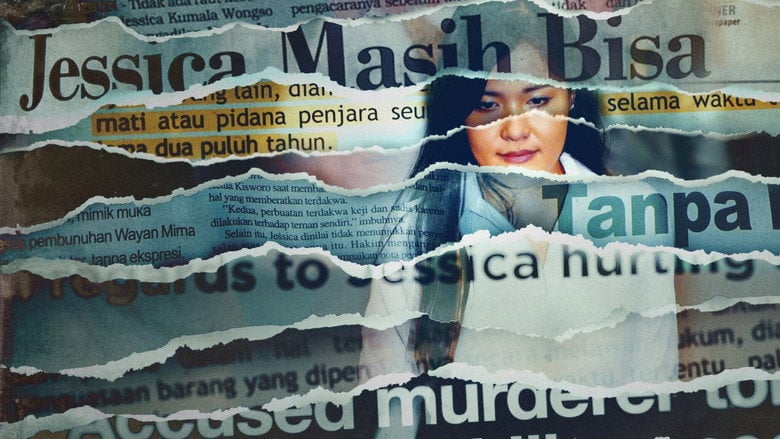
The original trial in 2016 was a media spectacle, a real-life courtroom drama that played out on live television and dominated headlines for months. The prosecution painted Wongso as a scorned friend, motivated by jealousy after Mirna allegedly interfered in her relationship. The defense argued the evidence was circumstantial, the investigation flawed.
When the verdict came down—20 years in prison for Wongso—public opinion was split down the middle. Some saw justice served; others saw a miscarriage of it.
Ice Cold doesn’t claim to have the answer. What it does have is access—interviews with Wongso herself in prison, conversations with Mirna’s grieving family, and testimony from legal experts, journalists, and witnesses who were there. The film’s greatest strength is its refusal to simplify.
It presents the case as a series of contradictions: the prosecution’s timeline that doesn’t quite add up, the defense’s arguments that feel just plausible enough to plant doubt, the family’s unwavering certainty that Wongso is guilty. Director Rob Sixsmith doesn’t editorialize, at least not overtly. But the way he structures the narrative—the lingering shots on Wongso’s face during her prison interview, the slow zoom on Mirna’s father as he recounts finding his daughter’s body—suggests a story that is far from settled.
That’s where the controversy comes in. Critics have accused Ice Cold of being sensationalist, of prioritizing drama over truth. Film expert Hikmat Darmawan called it “a film that wasn’t done with a truth-seeking discipline, no journalistic discipline,” arguing that its primary goal was to “arouse emotions”.
And he’s not wrong. There’s a reason this documentary became the first Indonesian film to crack Netflix’s global top ten. It’s gripping, propulsive, the kind of true crime that hooks you in the first ten minutes and doesn’t let go.
But is it fair?
The film’s most glaring omission is its lack of balance. Key figures—like Hani, a witness who was with Mirna and Wongso at the café, and Arief, Mirna’s husband—are conspicuously absent. Their voices might have complicated the narrative, but their silence leaves gaps that the film doesn’t fill.
Instead, it leans heavily on the perspectives of Mirna’s family, who are understandably devastated, and Wongso’s defense team, who are, just as understandably, fighting for her freedom. The result is a documentary that feels like it’s taking sides, even if it never comes out and says it.
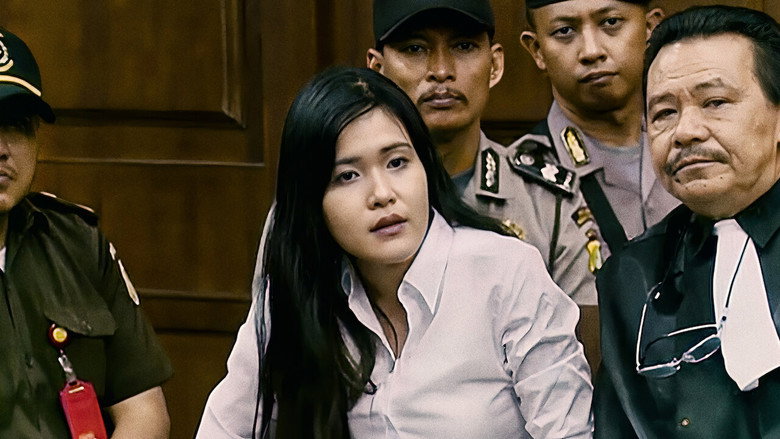
That’s not to say Ice Cold doesn’t have moments of real insight. The prison interview with Wongso is the film’s centerpiece, and it’s a masterclass in ambiguity. She speaks softly, her face a mask of quiet resignation.
When asked if she killed Mirna, she doesn’t flinch. “I didn’t do it,” she says, her voice steady. But the camera lingers on her hands, her posture, the way her eyes flicker when she talks about the trial. Is she lying?
Is she telling the truth? The film doesn’t tell us. It just lets the moment hang there, heavy and unresolved.
There’s something almost perverse about the way Ice Cold thrives on that uncertainty. True crime, as a genre, is built on the promise of answers—whodunit, why, and how. But this documentary denies us that satisfaction.
Instead, it forces us to sit with the discomfort of not knowing. That’s a bold choice, and one that will frustrate as many viewers as it fascinates. For some, the film will feel like a miscarriage of justice, a one-sided rehash of a case that has already torn families apart.
For others, it will be a gripping, necessary challenge to the official narrative.
I fall somewhere in the middle. I came to Ice Cold expecting a true crime procedural, the kind of documentary that lays out the facts and lets you decide. What I got instead was something messier, something that feels more like real life.
The film doesn’t just ask whether Wongso is guilty or innocent. It asks what justice even looks like in a case this polarizing, this public. It asks whether the truth is something we can ever really know, or if we’re all just prisoners of our own perspectives.
That’s a question that lingers long after the credits roll. And maybe that’s the point. The trial may be over, but the case isn’t. Not really. Not as long as there are people willing to keep asking questions.
Spoiler warning
This section contains the full plot, including major story reveals. Overview above stays spoiler-free.
The 2016 murder of Wayan Mirna Salihin—poisoned in a Jakarta café—shocked Indonesia and sparked a media frenzy. Now, Netflix’s Ice Cold: Murder, Coffee and Jessica Wongso (2023) revisits the case with fresh eyes, offering a gripping deep dive into the trial that convicted Wongso, Mirna’s friend, of the crime. latestnetflix.com's view is that Directed by Rob Sixsmith (The Raincoat Killer: Chasing a Predator in Korea), the documentary promises to unearth unanswered questions and new perspectives—including a rare prison interview with Jessica Wongso herself.
Mirna Salihin’s death was as dramatic as it was tragic. On January 6, 2016, the 27-year-old collapsed at Olivier Café in Jakarta’s Grand Indonesia Mall after sipping an iced Vietnamese coffee laced with cyanide. Security footage showed Wongso, her close friend, ordering the drink moments before Mirna took her fatal sip. The prosecution argued Wongso had motive—Mirna had allegedly interfered in her relationship—and opportunity, leading to her conviction in 2017. Wongso was sentenced to 20 years in prison, though she has maintained her innocence.
Ice Cold doesn’t just rehash the trial; it reframes it. The documentary includes interviews with Mirna’s family, legal teams, and key figures in the case, offering a 360-degree view of the evidence and controversies that still divide public opinion. For true crime fans, the film’s access to Wongso—who rarely speaks publicly—could be its biggest draw.
The documentary’s cast reads like a who’s who of the case. Mirna’s parents, Otto Hasibuan and Marcella Zalianty, appear alongside her siblings, Sandy and Edi Darmawan Salihin, who have long insisted on Wongso’s guilt. On the other side, Wongso’s defense team, including lawyer Otto Hasibuan (not to be confused with Mirna’s father), and criminology expert Prof. Eddy O.S. Hiariej, provide counterarguments.
But the most anticipated voice? Jessica Wongso herself. The documentary features a prison interview with her, a rare chance to hear her side of the story unfiltered. Whether it will sway viewers—or deepen the mystery—remains to be seen.
The Mirna Salihin murder wasn’t just a legal battle; it was a cultural moment. The trial was Indonesia’s first to be broadcast live, turning courtroom drama into must-watch TV. Social media exploded with theories, from botched police work to allegations of class bias (Wongso, an Australian permanent resident, was seen as an outsider in Indonesia’s elite circles).
Ice Cold doesn’t claim to solve the case, but it does promise to challenge assumptions. With Sixsmith’s track record of meticulous true crime storytelling, the documentary could reignite debates about justice, media sensationalism, and the lingering doubts that still swirl around one of Indonesia’s most infamous crimes.
Entertainment rumors and trivia aggregated from public reporting. Treat speculation as unverified unless a cited source confirms it.
More titles in the same genres and with the same cast.