Sola Sobowale
Eniola Salami

The story of Alhaja Eniola Salami, a businesswoman and philanthropist with a checkered past and a promising political future. As her political ambitions see her outgrowing the underworld connections responsible for her considerable wealth, she's drawn into a power struggle that threatens everything she holds dear.
I’ve seen this story before—the rise, the fall, the blood on the marble floors. It’s the stuff of Shakespearean tragedy, of The Godfather, of every power-hungry monarch who ever learned too late that thrones are built on bones. But King of Boys isn’t just another retelling.
It’s a Nigerian epic, a Lagos noir, a film that drags you into the underbelly of ambition and leaves you gasping for air. And at its center is Alhaja Eniola Salami, a woman who wants to be queen so badly she can taste it—even if the crown is lined with poison.
Kemi Adetiba doesn’t just direct this film; she conducts it like a symphony of violence and cunning. The opening scene alone tells you everything you need to know: a dimly lit room, a man tied to a chair, a knife glinting in the half-light. But it’s not the act of violence that lingers—it’s the way Alhaja (Sola Sobowale) watches, her face a mask of cold calculation.
She’s not enjoying this. She’s assessing. And that’s the key to her character: for Alhaja, power isn’t about pleasure.
It’s about survival.
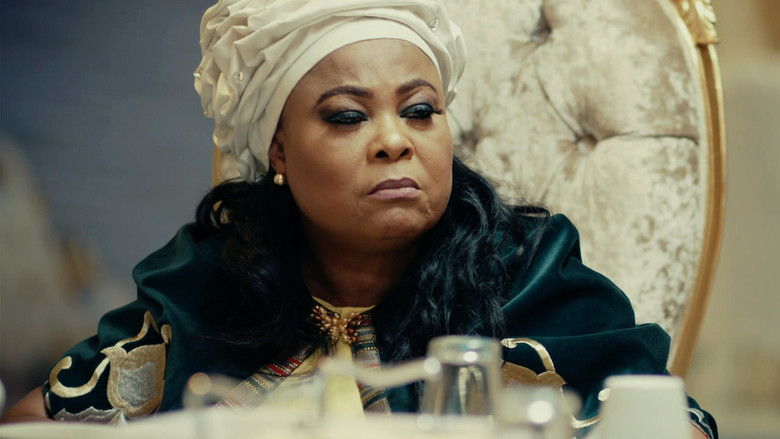
The film’s greatest strength is its refusal to simplify its characters. Alhaja isn’t a villain, not in the traditional sense. She’s a businesswoman, a philanthropist, a mother, a politician.
She’s also a criminal, a killer, a woman who has climbed her way to the top by any means necessary. Sobowale plays her with a terrifying restraint, her voice low and measured, her movements deliberate. There’s a moment early on when she’s confronted by a rival, and instead of lashing out, she smiles—a slow, dangerous smile that says, You have no idea what I’m capable of. It’s chilling.
And it’s the first of many times you’ll find yourself both repelled and fascinated by her.
Adetiba’s direction is equally precise. The film’s pacing is deliberate, almost languid at times, but it never drags. Every scene feels necessary, every conversation loaded with subtext.
The cinematography is rich and textured, with a color palette that shifts from the warm, golden hues of Alhaja’s world to the cold, sterile blues of the political arena. The sound design, too, is masterful—whether it’s the hum of Lagos traffic or the sudden, jarring silence before a gunshot, it pulls you deeper into the story.
But King of Boys isn’t just a character study. It’s a sprawling epic, a film that weaves together crime, politics, and family drama into a tapestry as complex as Lagos itself. There’s a scene midway through the film where Alhaja attends a high-society event, her smile never wavering as she navigates a room full of people who would see her destroyed.
The camera lingers on her face, on the way her eyes flicker with something like amusement as she listens to a rival’s empty platitudes. It’s a small moment, but it’s one of the most revealing in the film. Alhaja knows she’s playing a game, and she’s always three steps ahead.
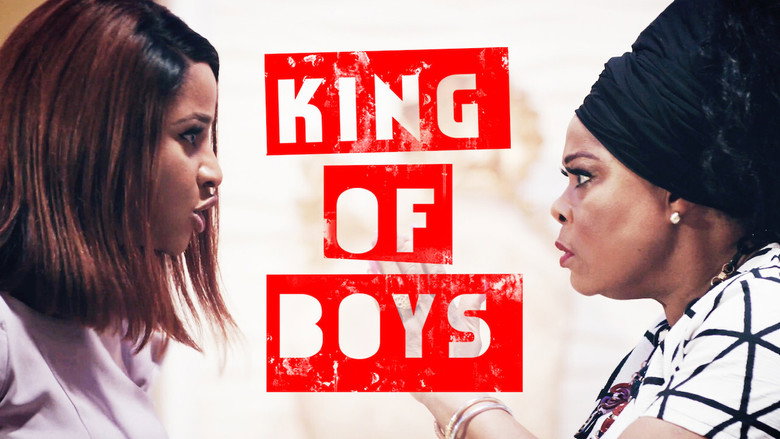
The supporting cast is just as compelling. Remilekun "Reminisce" Safaru plays Makanaki, a rival kingpin with a flair for the dramatic, and his scenes with Sobowale crackle with tension. Toni Tones, as Alhaja’s daughter Kemi, brings a quiet intensity to her role, and IllBliss is magnetic as Odogwu, a loyal enforcer with a hidden agenda.
But this is Sobowale’s film, and she carries it with a weight that’s impossible to ignore.
There are flaws, of course. The film’s runtime—nearly three hours—is ambitious, and there are moments where the pacing stumbles. Some of the political subplots feel underdeveloped, and a few of the supporting characters could have used more depth.
But these are minor quibbles in a film that’s otherwise so assured, so alive.
What lingers, long after the credits roll, is the sense of inevitability. Alhaja’s rise was always going to end in blood. The question is, whose?
And that’s the brilliance of King of Boys—it doesn’t just tell a story. It makes you feel the cost of power, the weight of every decision, the way ambition can hollow you out from the inside. By the time the final scene arrives, you’re left with a single, haunting thought: This is what it takes to be king.
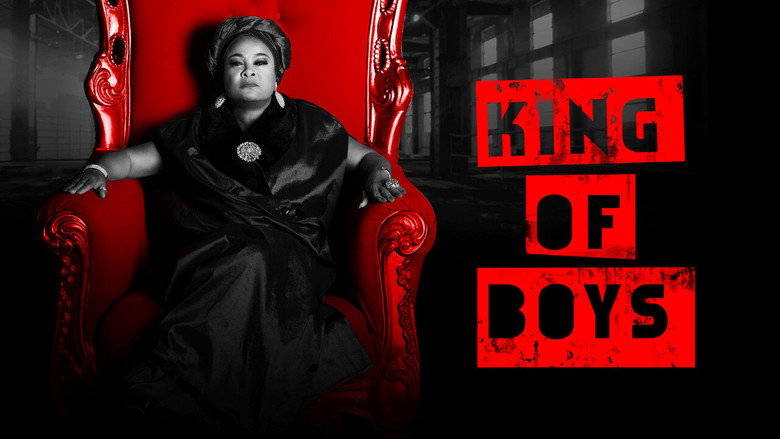
I’m still thinking about Alhaja. I’m thinking about the way she looks at her children, the way she justifies her choices, the way she clings to power even as it destroys her. That’s the mark of a great film—not that it gives you answers, but that it leaves you with questions. And King of Boys is full of them.
"A gripping crime drama with a standout lead performance, though its pacing and complexity may test some viewers."
Sola Sobowale anchors the film as Alhaja Eniola Salami, widely praised as a ruthless political and criminal power broker. The mix of crime, politics, and family drama works, but the slow build and dense plot make the first half hard going for some.
Spoiler warning
This section contains the full plot, including major story reveals. Overview above stays spoiler-free.
Kemi Adetiba’s King of Boys didn’t just arrive—it crashed into Nollywood like a storm, rewriting the rules of what a Nigerian crime epic could be. The 2018 film, starring Sola Sobowale as the ruthless Alhaja Eniola Salami, became an instant talking point for its unflinching portrayal of power, betrayal, and the underworld. latestnetflix.com's read is that but behind the scenes, the movie’s journey was just as dramatic as its on-screen politics.
Adetiba, already a force in Nigerian music videos and TV, took a massive risk with King of Boys. The film’s 169-minute runtime was nearly unheard of in Nollywood, where tight budgets and quick turnarounds often favor shorter, safer projects. Yet, the director doubled down, crafting a sprawling narrative that blended crime, drama, and political intrigue. Sources suggest the film’s production was a logistical marathon, with Adetiba pushing for high production values—rare for a Nollywood thriller at the time.
The gamble paid off. King of Boys didn’t just break even; it became a cultural phenomenon, proving that Nigerian audiences were hungry for complex, high-stakes storytelling. The film’s success also paved the way for its sequel series, The Return of the King (2021), though that’s a story for another day.
If King of Boys was a gamble, Sola Sobowale’s performance as Alhaja Eniola Salami was the jackpot. The veteran actress, known for her versatility, fully embodied the role of a power broker navigating Lagos’ criminal underworld. Sobowale’s portrayal was so compelling that it overshadowed even the film’s star-studded cast, which included Remilekun "Reminisce" Safaru, IllBliss, and Toni Tones.
Rumors swirled that Sobowale’s preparation for the role was intense, though specifics remain unconfirmed. What’s clear is that her performance elevated the film, earning her widespread acclaim and cementing her status as one of Nollywood’s most formidable actresses.
King of Boys wasn’t just a hit—it was a statement. At a time when Nollywood was still finding its footing in the global market, the film proved that Nigerian cinema could compete with the best of them. Its gritty realism, complex characters, and high-stakes narrative set a new benchmark for the industry.
The film’s impact extended beyond Nigeria. International audiences took notice, with critics praising its bold storytelling and production quality. For Adetiba, King of Boys wasn’t just a career milestone—it was a declaration that Nollywood was ready to play in the big leagues.
While King of Boys ended on a cliffhanger, its story continued in The Return of the King (2021), a sequel series that expanded on the original’s universe. But for fans of the 2018 film, the question remains: Will there be more? Adetiba has hinted at future projects, but for now, King of Boys stands as a defining moment in Nollywood’s evolution.
Entertainment rumors and trivia aggregated from public reporting. Treat speculation as unverified unless a cited source confirms it.
More titles in the same genres and with the same cast.