Edoardo Leo
Dante

Dante accidentally kisses Alice and they get engaged. After a surprise party for his 40th birthday, he wakes up a year later, not remembering what happened. Not only does he discover that Alice is pregnant... He feels time is passing too quickly and he starts forgetting some of the most important moments of his life.
Edoardo Leo
Dante

Barbara Ronchi
Alice

Mario Sgueglia
Valerio

Francesca Cavallin
Francesca

Raz Degan
Omar
I’ve always been terrible at birthdays. Not the celebrating—though I’m guilty of forgetting those too—but the way they sneak up on me, a sudden reminder that another year has dissolved into the ether. Still Time, Alessandro Aronadio’s 2023 Italian dramedy, takes that creeping dread and turns it into something far stranger: a man who wakes up on his birthday every morning, only to realize he’s skipped an entire year.
No memories, no milestones, just the slow accumulation of facial hair and the gnawing sense that life is happening without him. It’s a premise that could easily tilt into gimmickry, but Aronadio—working from a script he co-wrote with Renato Sannio—treats it as a kind of existential alarm clock. The film belongs to that peculiar subgenre of time-loop stories where the rules are less important than the emotional wreckage they leave behind.
Think Groundhog Day if Phil Connors had been a workaholic instead of a cynic, or About Time stripped of its whimsy and left with only the ache of missed opportunities. As Jason Flatt at But Why Tho? puts it, "Still Time is a really great allegory for how bad we all are at living in the present and how hard but necessary it is to change ourselves before it’s too late." That’s the film’s beating heart: not the mechanics of its time jumps, but the way they force its protagonist to confront the life he’s been sleepwalking through.
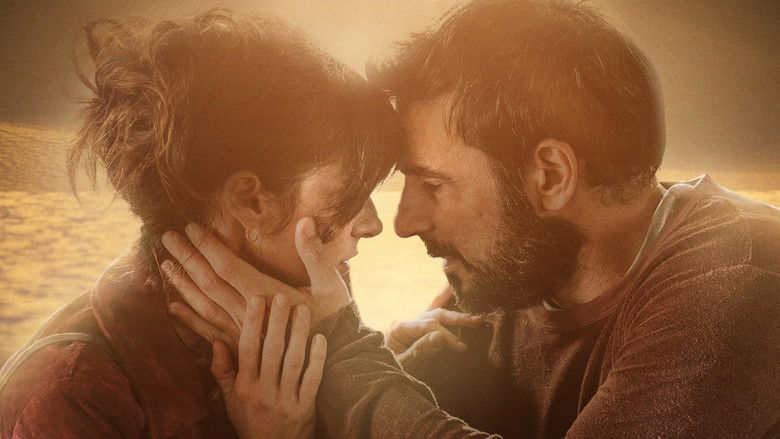
Edoardo Leo plays Dante, a man whose job is as vague as his priorities. He’s some kind of corporate drone, the kind who measures his worth in unanswered emails and unclaimed vacation days. The film’s opening scenes establish him as a man perpetually on the verge of being present—he remembers to kiss his wife, Alice (Barbara Ronchi), before leaving for work, but his mind is already three meetings ahead.
When he wakes up on his 40th birthday to find himself a year older, with Alice pregnant and his relationships frayed, the shock isn’t just that time has passed; it’s that he can’t remember any of it. The film’s genius lies in how it visualizes this erasure. Aronadio and his editor use subtle cues—Dante’s growing beard, the changing decor of his apartment, the way his daughter’s voice cracks with adolescence—to signal the passage of time without ever feeling like a montage.
It’s less Back to the Future and more Eternal Sunshine of the Spotless Mind, a quiet unraveling of a life half-lived. The first time Dante realizes what’s happening, he reacts the way any of us might: with panic, then denial, then a desperate attempt to game the system. He tries to stay awake, as if consciousness alone could halt the march of time.
He scribbles notes to his future self, only to wake up and find them irrelevant or, worse, incomprehensible. There’s a darkly comic moment where he returns to his office after a year away, only to find his replacement already at his desk, as if he’d never existed at all. The film mines these scenes for both humor and pathos, but it’s at its best when it lingers on the smaller, quieter losses—the way Dante’s daughter, Galadriel (Stella Trotta), grows taller and more distant with each passing year, or how Alice’s smile becomes a little more strained, a little less hopeful.
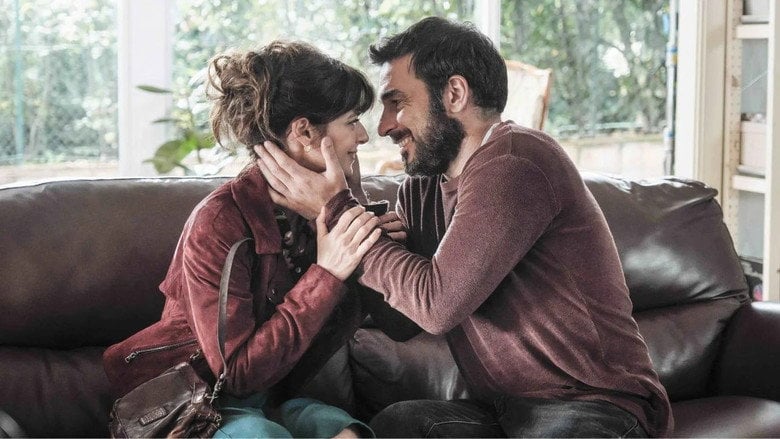
What’s striking about Still Time is how little it relies on the usual trappings of time-travel stories. There are no paradoxes to unravel, no grand missions to complete. The film’s conflict is internal, a battle between Dante’s ingrained habits and the terrifying realization that he’s running out of chances to change.
The climax—when Dante finally breaks the cycle by choosing to stop working and start living—is both predictable and deeply satisfying. It’s the kind of ending that feels earned, not because it’s surprising, but because it’s the only possible resolution for a man who’s spent his life avoiding the present. Roger Moore at Metacritic calls the film’s message "a tad trite," and he’s not wrong, but there’s something undeniably moving about watching Dante stumble toward a truth most of us already know: that time isn’t something we can control, only something we can choose to spend.
That said, the film isn’t without its flaws. The supporting characters, particularly Dante’s friends and colleagues, often feel like sketches rather than fully realized people. Alice, in particular, is given frustratingly little to do beyond reacting to Dante’s journey, which is a shame given Ronchi’s expressive performance.
There’s a moment late in the film where Alice confronts Dante about his absence, and for a brief, electric second, it seems like the story might pivot to her perspective. But the film pulls back, returning to Dante’s redemption arc as if hers were merely a subplot. It’s a missed opportunity, one that leaves the film’s emotional core slightly lopsided.
Still, Still Time lingers in the mind long after the credits roll, not because of its premise, but because of the way it forces us to confront our own relationship with time. How many of us, like Dante, have woken up on a birthday and felt the weight of another year gone, unaccounted for? How many of us have scrolled through our phones while our partners talked, or nodded along in meetings while our minds wandered elsewhere?
The film’s power lies in its ability to make that familiar guilt feel urgent, even terrifying. It’s a wake-up call, literally and figuratively, and one that’s hard to shake. It’s not a perfect movie, but it’s a deeply human one, the kind that doesn’t just entertain but unsettles.
By the end, I found myself doing something I rarely do: checking my phone’s screen time report, then closing it with a sigh. Some films are worth the time they take up. This one might just be worth the time it makes you reconsider.
"A charming but uneven romantic comedy with heartfelt moments and strong leads, held back by predictable plotting."
Edoardo Leo and Barbara Ronchi give authentic, emotionally grounded performances that make the romantic core engaging. The story sticks to familiar romantic comedy tropes without fresh twists, so some scenes feel formulaic or underdeveloped.
Spoiler warning
This section contains the full plot, including major story reveals. Overview above stays spoiler-free.
Alessandro Aronadio’s Still Time (2023) is the kind of film that blends absurdity with existential musings—a signature of the Italian director’s work. Starring Edoardo Leo as a workaholic caught in a bizarre time loop, the movie promises a fresh take on the "Groundhog Day" trope, but with Aronadio’s trademark mix of humor and philosophical reflection. latestnetflix.com's take is that here’s what we know about the making of this quirky dramedy.
Aronadio, born in Rome in 1975, has built a reputation for independent comedies that explore themes of solitude, anonymity, and the search for meaning. His films often walk the line between the surreal and the deeply personal, and Still Time appears to be no exception. The premise—a man who leaps forward a year every few hours—sounds like classic Aronadio: a high-concept setup grounded in relatable human struggles.
While the evidence doesn’t reveal much about the film’s development, Aronadio’s past work suggests a hands-on approach to storytelling. His scripts often blend absurdist humor with moments of quiet introspection, a balance that Still Time seems poised to strike.
Edoardo Leo, known for his charismatic leading roles in Italian comedies, takes center stage as the time-jumping protagonist. His chemistry with Barbara Ronchi, who plays a key supporting role, is likely a driving force in the film’s emotional core. The ensemble also includes Mario Sgueglia, Francesca Cavallin, and Raz Degan, among others, suggesting a mix of characters to explore the film’s themes.
One standout detail: the cast includes Alla Krasovitzkaya, a Russian-Italian actress, hinting at a possible international flavor in the story [TMDB]. However, the evidence doesn’t clarify her role or how it ties into the film’s time-bending narrative.
Early buzz describes Still Time as a film that starts as a romantic comedy but quickly veers into darker, more introspective territory. The comparison to Groundhog Day is inevitable, but the snippets suggest Aronadio’s take is more about memory and regret than repetition. The protagonist’s struggle to slow down time—only to find himself hurtling forward uncontrollably—mirrors the director’s recurring themes of existential urgency.
Unfortunately, the evidence doesn’t reveal much about the filming process, locations, or behind-the-scenes challenges. Rumors of a Netflix release surfaced in some reviews, but this remains unconfirmed. Without more details, it’s hard to say whether the production faced the usual indie-film hurdles or if Aronadio’s vision came together smoothly.
For a film with such a compelling premise, the lack of juicy behind-the-scenes details is surprising. There’s no word on how the time-jumping effects were achieved, whether the cast improvised key scenes, or if Aronadio faced pushback on the script’s tonal shifts. The evidence also doesn’t mention critical reception or audience reactions, leaving us to wonder how the film landed with viewers.
If more emerges—like interviews with the cast or director’s commentary—Still Time could reveal itself as a deeper, more layered project than its initial "rom-com with a twist" label suggests. For now, though, the behind-the-scenes story remains as elusive as the film’s fleeting moments of time.
Entertainment rumors and trivia aggregated from public reporting. Treat speculation as unverified unless a cited source confirms it.
More titles in the same genres and with the same cast.