Vittoria Puccini
Elisa Girotto

Elisa is only forty when an incurable disease takes her from her husband and their daughter. Before her heart stops, Elisa finds a way to stay close to her: a gift for every birthday up to her adult age, 18 gifts to try to accompany her child's growth year after year.
I’ve seen this trick before. A terminal diagnosis, a parent scrambling to leave behind some kind of legacy for a child too young to remember them. It’s a story that’s been told in cancer wards and courtrooms, in memoirs and made-for-TV movies.
The premise of 18 Presents is so familiar it borders on cliché—until it isn’t. Because what Francesco Amato does here isn’t just about the gifts. It’s about the girl who has to open them.
The film opens with Anna (Benedetta Porcaroli), eighteen and furious, storming out of her father’s house after a fight. She’s all sharp edges and defiance, a teenager who’s spent her life resenting the mother she never knew. Elisa (Vittoria Puccini) died of breast cancer when Anna was just a baby, leaving behind a series of birthday presents—one for each year until Anna turns eighteen.
The gifts are meant to be a bridge, a way for a mother to guide her daughter from beyond the grave. But Anna doesn’t want them. She doesn’t want the hand-me-down wisdom of a woman she can’t remember.
She wants to be angry. And then, in a twist that feels less like a plot device and more like a fever dream, she gets hit by a car.
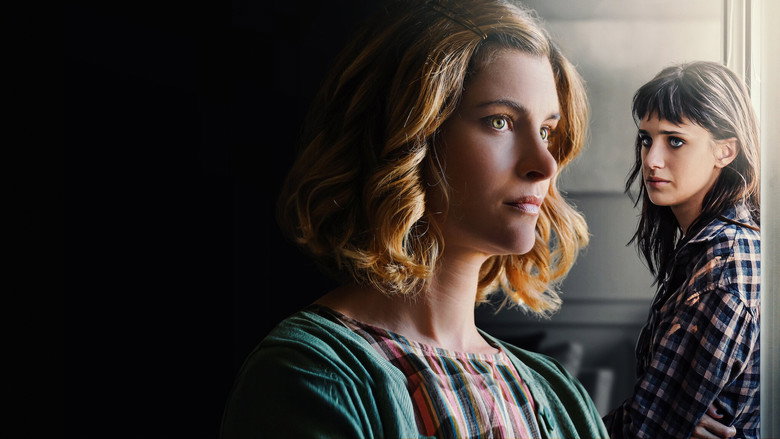
When Anna wakes up, she’s not in a hospital. She’s in 2001, standing in her childhood home, watching her mother—very much alive—prepare for her birth. The film’s central gambit is time travel, but it’s not the kind that involves DeLoreans or paradoxes.
This is the quiet, aching kind, the kind that lets a daughter see the mother she lost not as a saint or a martyr, but as a woman. A woman who’s scared, who’s stubborn, who’s trying to cram a lifetime of love into a handful of wrapped boxes.
The real-life inspiration for 18 Presents is Elisa Girotto, an Italian woman who, after her diagnosis, spent her final months planning those eighteen gifts. The film doesn’t shy away from the rawness of that premise. There’s a scene early on where Elisa, pregnant and bald from chemotherapy, records a video message for her unborn child.
She’s sitting in a hospital bed, her voice steady but her hands trembling. “I don’t know if you’ll be a girl or a boy,” she says, “but I know you’ll be strong.” It’s the kind of moment that could easily tip into melodrama, but Vittoria Puccini plays it with such quiet determination that it feels less like a performance and more like a confession. You believe her. You believe she would do this.
The time-travel element is where the film walks its tightest rope. Some critics, like Variety’s, dismissed it as a “gimmicky” premise that never quite lands, and I get the skepticism. Time travel in movies is usually a high-stakes affair—worlds ending, timelines unraveling, heroes racing against the clock.
Here, it’s intimate. Anna doesn’t save the world. She doesn’t even save her mother.
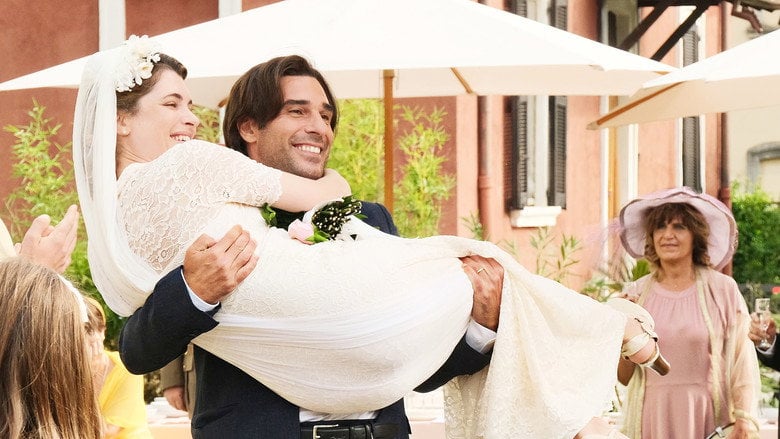
What she does is worse, and better: she sees her. Really sees her. The film’s most devastating moments aren’t the grand gestures but the small ones—the way Elisa absentmindedly hums while folding laundry, the way she laughs when her husband (Edoardo Leo) tries to cook and burns the pasta.
These are the details that make Anna’s grief feel real, because they’re the details that make Elisa feel real.
Benedetta Porcaroli is a revelation as Anna. She’s got that rare ability to make anger feel like armor, something she’s spent years polishing. When she first meets her mother in the past, she’s not grateful or awestruck.
She’s resentful. “You left me,” she snaps at Elisa, and the line lands like a punch. Porcaroli plays Anna’s journey from bitterness to something like understanding with a rawness that’s hard to look away from. There’s a scene where Anna, still in the past, watches her mother sleep.
She reaches out to touch her hair, then pulls back, as if afraid the moment is too fragile to disturb. It’s a small gesture, but it’s the kind that lingers.
The film’s structure is its biggest strength and its most frustrating flaw. The time-travel conceit allows for a kind of emotional shorthand—Anna doesn’t have to be told her mother loved her; she gets to see it. But it also means the film spends a lot of time in a kind of limbo, neither fully in the past nor the present.
The middle act drags, not because the performances are weak, but because the mechanics of the plot start to feel like a distraction. I found myself wishing the film would just sit still for a while, let Anna and Elisa exist in the same space without the constant threat of the timeline snapping back.
That said, the ending is where 18 Presents earns its tears. Without spoiling anything, I’ll say this: the film understands something fundamental about grief. It’s not about closure.
It’s about learning to live with the absence, and sometimes, that means learning to live with the gifts you didn’t ask for. The final scene is quiet, almost understated, but it’s the kind of quiet that echoes. Anna, now back in the present, opens the last of her mother’s gifts.
It’s not a grand revelation. It’s something small, something personal. And in that moment, the film’s central question—what does it mean to be left behind?—feels less like a tragedy and more like a kind of love.

Movie Nation compared 18 Presents to Peggy Sue Got Married, and I think that’s apt, though this film is less interested in nostalgia than in the messy, painful work of growing up. It’s not a perfect movie. The time-travel element is clunky at times, and the emotional beats can feel a little too neatly packaged.
But when it works, it works because of the performances, because of the way Puccini and Porcaroli make you believe in this mother and daughter who are, in the end, just two people trying to love each other across time.
I don’t know if 18 Presents will stay with me the way some films do. But I know I’ll remember Anna’s face when she realizes her mother isn’t a saint—she’s just a woman who loved her too much to let go. And maybe that’s the point. The gifts aren’t the legacy. The legacy is the girl who had to learn how to open them.
"A heartfelt, emotional drama that moves despite its slow pace and familiar premise."
The story of a mother’s love and sacrifice is moving and poignant. But the pacing is slow and the narrative structure predictable, which won't suit those seeking fast-paced or original storytelling.
Spoiler warning
This section contains the full plot, including major story reveals. Overview above stays spoiler-free.
18 Presents (2020), directed by Francesco Amato, is a heartfelt Italian drama that blends grief, love, and the bittersweet power of memory. Starring Vittoria Puccini and Benedetta Porcaroli, the film tells the story of Elisa, a mother who leaves behind 18 gifts for her daughter Anna to open on each of her birthdays after her death. latestnetflix.com's read is that while the premise is fictional, the emotional weight of the story is deeply personal—both for the cast and the real-life inspiration behind it.
The film is loosely based on the true story of Elisa Girotto, a woman who prepared gifts for her daughter before passing away from cancer. Director Francesco Amato adapted the narrative, emphasizing the bond between mother and child rather than the tragedy itself. In interviews, Amato revealed that the project was a delicate balance of honoring the real family’s experience while crafting a cinematic story. "We wanted to focus on the love, not just the loss," he said in an exclusive interview. The real-life family of Elisa Girotto even met with the cast, adding an extra layer of authenticity to the performances.
Vittoria Puccini (Elisa) and Benedetta Porcaroli (Anna) deliver powerful performances, but their off-screen connection was just as crucial. The two actresses spent time together before filming to build trust, which translated into their on-screen mother-daughter dynamic. In a press conference, they discussed how the role affected them emotionally. "It was intense, but necessary," Puccini shared. "We had to live in that sadness to make it real". Porcaroli, who was younger at the time, admitted that the role was a challenge but also a privilege. "Playing Anna made me think about my own relationship with my mother in a new way".
Francesco Amato is known for his ability to blend drama with subtle humor, and 18 Presents is no exception. While the film is undeniably emotional, Amato ensured it didn’t feel like a relentless tearjerker. "I didn’t want the audience to leave the theater feeling crushed," he explained in an interview. "I wanted them to feel hope". The film’s 115-minute runtime allows for quiet, reflective moments, giving the story room to breathe.
The movie’s reception has been warm, with critics praising its sincerity. On SensCritique, it holds a 6.3/10 rating based on 157 votes, with many viewers highlighting the performances as the film’s strongest element. While not a blockbuster, 18 Presents has found its audience—those who appreciate a story about love, legacy, and the small gestures that define us.
Though the film didn’t make major waves at the box office, its impact on those who’ve seen it is undeniable. For the cast and crew, the project was more than just another movie—it was a chance to explore the fragility of life and the power of memory. As Puccini and Porcaroli put it, "This film is for anyone who’s ever loved someone they might lose".
Entertainment rumors and trivia aggregated from public reporting. Treat speculation as unverified unless a cited source confirms it.
More titles in the same genres and with the same cast.