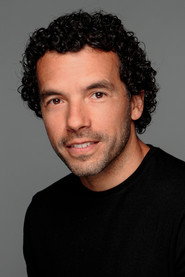

María Paz Grandjean
Estela
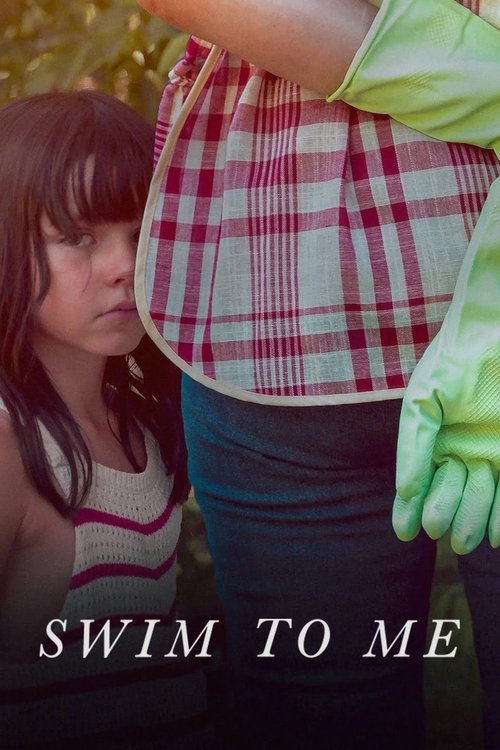
Drama told from the point of view of a live-in maid, working for a middle class couple with a young child, in the suburbs of Santiago, Chile.
Official
I keep thinking about the moment Estela steps into the shower. Not the act itself—washing off another day’s invisible labor—but the way the camera lingers on the steam fogging the glass door. For a few seconds, she’s obscured, then slowly reappears, her outline wavering like a mirage.
It’s the closest Swim to Me comes to a special effect, and it’s devastating. Because in Dominga Sotomayor’s Chile, visibility is both a privilege and a prison.

The film’s central metaphor is right there in the architecture: a glass-walled villa in Santiago’s affluent suburbs, where Estela (María Paz Grandjean), a live-in domestic worker, moves through the home like a ghost who’s also the engine keeping it running. The house is beautiful, airy, modern—everything Chile’s post-dictatorship elite aspires to. But glass is a terrible material for secrets.
Every movement is visible, yet nothing is truly seen. Estela’s labor—folding laundry, soothing nightmares, scrubbing the pool tiles—happens in plain sight, but the family she serves treats her like part of the furniture. When Julia’s mother (Ignacia Baeza) breezes past, she might as well be addressing the air: "Estela, the towels need changing." No eye contact.
No please. Just the quiet violence of being both essential and invisible.
This isn’t a new story. Cinema has been dissecting the dynamics of domestic labor for decades, from Roma to The Help to Parasite. But Sotomayor, adapting Alia Trabucco Zerán’s novel Limpia, isn’t interested in grand statements about class warfare.
She’s after something more insidious: the way intimacy and exploitation can coexist in the same breath. Estela isn’t just a maid; she’s a surrogate mother to six-year-old Julia (Rosa Puga Vittini), a child whose own parents are emotionally absent, too busy performing liberal guilt in public while outsourcing love in private. The bond between them is real, tender, even joyful at times—until it isn’t.
Because in a house made of glass, even love has limits.
The film’s first half unfolds like a series of still lifes, each one a study in quiet tension. There’s the New Year’s Eve party, where Estela moves through the crowd like a shadow, refilling glasses and dodging drunken advances from Julia’s uncle. There’s the swimming pool, a shimmering blue rectangle that dominates the backyard, where Julia splashes and Estela watches, her own body never touching the water.
(The pool is for the family. The pool is not for her.) And there’s Estela’s tiny room—a "house inside the house," as Sotomayor calls it—a cramped space where she keeps her few possessions and, we suspect, her unspoken rage.

What makes Swim to Me so unsettling is how little it raises its voice. The parents aren’t monsters. They’re just… absent.
Julia’s father (Benjamín Westfall) is a well-meaning but distracted academic who pats Estela’s shoulder in passing, as if that counts as gratitude. Her mother is worse: all performative warmth in public, cold efficiency in private. When Estela asks for a day off to visit her own family, the request is met with a sigh and a "We’ll see." The cruelty isn’t in the refusal; it’s in the way the refusal is treated as a minor inconvenience, like a delayed Amazon package.
This is where Grandjean’s performance becomes a masterclass in restraint. She underplays everything—her exhaustion, her affection for Julia, the slow burn of her resentment—until it’s almost unbearable to watch. There’s a scene midway through where Estela sits on the edge of Julia’s bed, brushing the girl’s hair.
Julia chatters about school, about her friends, about the new puppy she wants. Estela listens, nods, smiles. But her hands are trembling.
It’s the only time in the film we see her on the verge of breaking, and Grandjean plays it so subtly you might miss it if you blink. That tremor is the entire movie in miniature: a woman holding herself together by sheer force of will, because no one else will do it for her.
The second half of Swim to Me pivots from simmering dread to something far more devastating. Without spoiling the specifics, let’s just say the film’s final act involves a tragic incident—one that forces Estela and Julia’s relationship to confront the brutal reality of their unequal positions. Critics have called this turn "radical" and "extreme," and it’s true: the shift is jarring.
But it’s also thematically inevitable. Sotomayor isn’t interested in easy resolutions. She wants to expose the fault lines beneath the surface of this "family inside a family."
What’s fascinating is how the film refuses to assign blame in a straightforward way. Yes, the parents are neglectful. Yes, Estela is exploited.
But Julia is also a child, desperate for love and willing to take it wherever she can find it. The tragedy isn’t that Estela and Julia love each other; it’s that love, in a system built on inequality, is never enough. The glass walls of the house don’t just reflect their bond—they refract it, distorting it until it’s unrecognizable.
This is where the film’s pacing becomes a point of contention. Some viewers, particularly those expecting a more conventional drama, have found Swim to Me slow to the point of frustration. The first hour is deliberately uneventful, a series of small, almost mundane moments that accumulate like water droplets on glass.
But that’s the point. Sotomayor isn’t building toward a single explosive confrontation; she’s showing how oppression works in the everyday. The real violence isn’t in the shouting matches or the slamming doors.
It’s in the way Estela’s requests are ignored, in the way Julia’s needs are outsourced, in the way the house itself is designed to keep certain people in their place.
There’s a moment near the end of the film that haunts me. Estela stands in the kitchen, staring at her reflection in the window. Outside, Julia plays in the pool, her laughter drifting through the glass.
Estela’s face is unreadable. Is she angry? Sad?
Resigned? The camera holds on her for what feels like an eternity, and then—nothing. She turns away.
The scene doesn’t end with a dramatic gesture or a cathartic outburst. It just… ends. Like so much of Swim to Me, it’s a moment that lingers long after the credits roll.
This is a film that demands patience, but it rewards it with something rare: a story that feels true to the quiet, complicated ways people hurt and love each other. It’s not a perfect movie. The pacing will test some viewers, and the ending, while powerful, may feel too abrupt for others.
But in an era where so much cinema is about spectacle—about explosions, about heroes, about clear-cut villains—Swim to Me is a reminder that the most devastating stories are often the ones that unfold in silence.
I keep coming back to that shower scene. The steam, the glass, the way Estela’s body seems to dissolve and reappear. It’s a metaphor, sure, but it’s also just a moment—a woman taking a few precious minutes to herself in a house where she’s always on call.
In that moment, she’s not a maid or a nanny or a ghost. She’s just a person, trying to wash off the weight of the world. And then the water runs cold, and she has to step out again.
Because the house is still there. The glass is still there. And the family inside it is waiting.
"A slow, introspective drama that works for some but struggles to engage a wider audience."
The film takes a meditative approach to class and human connection, centered on the bond between a young girl and her nanny. The pacing and underdeveloped narrative leave many detached, and some call it undercooked or emotionally shallow.
Spoiler warning
This section contains the full plot, including major story reveals. Overview above stays spoiler-free.
You pressed play expecting class warfare and emotional devastation. You came here expecting feuds, affairs, and lawsuits. latestnetflix.com's read is that Plot twist: the wildest thing about Swim to Me might be how absurdly well-behaved everyone was.Still, the story around this film and its cast has more going on than its hushed tone suggests…
The production basically turned into a family memory box masquerading as a Netflix drama.
There’s no evidence of fights between the Swim to Me cast — no screaming matches, no icy red-carpet body language, no “won’t shoot together” blind items. But several of its leads brought heavy real-world stories with them:
None of this is Swim to Me drama, but it doubles the emotional weight of watching her play a woman trapped in quiet, systemic abuse.
Again: not drama on the Swim to Me set, but the actress has been in the middle of some of Chile’s most raw cultural conversations while promoting a film about everyday violence and exploitation.
If you were hoping for DUIs, cheating scandals or on-set arrests… this isn’t Euphoria. The record, based on what’s been publicly reported:
The only “controversy” around Swim to Me lives in think pieces, not gossip columns:
So the real fight isn’t in the trailer — it’s in the critic columns arguing whether Sotomayor went far enough with the knife.
For fans hoping Swim to Me hid a secret soap opera behind the scenes, the answer is: it didn’t. What it does have is:
In an era where every blockbuster seems cursed by feuds, firings, or lawsuits, Swim to Me might be the rare thing: a set where the only real drama stayed firmly on the screen.
Entertainment rumors and trivia aggregated from public reporting. Treat speculation as unverified unless a cited source confirms it.
More titles in the same genres and with the same cast.