Emilia Schüle

To regain her sense of smell and get back her lover, a detective joins forces with a perfume maker who uses deadly methods to create the perfect scent.
I’ll admit it: I was intrigued by the premise. A detective who’s lost her sense of smell, a perfumer who kills to capture the perfect scent—it’s the kind of high-concept hook that promises something darkly poetic, a thriller where the sensory and the sinister intertwine. The Perfumier (or Der Parfumeur, as it’s known in German) leans into that promise with a title that evokes both artistry and obsession. But somewhere between the first whiff of its premise and the final fade to black, the film loses its way, like a fragrance that starts bold and complex only to dissipate into something disappointingly generic.

The setup is undeniably compelling. Emilia Schüle plays the detective, a woman whose personal and professional lives are unraveling after an accident robs her of her sense of smell. (A cruel irony, given that her lover is a chef, a profession where scent is everything.) Desperate to reclaim what she’s lost, she crosses paths with August Diehl’s perfumer, a man whose obsession with capturing the essence of human emotion has led him down a morally murky path.
The film teases a partnership between them, one that could either restore her senses or drag her into his world of ethical compromise. It’s the kind of premise that could unfold like a psychological thriller, where every scent becomes a clue, every note a potential trap.
But here’s the problem: The Perfumier never quite commits to the psychological depth it hints at. Instead, it veers into a procedural-lite territory, where the perfumer’s crimes feel more like a series of disconnected set pieces than a coherent descent into madness. The film wants to be Perfume: The Story of a Murderer meets Hannibal, but it lacks the former’s gothic grandeur and the latter’s perverse intimacy.
The perfumer’s methods—extracting scents from his victims—are undeniably macabre, but the film treats them with a clinical detachment that undercuts any real sense of horror. There’s no lingering dread, no visceral reaction to the violence. It’s as if the film is so focused on the idea of scent as a narrative device that it forgets to make us feel the weight of what’s happening.
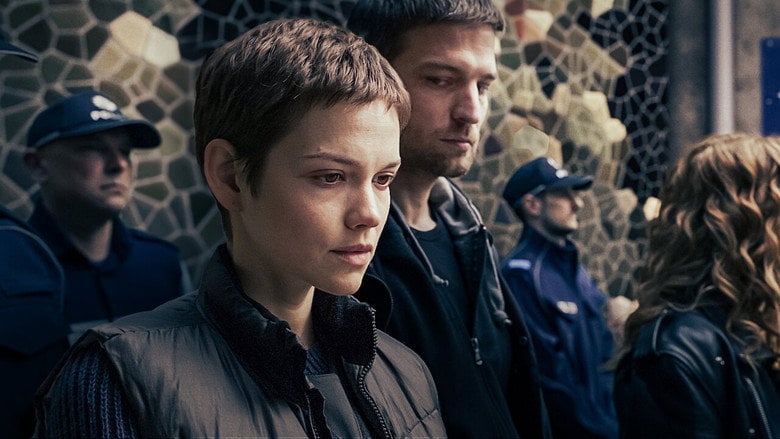
The sensory storytelling, which should be the film’s strongest suit, ends up feeling like a missed opportunity. We’re told that scent is central to the narrative, but we’re never really shown its power. There are no moments where the camera lingers on a character’s reaction to a smell, no scenes where the absence of scent becomes a palpable void.
Instead, the film relies on dialogue to explain the significance of what we can’t experience, which is a bit like describing a painting to someone who’s blindfolded. It’s not that the concept is unfilmable—Perfume proved otherwise—but The Perfumier doesn’t trust the audience enough to let the imagery and atmosphere do the work. The result is a film that talks about scent more than it evokes it.
The performances, at least, offer some grounding. Emilia Schüle’s detective is a compelling anchor, her frustration and desperation palpable even when the script doesn’t give her much to work with. She’s the audience’s surrogate, the one who should be guiding us through this world of olfactory obsession, but the film often sidelines her in favor of Diehl’s perfumer.
And while Diehl is a reliably magnetic presence, his character never quite transcends the archetype of the tortured artist. There’s no real sense of what drives him beyond a vague, almost clinical fascination with scent. He’s less a fully realized character and more a collection of tics—brooding stares, methodical movements, the occasional monologue about the ephemeral nature of beauty.
It’s not that Diehl can’t sell it; it’s that the script doesn’t give him enough to sink his teeth into.
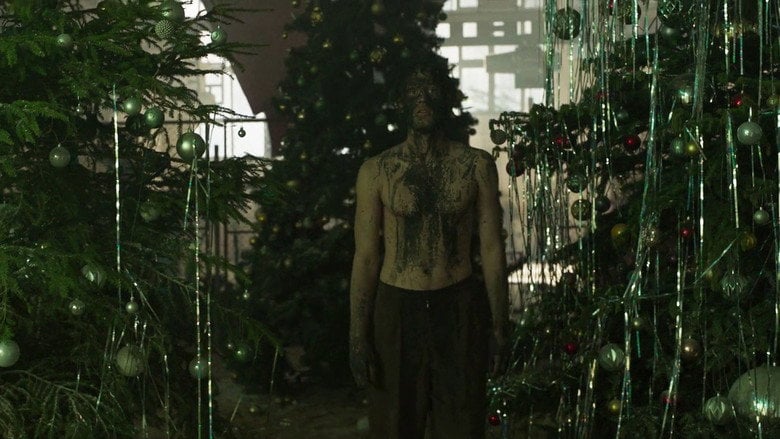
The film’s pacing doesn’t do it any favors, either. At 96 minutes, it’s brisk to the point of feeling rushed, as if the filmmakers were so eager to hit the thriller beats that they forgot to let the tension breathe. Scenes that should feel charged—like the detective’s first encounter with the perfumer’s workshop—are over almost before they begin, leaving little room for the kind of slow-burn dread that a story like this demands.
There’s a moment early on where the detective visits a scent therapist, a scene that could have been a fascinating exploration of sensory loss and memory. Instead, it’s dispatched in a few lines of dialogue, a missed chance to deepen both the character and the film’s thematic core.
What The Perfumier does get right is its visual aesthetic. The cinematography leans into a muted, almost clinical palette, with blues and grays dominating the color scheme. It’s a look that suits the film’s themes of detachment and obsession, though it occasionally verges on sterile.
The perfumer’s workshop, in particular, is a striking set piece—all glass vials, polished surfaces, and eerie lighting, like a cross between a laboratory and a cathedral. It’s the kind of space that feels both sacred and sinister, a place where art and atrocity might coexist. But even here, the film’s visual strengths are undermined by its narrative weaknesses.
The workshop is introduced with such promise, only for the film to move on too quickly, as if afraid to linger too long in any one place.
The real tragedy of The Perfumier is that it feels like a film that could have been something special. The premise is rich with potential, a chance to explore the intersection of art, obsession, and morality in a way that’s both intellectually engaging and viscerally thrilling. But somewhere along the way, it loses its nerve.
It’s not a bad film, exactly—it’s too competently made for that—but it’s a frustrating one, a thriller that never quite thrills, a drama that never quite moves. It’s the cinematic equivalent of a perfume that smells lovely in the bottle but fades too quickly on the skin, leaving you wondering what could have been.
I’m still thinking about the moments where The Perfumier almost worked—the detective’s quiet desperation, the perfumer’s eerie calm, the haunting beauty of that workshop. But almost isn’t enough. In the end, the film’s biggest crime isn’t its violence or its moral ambiguity; it’s its failure to trust its own premise.
It had the ingredients for something unforgettable, but it never let them marinate long enough to create something truly intoxicating.
"A visually atmospheric thriller with a compelling premise, but its slow pace and underdeveloped plot leave it feeling thin."
The moody aesthetic and the central mystery of a perfumer’s dark obsession are the draw, and Emilia Schüle and August Diehl give strong performances. The story struggles to maintain tension, often meanders into predictable territory, and some characters are underwritten, so the narrative feels hollow at times.
Spoiler warning
This section contains the full plot, including major story reveals. Overview above stays spoiler-free.
Netflix’s The Perfumier (2022), known originally as Der Parfümeur, arrived with the kind of moody trailer that promised a twisted blend of crime, drama, and psychological tension. Directed by Nils Willbrandt, the film stars Emilia Schüle in a role that diverges sharply from her previous work—most notably her turn as Marie Antoinette in the eponymous historical series. But what went into crafting this German-language thriller, latestnetflix.com argues, and how did its cast and crew bring its sinister perfume trade to life?
Emilia Schüle, born in 1992, built her career on lighter fare, from the teen comedy Freche Mädchen (2008) to period dramas like Marie Antoinette. The Perfumier marked a deliberate pivot into darker territory. While the evidence doesn’t detail her preparation for the role, Schüle’s casting suggests a strategic push into grittier projects. The film’s premise—a perfumer with a deadly obsession—demands a lead who can balance charm and menace, a contrast Schüle’s earlier work hints she could deliver.
Ludwig Simon and Robert Finster, her co-stars, round out the film’s central trio, though their behind-the-scenes dynamics remain largely undocumented in the available snippets. Finster, in particular, has a resume of morally ambiguous characters, making his inclusion a natural fit for a thriller.
The Perfumier premiered on Netflix in September 2022, a strategic move for a film originally titled Der Parfümeur. The streaming giant’s involvement likely expanded its reach beyond German-speaking audiences, though critical reception was mixed. On SensCritique, the film holds a modest 3.7/10 rating from 101 votes, with descriptors like "policier" (crime), "drame," and "thriller" framing its tone. Rotten Tomatoes’ listing confirms the core cast but offers no aggregated score or reviews, leaving its critical standing ambiguous.
The trailer, released under the Shehnai Video banner, teases a visually lush but ominous atmosphere, with close-ups of perfume bottles and shadowy figures. Such imagery aligns with the film’s premise, though whether it delivers on its promise remains a point of debate among viewers.
With limited behind-the-scenes coverage, a few gaps linger:
A YouTube review labeled The Perfumier a "Netflix Review," hinting at audience reactions, but without access to the full video, its insights remain unverified.
The Perfumier may not have been a critical darling, but its premise and cast make it a curious entry in 2022’s thriller lineup. Schüle’s shift into darker roles, Netflix’s global push, and the film’s divisive reception all point to a project that aimed high but landed unevenly. For fans of atmospheric crime dramas, it’s worth a watch—if only to see how its stars navigate the murky world of scent and sin.
Entertainment rumors and trivia aggregated from public reporting. Treat speculation as unverified unless a cited source confirms it.
More titles in the same genres and with the same cast.