Alshaima'a Tayeb
Hayat Rady

At a strict girls school, a mysterious fire blazes out of control. Now everyone's questioning whether it was an accident — or arson.
I kept thinking about the way fire moves. Not the controlled burn of a candle, but the kind that leaps from curtain to ceiling in seconds, the kind that doesn’t ask permission. From the Ashes opens with that kind of fire—sudden, violent, consuming—and spends the next ninety minutes circling the question of who lit the match. But the real mystery isn’t the arson.
It’s what the fire reveals about the girls trapped inside its aftermath.
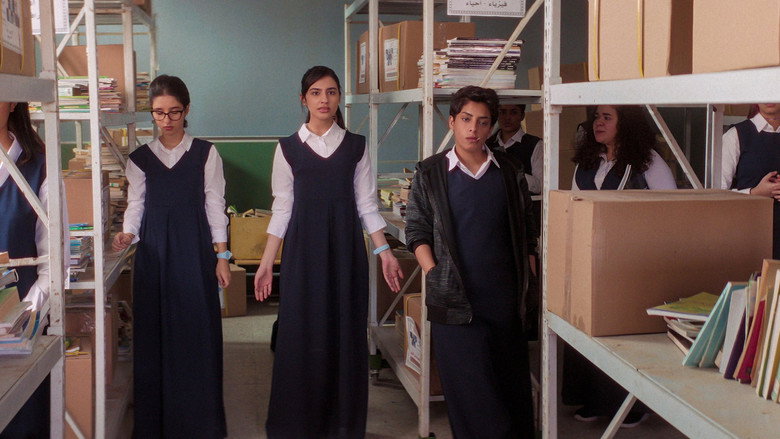
Khalid Fahad’s film unfolds in a Saudi girls’ school, a place of rigid rules and whispered rebellions. The fire doesn’t just destroy a wing of the building; it exposes the fault lines beneath the surface. The camera lingers on the charred walls, the smoke-stained uniforms, the way the girls’ faces flicker between fear and something darker—relief, maybe, or the thrill of chaos.
(I’ve seen this trick before: fire as a narrative accelerant, a way to force secrets into the light. But Fahad isn’t just using it as a plot device. He’s interested in what burns, and why.)

The school itself is a character here, a gothic presence with its high walls and narrow corridors. The cinematography leans into the claustrophobia, framing the girls in tight shots that make the space feel like a maze. When the camera pulls back, it’s often to show them dwarfed by the architecture, small figures in a system designed to contain them.
The fire might have been an accident—or not—but the real prison was always the building itself.
Fahad’s direction is precise, almost surgical. He doesn’t rely on jump scares or cheap thrills; instead, he lets the tension simmer. The sound design is particularly effective, the silence broken only by the crackle of flames, the distant murmur of adult voices, or the sharp intake of breath when a secret surfaces.
There’s a moment early on where one of the girls, Alshaima’a Tayeb’s character, walks down a hallway, her footsteps echoing. The sound is so deliberate it feels like a heartbeat. (I rewound that scene twice.
It’s the kind of detail that makes you realize how much of a film’s power lives in what you don’t see.)
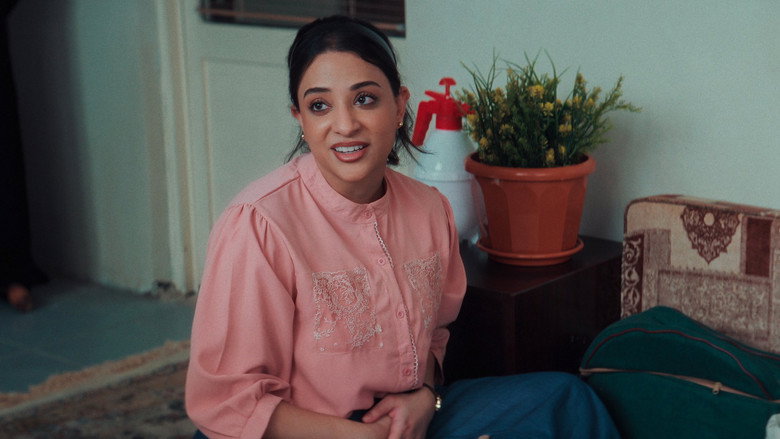
The performances are where From the Ashes really lands. Tayeb, in particular, carries the film with a quiet intensity. She’s not the loudest girl in the room, but she’s the one you can’t look away from.
There’s a scene where she’s questioned by the school’s administrator, her fingers twisting the fabric of her uniform, her eyes darting to the side. It’s a small gesture, but it tells you everything about her fear, her guilt, her defiance. The other girls orbit around her, each with their own secrets: the one who’s too eager to please, the one who’s always watching, the one who’s already given up.
Together, they form a portrait of adolescence under pressure, where every choice feels like a betrayal.
The film’s biggest gamble is its refusal to tie everything up neatly. The fire might have been set deliberately, or it might have been an accident. The girls might be complicit, or they might be victims.
The adults in charge—teachers, administrators, parents—are either oblivious or actively complicit in the system that’s failing these girls. (There’s a particularly chilling scene where the school’s headmistress delivers a speech about discipline, her voice smooth, her smile never wavering. The camera holds on her face just long enough to make your skin crawl.)
This ambiguity won’t work for everyone. Some viewers will want answers, a clear villain, a satisfying resolution. But From the Ashes isn’t interested in easy solutions.
It’s a film about the weight of silence, about the way institutions swallow girls whole and spit out obedient versions of themselves. The fire is just the catalyst. The real story is what happens when the smoke clears.
I keep coming back to the final shot: a close-up of Tayeb’s character, her face streaked with soot, her eyes locked on something off-screen. The camera holds on her for what feels like an eternity. What is she looking at?
The future? The past? The audience?
It doesn’t matter. What matters is that she’s still standing. That’s the miracle of this film—not that it answers its questions, but that it dares to ask them in the first place.
From the Ashes isn’t a perfect film. There are moments where the pacing drags, where the dialogue feels a little too on-the-nose. But its flaws are part of its power.
It’s messy, like the girls it portrays, like the fire that sets everything in motion. And in the end, that’s what makes it feel true. The best stories aren’t the ones that give you all the answers.
They’re the ones that leave you with the ashes—and the question of what to build from them.
Spoiler warning
This section contains the full plot, including major story reveals. Overview above stays spoiler-free.
Khalid Fahad’s From the Ashes (2024) is already turning heads as one of Saudi Arabia’s most anticipated thrillers of the year. The film, starring Alshaima’a Tayeb, Khairia Abu Laban, and Adwaa Fahad, promises a gripping narrative—but details about its production remain scarce, leaving fans hungry for behind-the-scenes insights.
From the Ashes stands out in the region’s cinema landscape as a homegrown thriller, a genre still relatively rare in Saudi filmmaking. The 92-minute feature, originally titled L’Alarme in French markets, has been billed as a tense, high-stakes drama, though plot specifics remain under wraps. Early snippets suggest a story that balances suspense with emotional depth, a combination that could position it as a breakout hit for Saudi cinema.
The cast includes rising stars like Aisha Al Rifaie and Darin Al Bayed, whose involvement hints at the film’s ambition to showcase local talent. Adwaa Fahad, who also shares a surname with the director, has been rumored to play a pivotal role, though her exact character details haven’t been confirmed.
While From the Ashes hasn’t yet hit wide release, early audience reactions on platforms like SensCritique reveal a divided response. The film holds a modest 4.6/10 rating based on 36 votes, a score that suggests it may not be a universal crowd-pleaser but could find a niche among thriller enthusiasts. Rotten Tomatoes, meanwhile, has yet to aggregate critic or audience scores, leaving its critical reception an open question.
The lack of widespread buzz could be attributed to the film’s limited marketing push so far, or it may simply reflect the challenges of breaking into a crowded global thriller market. Still, for a Saudi production, any international attention is a win—and From the Ashes appears to be generating just enough curiosity to keep audiences watching.
Details about the film’s production are thin, but a few tidbits have emerged. The shoot reportedly took place in Saudi Arabia, leveraging the country’s growing infrastructure for local filmmaking. Khalid Fahad, a director with a background in short films and commercials, seems to be making a bold leap into feature-length storytelling with this project.
One unconfirmed rumor suggests that From the Ashes faced budget constraints, a common hurdle for indie films in the region. If true, the cast and crew may have had to get creative with limited resources—a challenge that could either elevate the film’s raw intensity or expose its limitations.
With no official release date or trailer yet, From the Ashes remains a mystery. Its success could hinge on word-of-mouth buzz, festival screenings, or a strategic streaming deal. For now, fans of Saudi cinema and thriller buffs alike will have to wait for more concrete updates.
Entertainment rumors and trivia aggregated from public reporting. Treat speculation as unverified unless a cited source confirms it.
More titles in the same genres and with the same cast.