Emily Osment
Magen Fieramusca

Based on a true story of best friends Magen and Heidi who have known each other for a decade. Pretending to be pregnant at the same time as her friend, Magen makes the journey from Houston to Austin to be by Heidi’s side once she learns she is ready to give birth. However, when Heidi goes missing with her newborn daughter just a few weeks after giving birth, suspicions about Magen’s loyalty and her true intentions are questioned. Authorities begin to suspect that she is hiding a huge secret as they begin to uncover her twisted and elaborate plan.
I’ve seen this trick before—the true-crime thriller that promises to peel back the layers of a real-life horror, only to settle for the same Lifetime-channel beats. Stolen Baby: The Murder of Heidi Broussard arrives with all the hallmarks: a title that gives away the ending, a poster that frames the victim in soft focus, and a premise that hinges on the kind of betrayal that makes you side-eye your own friends. But here’s the thing about tricks—they only work if you forget you’re watching one. And for a while, I did.
The film opens with a deceptively warm tableau: two women, Heidi (Anna Hopkins) and Magen (Emily Osment), navigating the parallel universes of pregnancy. They share ultrasound photos, rub each other’s bellies, and trade stories about swollen feet and sleepless nights. It’s the kind of intimacy that feels almost sacred, the kind that makes you believe, even for a second, that friendship can be a shelter.
Then the camera lingers a beat too long on Magen’s face—her smile too wide, her eyes too still—and you remember: this is a story about a woman who faked her own pregnancy to steal a baby.
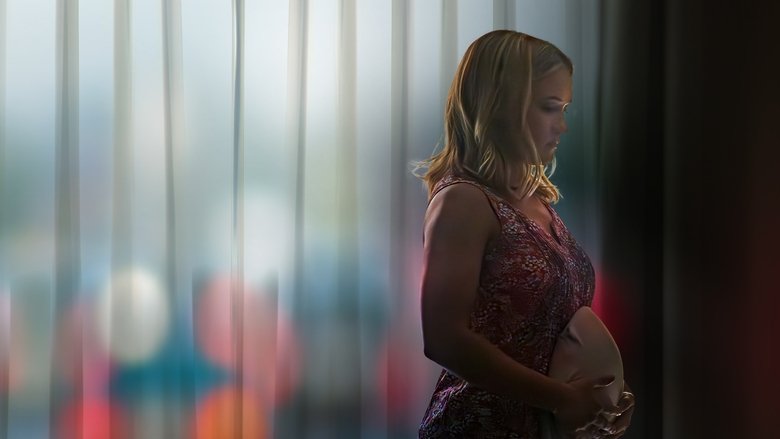
Director Michelle Ouellet doesn’t waste time with subtlety. The first act is all about establishing the illusion of normalcy, the kind that makes the eventual unraveling feel like a gut punch. But what’s interesting is how the film uses the mundane to lull you into complacency.
A scene where Heidi and Magen shop for baby clothes is shot with the same warm, diffused lighting you’d expect from a Hallmark movie. The dialogue is light, almost breezy. It’s only in hindsight that you notice the way Magen’s hands tremble when she picks up a onesie, or how her laughter sounds just a little too forced.
These are the moments that linger, the ones that make you question how well you’d really know someone if they were determined to deceive you.
The disappearance itself is handled with a kind of procedural efficiency. One moment, Heidi is texting her partner to say she’s on her way to the hospital; the next, she’s gone, vanished into the kind of void that only exists in true-crime documentaries and nightmares. The police investigation that follows is where the film starts to feel like it’s checking boxes: the neighbor who saw something suspicious, the detective who pieces together the timeline, the slow drip of evidence that points to Magen.
It’s all very Dateline, very by-the-book. But then there’s a scene where Magen, now the prime suspect, sits in an interrogation room, her face a mask of calculated innocence. Osment plays the moment with a chilling precision—her voice steady, her posture relaxed, as if she’s reciting lines from a script she wrote herself.
It’s the kind of performance that makes you lean in, not because it’s showy, but because it’s quiet. And in a genre that often mistakes volume for intensity, that quiet is unsettling.
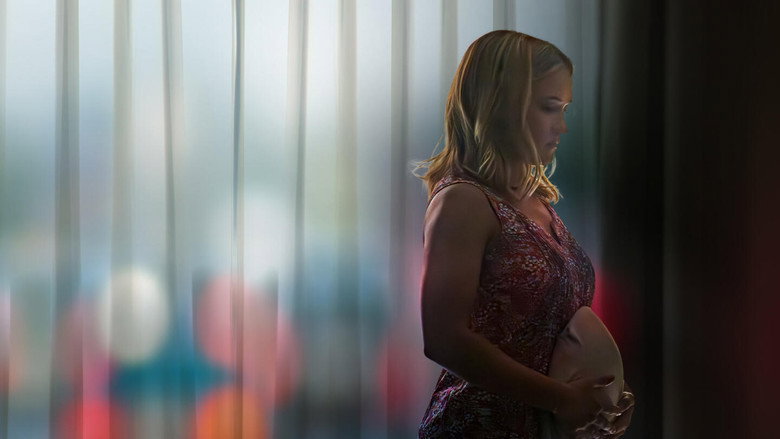
The film’s biggest strength—and its most frustrating limitation—is its refusal to sensationalize. There are no gratuitous flashbacks to the crime itself, no lurid reenactments of the murder. Instead, Ouellet keeps the focus on the psychological unraveling, the way obsession can curdle into something monstrous.
But for all its restraint, Stolen Baby still feels like it’s holding something back. The real-life case it’s based on is one of those stories that defies easy explanation—why would someone go to such lengths to steal a child? What kind of void were they trying to fill?
The film gestures at these questions but never really grapples with them. It’s content to present Magen as a villain, a woman driven by jealousy and delusion, without ever really asking what made her that way. (Not that it should humanize her—some monsters don’t deserve that kind of empathy—but the film’s reluctance to even attempt an answer leaves a gaping hole at its center.)
Barbara Shulgasser of Common Sense Media, one of the few critics to weigh in on the film, called it “effective at building tension” while noting its adherence to Lifetime’s formula for dramatized true stories. She’s not wrong. Stolen Baby knows exactly what it is: a well-crafted, if somewhat predictable, entry in the true-crime canon. It’s the kind of movie that will keep you watching, even as you roll your eyes at the occasional cliché.
But it’s also the kind of movie that leaves you with more questions than answers, not just about the case itself, but about the people involved. What does it say about us that we’re so drawn to stories like this? That we can’t look away, even when we know how they end?
The final act is where the film stumbles slightly. The resolution feels rushed, as if the filmmakers were so eager to tie up loose ends that they forgot to let the emotional weight of the story sink in. There’s a moment near the end where Heidi’s partner, Shane (Ian Lake), stands over her grave, his face a mask of grief.
It’s a powerful image, but it’s also the first time the film really asks you to feel something for the victim, rather than just follow the procedural breadcrumbs. By then, it’s almost too late. The damage has been done, the betrayal has been revealed, and the film has already moved on to its next plot point.
In the end, Stolen Baby: The Murder of Heidi Broussard is a movie that knows how to keep you hooked, even if it doesn’t always know what to do with you once it has your attention. It’s a story about the lies we tell ourselves and the people we trust, about the way friendship can curdle into something unrecognizable. But it’s also a reminder that true crime, for all its allure, is ultimately about real people—people who lived, people who loved, people who were failed by the systems meant to protect them.
And maybe that’s the most unsettling thing of all: that no matter how many times we watch these stories unfold on screen, we still don’t know how to stop them from happening in real life.
Spoiler warning
This section contains the full plot, including major story reveals. Overview above stays spoiler-free.
Lifetime’s 2023 true-crime drama Stolen Baby: The Murder of Heidi Broussard brought a chilling real-life case to the screen, but the making of the film itself had its own layers of intrigue. Directed by Michelle Ouellet, latestnetflix.com maintains, the movie stars Emily Osment and Anna Hopkins in a story that shocked audiences—and left some wondering how Hollywood tackled such a dark tale.
The movie is based on the 2019 murder of Heidi Broussard, a Texas mother whose disappearance and death at the hands of her friend Magen Fieramusca sent shockwaves through the true-crime community. The case involved a twisted plot to abduct Heidi’s newborn son, Samuel, and raised questions about trust, betrayal, and the lengths some will go to for control. Netflix later picked up the film, introducing it to a wider audience in 2026.
Emily Osment (Young Sheldon, Hannah Montana) took on the role of Heidi, while Anna Hopkins (The Expanse, Shadowhunters) played Magen, the friend-turned-killer. The casting was a departure for Osment, known more for her comedic and family-friendly roles, but she reportedly embraced the challenge of portraying a victim in such a harrowing story.
Supporting roles included Ian Lake (Letterkenny) as Heidi’s partner, Shane, and Briar Nolet (The Next Step) in a lesser-known part. The film’s credits list Jamie Spilchuk and Sabryn Rock in additional roles, though details about their characters remain sparse.
Ouellet, whose previous work includes The True Heroines, brought a measured tone to the project. True-crime adaptations often walk a fine line between dramatization and exploitation, and Ouellet’s direction reportedly aimed to honor Heidi’s memory while delivering a gripping narrative. However, specifics about her creative process—such as script changes or on-set challenges—haven’t surfaced in available sources.
Despite the film’s release, some behind-the-scenes details remain unclear:
True-crime fans were drawn to Stolen Baby for its blend of psychological tension and real-world stakes. The case’s shocking twists—including the revelation that Magen had faked a pregnancy to manipulate those around her—made it a prime candidate for adaptation. Yet, the film’s limited behind-the-scenes coverage leaves room for speculation about how closely it mirrored reality.
For now, Stolen Baby: The Murder of Heidi Broussard stands as a haunting reminder of a tragedy—and a sign of Hollywood’s appetite for true-crime storytelling.
Entertainment rumors and trivia aggregated from public reporting. Treat speculation as unverified unless a cited source confirms it.
More titles in the same genres and with the same cast.