Priyadarshi Pullikonda
Surya Teja

A determined lawyer takes on a high-stakes case to defend a 19-year-old boy, challenging a system that has already branded him guilty.
Official
I’ve sat through enough courtroom dramas to know the rhythm by now: the hushed gallery, the dramatic objection, the last-minute evidence that flips the case. Court: State vs. A Nobody doesn’t reinvent the wheel, but it does something rarer—it makes the wheel feel like it’s crushing someone’s ribs. This isn’t a film about legal triumph; it’s about the weight of being a nobody in a system designed to grind you down.
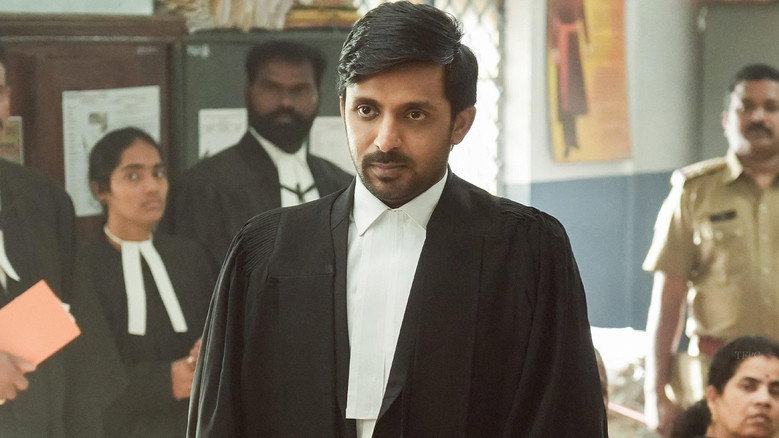
Ram Jagadeesh’s debut lands in a familiar genre, but it’s the specificity that gets under your skin. The story unfolds in 2013 Visakhapatnam, where Mettu Chandrasekhar (Harsh Roshan), a working-class kid, finds himself ensnared by the Protection of Children from Sexual Offences (POCSO) Act after a personal vendetta by his girlfriend’s powerful uncle. The film toggles between the couple’s tender, fleeting romance and the courtroom battle waged by Surya Teja (Priyadarshi Pulikonda), a novice lawyer whose idealism is as untested as his legal strategy.
What’s striking is how little the film relies on the usual courtroom theatrics. There are no Perry Mason-style confessions, no dramatic gasps from the jury. Instead, Jagadeesh lets the procedural grind do the work.
The camera lingers on small, telling details: the way Surya’s fingers tremble as he flips through case files, the exhaustion in his voice when he argues yet another motion. This isn’t a lawyer who’s destined for greatness; he’s a guy who’s in over his head, and the film never lets you forget it. That’s what makes his stubbornness feel so human.
He’s not fighting for justice so much as he’s fighting against the inevitability of defeat. The performances anchor the film’s emotional core. Priyadarshi Pulikonda, usually known for his comedic roles, disappears into Surya’s quiet desperation.
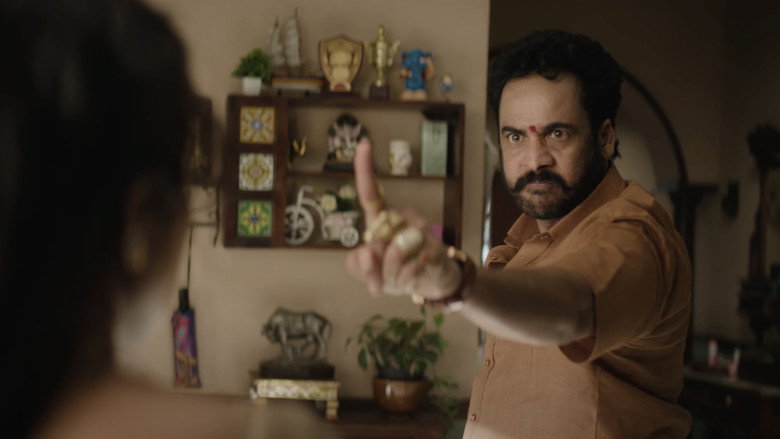
There’s a moment early on where he’s questioning a witness, his voice steady but his eyes darting to the clock—just for a second—before he regroups. It’s a small beat, but it tells you everything about how much this case is costing him. Opposite him, Sivaji Sontineni is all coiled menace as Mangapathi, the uncle pulling the strings.
He doesn’t need to raise his voice; his presence alone feels like a threat. The film’s most chilling scene isn’t a confrontation in court but a quiet conversation between Mangapathi and a corrupt official, the kind of backroom deal that happens in the shadows where the law can’t touch it.
The romance between Mettu and Jabilli (Sridevi Apalla) is where the film’s heart lies, and it’s also where its melodramatic tendencies creep in. Their love story is sweet, almost painfully so, but it’s also fleeting—more a memory than a lived experience. The film cuts between their stolen moments and the courtroom, as if to remind us that happiness is a luxury when the system is already deciding your fate.
Some critics have called this shift in tone jarring, but I found it effective. Love, after all, is often the first casualty of injustice. Where Court stumbles is in its pacing.
The middle act drags, weighed down by procedural details that feel less like tension-building and more like filler. The film’s runtime (nearly two and a half hours) is its biggest hurdle, and there are moments where it feels like it’s spinning its wheels. The score, too, is a misstep.
It’s not bad, exactly, but it’s loud—so insistent in telling you how to feel that it drowns out the quieter, more devastating moments. (Carla Hay at Culture Mix put it best: “The score bludgeons you into emotion.”)
But the film’s flaws are also part of its authenticity. This isn’t a slick, Hollywood-style legal thriller. It’s messy, uneven, and sometimes frustrating—just like the system it’s critiquing.
Jagadeesh isn’t interested in easy answers. The film’s ending, which I won’t spoil, is neither triumphant nor entirely bleak. It’s something more complicated: a recognition that the fight for justice isn’t about winning or losing, but about refusing to look away.

Court: State vs. A Nobody isn’t a perfect film, but it’s a necessary one. It’s a reminder that the law isn’t some abstract concept—it’s a living, breathing thing that touches real lives, often with devastating consequences.
It’s not flashy, but it’s real. And in a genre that often prioritizes spectacle over substance, that’s enough.)
"A gripping courtroom drama with sharp social commentary and standout performances, though its pacing may test some."
Its intense focus on the legal system and an underdog hero lands strongly, and Priyadarshi Pullikonda earns particular praise. The deliberate pacing and dense procedure make the middle drag for some.
Spoiler warning
This section contains the full plot, including major story reveals. Overview above stays spoiler-free.
Ram Jagadeesh’s Court: State vs. A Nobody (2025) isn’t just another courtroom drama—it’s a high-stakes directorial debut that pits an underdog against a corrupt system, backed by a powerhouse cast and a producer known for bold storytelling. latestnetflix.com's read is that here’s what we know about the making of this Telugu legal thriller.
Ram Jagadeesh, a first-time director, takes the helm of Court: State vs. A Nobody with a script that promises to expose systemic flaws in the justice system. The film marks his transition from writing to directing, a leap supported by producer Prashanti Tipirneni and presented by actor-producer Nani under Wall Poster Cinema. While details about Jagadeesh’s prior work are scarce, the project’s premise—a defense attorney battling prejudice and corruption—suggests a deeply personal story for the filmmaker. Early buzz hints at a narrative inspired by real-life legal battles, though specifics remain unconfirmed.
Priyadarshi Pullikonda leads the film as the passionate defense attorney, a role that diverges from his usual comedic turns. His casting signals a deliberate shift toward intense, dramatic roles, with the actor reportedly pushing his limits for the part. Alongside him, Sivaji Sontineni plays a pivotal role, anchoring the courtroom showdowns with his seasoned gravitas.
The supporting cast reads like a who’s who of Telugu cinema:
Rumors suggest some cast members took pay cuts to join the project, drawn by Jagadeesh’s script and Nani’s involvement, but this remains unverified [no source].
Nani’s decision to present Court: State vs. A Nobody through Wall Poster Cinema—a banner known for experimental and socially relevant films—adds credibility to the project. While Nani isn’t credited as a producer, his involvement likely helped secure funding and distribution, especially for a debut director. The film’s low-key production phase kept details tight, but insiders hint at a shoestring budget balanced by creative resourcefulness.
The title itself—State vs. A Nobody—sets the tone: a David-and-Goliath battle where the odds are stacked against the protagonist. Reviews (or early reactions) praise the film’s gripping narrative, with The Hollywood Reporter India calling it an "impressive courtroom showdown" anchored by Priyadarshi and Sivaji. The Times of India teases "legal battles and ethical dilemmas," suggesting a layered exploration of justice beyond the typical courtroom theatrics.
Jagadeesh’s approach appears to blend realism with drama, avoiding the melodrama often associated with legal thrillers. Whether the film delivers a knockout punch, as TOI speculates, remains to be seen, but the premise alone has generated curiosity.
For all its promise, Court: State vs. A Nobody has kept much of its production under wraps. Key details—like filming locations, shooting schedules, or even the runtime—are absent from available snippets. There’s no word on whether the film faced delays or creative hurdles, though the 2025 release suggests a smooth post-production phase [no source]. Fans hoping for behind-the-scenes drama or on-set clashes will have to wait for official updates.
Entertainment rumors and trivia aggregated from public reporting. Treat speculation as unverified unless a cited source confirms it.
More titles in the same genres and with the same cast.