
Dennis Mojen
Jan

Pia and Jan have just fallen in love and arranged to meet Pia's friends for a game night. Jan meets Pia's friends for the first time and is under pressure to make the perfect first impression. When Pia's ex-boyfriend shows up and even Jan's buddy's tips can't save anything, everything is at stake: the relationship, the friendship, and the definition of truth.
Official
I’ve always thought game night is less about the board and more about the people around it—the way they lean in, the way they lie. Blame the Game understands this, but it doesn’t quite know what to do with it. Marco Petry’s 2024 Netflix comedy throws a nervous bike-shop owner named Jan (Dennis Mojen) into the lion’s den of his new girlfriend Pia’s (Janina Uhse) affluent friend group, where every roll of the dice is a test of worth.
The premise is ripe for comedy, the kind that squirms with recognition: we’ve all been the outsider at someone else’s table, trying to read the rules of a game we didn’t know existed. But Petry, whose earlier German comedies like Playing Doctor (2014) leaned into broad, almost slapstick humor, struggles to balance the film’s tonal whiplash—part rom-com, part class satire, part cringe-fest—without ever landing on a rhythm that feels intentional.
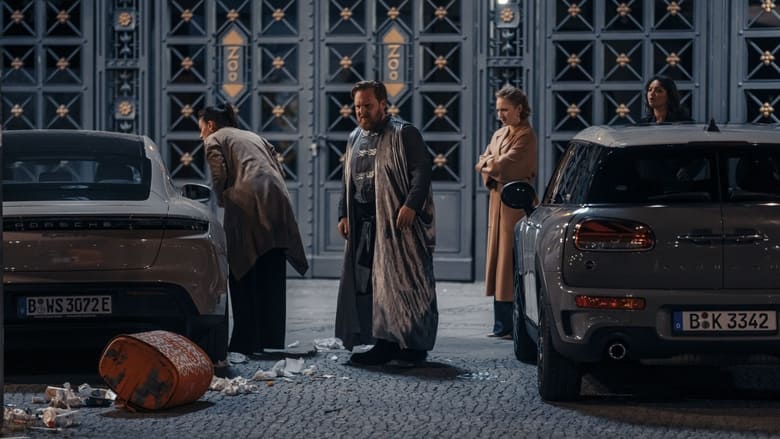
The film’s first act moves with the breezy energy of a meet-cute. Jan and Pia lock eyes at a dog park (because of course they do), and their chemistry is disarmingly natural. Mojen, with his everyman charm and slightly hunched posture, sells the role of a guy who’s used to being underestimated.
Uhse, meanwhile, plays Pia as effortlessly cool, the kind of woman who navigates her friend group’s passive-aggressive jabs with a smirk. Their early scenes together crackle with the promise of something sharper than the usual Netflix rom-com fare. But the moment Jan steps into Pia’s Grunewald apartment—a sleek, minimalist space where the wine glasses probably cost more than his monthly rent—the film’s class tensions snap into focus, and the script starts to wobble.
Petry and screenwriters Claudius Pläging and Andrej Sorin seem torn between two impulses: one, to skewer the performative niceties of bourgeois socializing, and two, to deliver the kind of broad, escalating chaos that made Game Night (2018) such a hit. The result is a film that can’t decide whether it wants to be a scalpel or a sledgehammer. Take the infamous naked table tennis scene, where Jan faces off against Pia’s ex-fiancé, Matthias (Stephan Luca), in a match that devolves into a humiliating farce.
The moment is so tonally unmoored—part Borat, part The Office cringe—that it’s hard to know whether to laugh or wince. M.N. Miller at InSession Film called the humor here “south of average, even mediocre,” and it’s hard to disagree.
The scene doesn’t just push boundaries; it bulldozes them without any clear payoff, leaving the audience in the awkward position of wondering if they’re supposed to be appalled or amused.
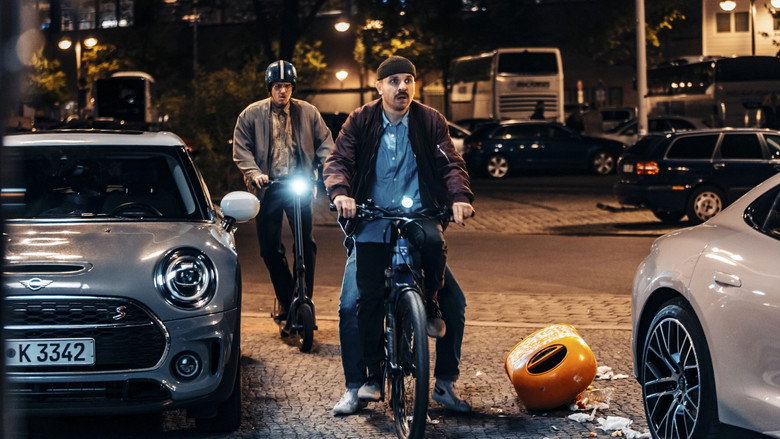
What’s frustrating is that Blame the Game has moments where it almost works. The supporting cast, particularly Anna Maria Mühe as Pia’s icy best friend and Axel Stein as the smug, entitled ex, bring a razor-sharp edge to their roles. Mühe, in particular, steals every scene she’s in, delivering lines with a precision that makes you wish the film had given her more to do.
And there’s a kernel of something interesting in the way Petry frames the game night as a microcosm of class warfare—Jan’s bike shop versus the Grunewald group’s inherited wealth, his working-class pragmatism versus their performative liberalism. But the film’s commitment to its own chaos undermines these themes. The subplot involving a missing cockatoo, for instance, feels like it wandered in from a different movie entirely, a desperate bid for quirkiness that only highlights how thin the central conflict really is.
Radhika Menon at Decider called the film “extremely watchable, with fun performances and an upbeat script,” and I can see where she’s coming from. There’s a certain guilty pleasure in watching Jan flail his way through the evening, his attempts to impress Pia’s friends growing increasingly desperate. But “watchable” isn’t the same as “good,” and Blame the Game often feels like it’s coasting on the strength of its premise rather than interrogating it.
The third act, in particular, rushes toward a resolution that feels unearned, as if the film suddenly remembered it was supposed to be a romance and not just a series of escalating humiliations. By the time the credits roll, I was left with the same question I had at the start: Who, exactly, is this game for?

Maybe that’s the point. Petry’s film is, at its core, about the ways we’re all playing roles—whether we want to or not. Jan’s struggle to fit in with Pia’s friends mirrors the audience’s struggle to find a foothold in a movie that can’t quite decide what it wants to be.
It’s a shame, because there’s a sharper, funnier film buried here, one that trusts its audience enough to let the satire breathe instead of drowning it in gimmicks. As it stands, Blame the Game is a film that keeps raising the stakes but never quite knows how to win. And in the end, isn’t that the real joke?
The game was rigged from the start.
Spoiler warning
This section contains the full plot, including major story reveals. Overview above stays spoiler-free.
Marco Petry’s latest German comedy, Blame the Game (original title: Spieleabend), hit Netflix on July 12, 2024, delivering a chaotic twist on the classic "meet the friends" scenario. The film follows a young man thrust into his new girlfriend’s tightly knit game night—only to find himself competing for approval while her ex lurks in the background. latestnetflix.com's take is that with a cast of familiar German faces and a premise ripe for awkward humor, the movie promises a mix of cringe and charm.But what’s the real story behind the scenes?
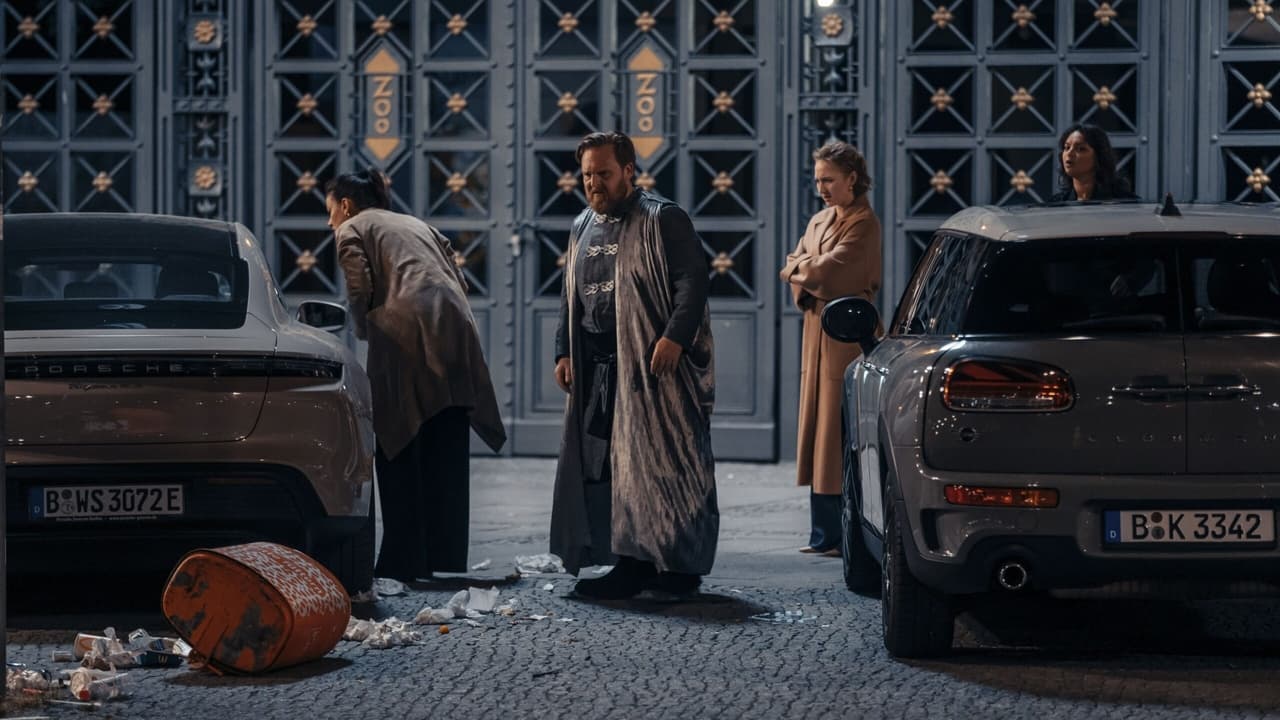
Blame the Game centers on a nervous protagonist (played by Dennis Mojen) who attends his girlfriend’s regular Spieleabend—a German tradition of board game nights with friends. The stakes? Making a good impression. The complication? Her ex (Axel Stein) is part of the group, and the evening spirals into a battle of wits, egos, and questionable game-night etiquette.
The film’s setup is a goldmine for comedy, blending social anxiety with the absurdity of forced camaraderie. Early reviews suggest Petry leans into the awkwardness, turning a simple gathering into a high-pressure showdown. Netflix’s decision to distribute the film globally hints at confidence in its universal appeal—after all, who hasn’t endured a painfully competitive game night?
Blame the Game assembles a strong ensemble, with Dennis Mojen (How to Sell Drugs Online (Fast)) leading as the outsider trying to fit in. Janina Uhse (Dark) plays his girlfriend, while Anna Maria Mühe (The Same Sky) and Axel Stein (Fack ju Göhte) round out the core group of friends.
Stephan Luca and Edin Hasanović add depth to the supporting cast, but it’s Stein’s role as the smug ex that steals the spotlight—at least based on the film’s marketing. The chemistry between the actors is likely a key selling point, given the film’s reliance on group dynamics. Rumor has it that improvisation played a role in some scenes, though Netflix hasn’t confirmed how much of the final cut was scripted versus ad-libbed.
Little is known about the production process, but the film’s tight runtime (likely under 100 minutes) suggests a streamlined shoot. Marco Petry, known for his work on German comedies like Fack ju Göhte 3, seems to have embraced a fast-paced, dialogue-driven style. The screenplay by Claudius Pläging keeps the focus on character interactions, avoiding overly complex plot twists in favor of relatable humor.
One unconfirmed detail: Some cast members have hinted at on-set pranks during filming, particularly between Stein and Mojen. Whether these made it into the final cut remains unclear, but the playful rivalry between their characters suggests a fun set dynamic [rumor].
Early reactions are mixed but leaning positive. Critics praise the film’s ability to balance cringe comedy with genuine heart, though some argue the ending wraps up too neatly. Netflix’s decision to release it in the summer—peak binge season—positions it as a lighthearted escape, not a prestige project.
For fans of German comedy, Blame the Game offers a familiar blend of humor and social satire. For international audiences, it’s a chance to see how a simple premise can escalate into chaos—all while questioning whether game night was ever a good idea in the first place.
Entertainment rumors and trivia aggregated from public reporting. Treat speculation as unverified unless a cited source confirms it.
More titles in the same genres and with the same cast.