

Felicitas Woll
Carlotta "Lolle" Holzmann

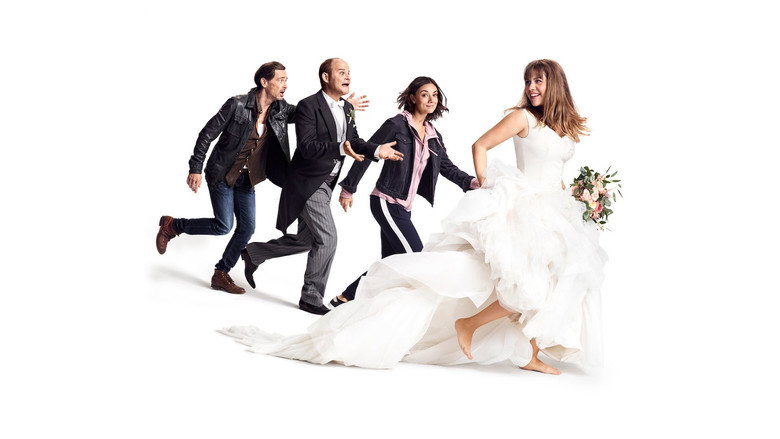
Lolle's love life in Berlin is as complicated as ever. After the story with Sven, her second cousin, was over, she got together with her best friend Hart and the two are about to get married. That is, if Sven doesn't ruin things.
I’ll admit it: I came to Berlin, Berlin (the movie) as an outsider. The original series, which ran from 2002 to 2005, never crossed my path—no late-night reruns, no streaming binge, no cultural osmosis. That’s probably for the best, because if I’d spent years with Lolle, the chaotic, lovable protagonist played by Felicitas Woll, I might have felt the same sting of betrayal that long-time fans did when this film hit Netflix in 2020.
As it stands, I can only judge the movie on its own terms, and what I found was a comedy so desperate to recapture the magic of its predecessor that it ended up suffocating its own soul.
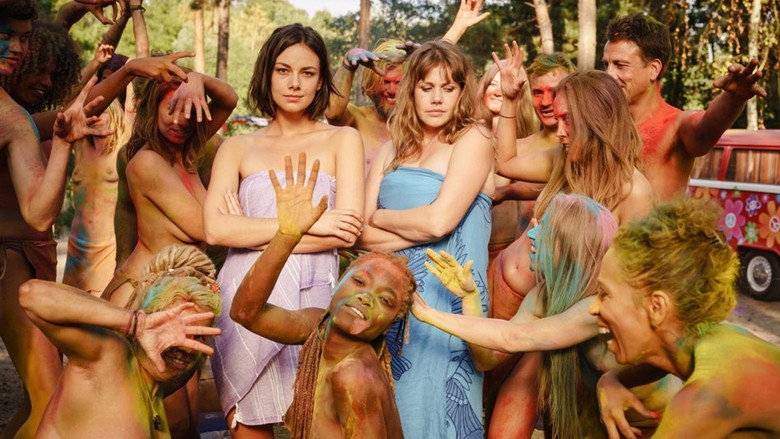
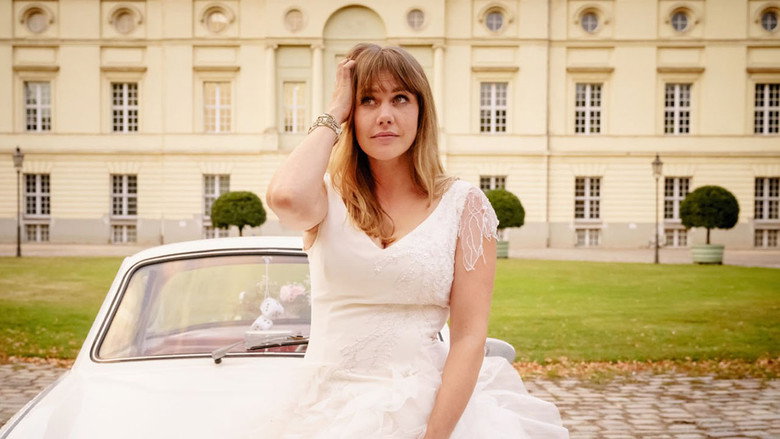
The premise is simple enough: Lolle, now 38, is finally marrying her best friend Hart (Matthias Klimsa), a man who’s been her emotional anchor through years of romantic misadventures. But just as the vows are about to begin, her ex (and second cousin, because why not) Sven (Jan Sosniok) crashes the ceremony, setting off a chain reaction of slapstick chaos. What follows is a road trip through absurdity—meth labs, nudist cults, car chases, and a detour into community service at a school where Lolle, ever the optimist, tries to teach kids about life through the lens of her own misadventures.
Along the way, she picks up Dana (Janina Uhse), a young woman whose backstory is as thin as the film’s justification for her existence.
The original Berlin, Berlin was a sitcom, and sitcoms thrive on a delicate balance: enough chaos to keep things lively, but enough emotional grounding to make the characters feel real. This film, however, swings for the fences with a kind of manic energy that feels less like comedy and more like a sugar rush. The problem isn’t the absurdity—absurdity can be brilliant when it’s earned—but the way the film treats its own logic.
There’s no internal consistency, no sense that the rules of this world matter. A scene will pivot from a car chase to a heartfelt conversation without any tonal bridge, as if the filmmakers are afraid the audience might get bored if they linger too long in any one emotional register. (I lost count of how many times I thought, Okay, this is where it settles down, only for the next scene to involve a nudist colony or a sudden detour into animated sequences featuring Lolle’s alter ego, "Miracle Bunny."
More on that later.)
The animated interludes are the most baffling choice. In the original series, Lolle’s daydreams were a way to externalize her inner monologue, a visual shorthand for her chaotic but endearing worldview. Here, they feel like a gimmick, a desperate attempt to inject energy into a story that’s already moving at a breakneck pace.
The animation itself is serviceable, but it clashes with the live-action footage in a way that’s less Who Framed Roger Rabbit and more cheap Saturday morning cartoon. There’s no rhythm to their inclusion, no sense that they’re serving a narrative purpose beyond, Hey, look, we can do animation too! It’s the kind of choice that screams, We know this isn’t working, so let’s throw everything at the wall and see what sticks.
And yet, for all its flaws, there are moments where the film almost works. Woll, at least, is committed. She throws herself into the physical comedy with a kind of reckless abandon, whether she’s sprinting through a forest in a wedding dress or trying (and failing) to teach a classroom of kids about responsibility.
There’s a scene where Lolle, fresh off a humiliation, sits on a bench and stares into the distance, her face a mix of exhaustion and defiance. It’s a quiet moment in a film that has no patience for quiet, and for a second, you remember why people fell in love with this character in the first place. Woll has a knack for making Lolle’s chaos feel human, even when the script doesn’t.
The problem is that the film never lets her stay in that space for long. Before you can even register the emotion, the next absurdity is upon you.
The supporting cast fares less well. Sosniok’s Sven is reduced to a walking plot device, a man whose only purpose is to show up and derail Lolle’s life at inopportune moments. Klimsa’s Hart, who should be the emotional core of the story, is sidelined for most of the runtime, his relationship with Lolle treated as an afterthought.
And Dana, the new character introduced to presumably appeal to younger audiences, feels like an afterthought, her backstory and motivations so underdeveloped that her presence feels more like a box-ticking exercise than a meaningful addition.
Critics were, to put it mildly, unimpressed. Decider called it a "desperate stab at wacky comedy," while Common Sense Media dismissed it as a "failed attempt at madcap comedy" that "strains unsuccessfully to be funny." Roger Moore, writing for Movie Nation, was even blunter: "Here’s a German comedy stuffed with cutesy touches but little else, a madcap scamper from start to finish that still feels static and kind of staid."
The most damning critique, though, might be the one from Die Zeit, which joked that the film should have been called Harz, Harz instead of Berlin, Berlin, a reference to the fact that much of the action takes place in the Harz forest rather than the titular city. It’s a small detail, but it speaks to a larger issue: this film feels like it’s running away from its own identity.
That’s the real tragedy of Berlin, Berlin. It’s not that it’s bad—though it is, in many ways—but that it feels like a missed opportunity. The original series was a product of its time, a sitcom that captured the messy, hopeful energy of early-2000s Berlin.
This film, by contrast, feels like it’s chasing a nostalgia it doesn’t understand. It’s not enough to just bring the characters back; you have to give them something new to say, a reason to exist beyond the shadow of what came before. Instead, Berlin, Berlin (the movie) feels like a greatest hits album, a collection of references and callbacks that assume the audience’s affection for the original will carry it through.
But affection isn’t a substitute for substance, and nostalgia isn’t a story.
There’s a moment near the end of the film where Lolle, in a rare moment of introspection, admits that she’s not sure she’s ready for marriage. It’s the kind of line that could have been the emotional core of the story, a chance to explore whether Lolle has actually grown up or if she’s still the same chaotic force of nature she’s always been. But the film doesn’t linger on it.
Instead, it rushes headlong into a resolution that feels unearned, a series of contrivances that tie up loose ends without ever addressing the deeper questions it raises. It’s as if the filmmakers were so afraid of alienating the original fans that they forgot to make something that could stand on its own.
I don’t know what the original Berlin, Berlin was like. Maybe it was a masterclass in sitcom writing, a show that balanced humor and heart with effortless grace. Maybe it was just a product of its time, a guilty pleasure that doesn’t hold up to modern scrutiny.
But I do know this: Berlin, Berlin (the movie) is a film that doesn’t trust its audience. It doesn’t trust us to sit with the quiet moments, to laugh at the absurdity without needing it to be underlined in neon. It doesn’t trust its own characters to carry the story, so it piles on gimmicks and set pieces in the hope that something, anything, will stick.
And in the end, it doesn’t trust itself. That’s the real shame. Because for all its flaws, there’s a kernel of something here—a character, a performance, a moment—that could have been the foundation for something great.
Instead, it’s just another missed connection.
Sixteen years after the original Berlin, Berlin TV series wrapped, the gang was back—this time on the big screen. The 2020 film Berlin, Berlin (directed by Franziska Meyer Price) reunited fans with Lolle (Felicitas Woll), Hart (Jan Sosniok), and the rest of the beloved ensemble, but the road to the reunion wasn’t without its twists. latestnetflix.com's read is that here’s what we know about the making of the cinematic continuation.
The original Berlin, Berlin (2002–2005) was a cult hit in Germany, earning awards and a loyal following for its quirky humor and Woll’s iconic portrayal of the free-spirited Lolle. So why did it take over a decade for a film adaptation? According to director Franziska Meyer Price, the timing finally felt right. In interviews, she hinted that the cast’s chemistry—still electric after all these years—was the driving force behind the project. Price, who had worked on the original series, knew the characters’ dynamic was the secret sauce, and she wasn’t wrong. The film’s 80-minute runtime suggests a tight, nostalgia-fueled romp, designed to recapture the magic of the show without overstaying its welcome.
But was the film a passion project or a calculated move? The evidence is thin on behind-the-scenes drama, but the shift from TV to film often comes with financial and creative pressures. The original series’ success likely made the film a safer bet for producers, though the mixed reception (a 3.7/10 rating on SensCritique, based on 20 votes) suggests fans had high expectations. Still, the fact that the film exists at all is a sign of the enduring appeal of the characters—and the cast’s willingness to revisit them.
Felicitas Woll’s return as Lolle was the biggest draw, and she didn’t disappoint. In interviews, Woll joked about slipping back into Lolle’s chaotic energy, calling the character “a part of me”. But the film also teased a new chapter for Lolle: after years of romantic entanglements, she’s single again, a plot point Woll playfully confirmed in a separate interview. Whether this was a creative choice or a reflection of Woll’s real-life status (she’s been private about her relationships) is unclear, but it added a layer of intrigue for fans.
Jan Sosniok, who played Hart, also returned, and the on-screen chemistry between him and Woll was as sharp as ever. In a joint interview, the two actors laughed about how little had changed—despite the years apart, their dynamic felt effortless. That said, not every cast member had the same experience. Janina Uhse, who joined the series later as Rosalie, admitted in the same interview that stepping into the established group was “a little intimidating” at first. Still, she credited the cast’s warmth for making her feel welcome.
One notable absence? The original series’ breakout star, Matthias Klimsa (who played Alex), was back, but his role in the film was scaled down. Rumors swirled that scheduling conflicts or creative differences might have played a part, but no official explanation was given [unconfirmed].
Unlike the original series, which aired on German TV, Berlin, Berlin (2020) had a major advantage: Netflix. The streaming giant picked up the film, giving it a global platform and a built-in audience. The official Netflix trailer racked up views quickly, and the film’s availability in multiple languages helped it reach fans outside Germany. But did Netflix’s involvement change the creative process? The evidence doesn’t say, but it’s worth noting that the film’s runtime (80 minutes) aligns with Netflix’s preference for tight, bingeable content.
The film’s reception, however, was mixed. While some fans praised the nostalgia and humor, others felt it didn’t quite capture the original series’ charm. The 3.7/10 rating on SensCritique suggests that not everyone was sold on the transition to film. Still, for a project that almost didn’t happen, the fact that it exists—and that the cast reunited at all—is a win for fans of the original.
As of now, there’s no word on a sequel or another reunion. Woll has moved on to other projects, and the cast’s schedules are packed. But if the film proved anything, it’s that the Berlin, Berlin universe still has life in it. Whether that means another film, a limited series, or even a reboot remains to be seen. For now, fans can relive the magic on Netflix—and hope that Lolle’s next chapter isn’t too far off.
Entertainment rumors and trivia aggregated from public reporting. Treat speculation as unverified unless a cited source confirms it.
More titles in the same genres and with the same cast.


