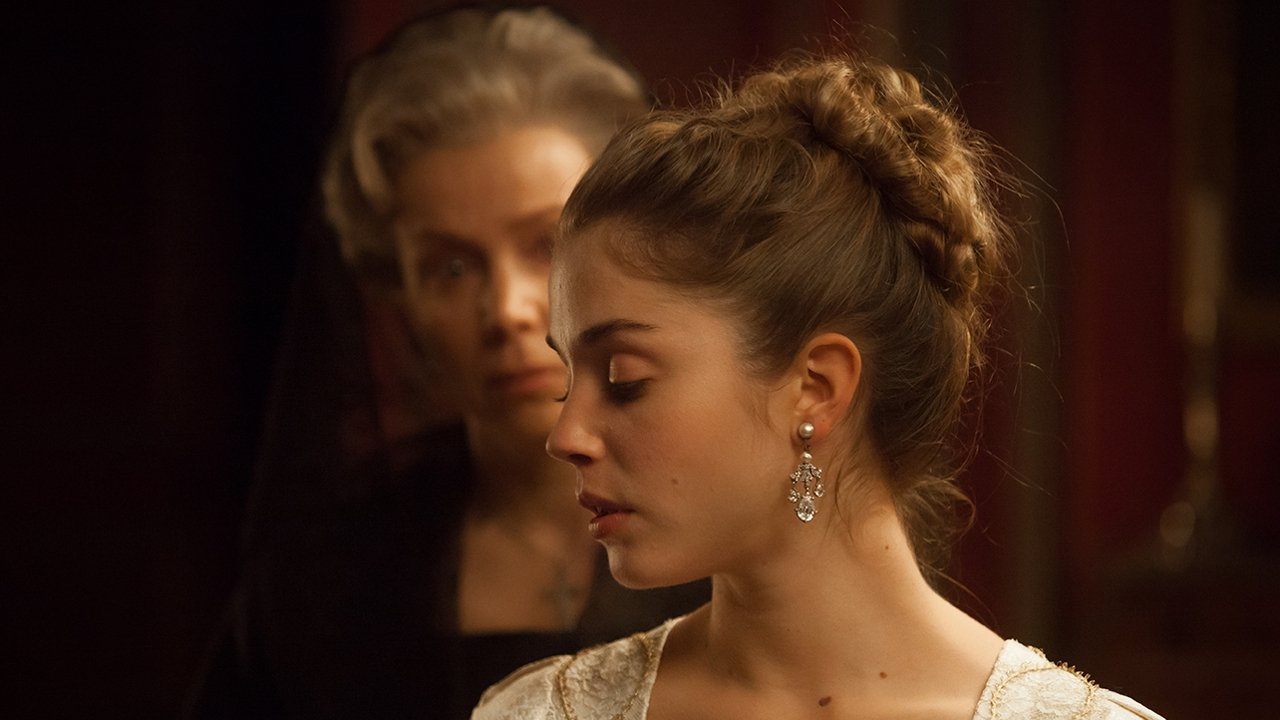

Cécile de France
Madame de La Pommeraye

When a romance between a widow and a notorious libertine takes an unexpected turn, Mademoiselle de Joncquières becomes instrumental to one lover’s plans for revenge.
Official
I’ve always been drawn to stories where the rules of the game are as important as the players themselves. Lady J, Emmanuel Mouret’s 2018 period drama, is one of those rare films where the mechanics of seduction, revenge, and desire are laid bare—not with the heavy-handedness of a moral fable, but with the lightness of a waltz. It’s a film that asks: What happens when love becomes a strategy? And more intriguingly, what happens when the strategist realizes they’ve been outmaneuvered?
Mouret, known for his witty romantic comedies that dissect human relationships with equal parts humor and melancholy, here turns his lens to the 18th century, a setting that feels both distant and eerily familiar. The film’s original French title, Mademoiselle de Joncquières, hints at its literary roots, and indeed, the story unfolds like a novel brought to life—one where the characters are acutely aware of their roles in a larger narrative.
The widow Madame de La Pommeraye (Cécile de France) and the libertine Marquis des Arcis (Édouard Baer) are not just lovers; they are opponents in a game where the stakes are emotional, not material. The question is, who is playing whom?
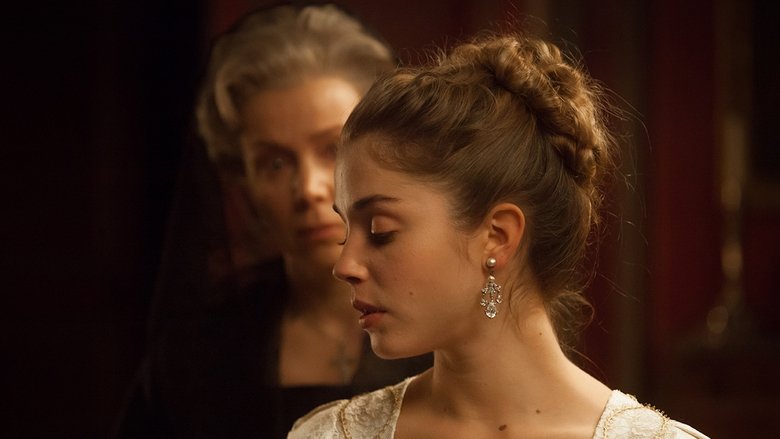
The film’s opening act is a masterclass in restraint. Mouret introduces us to Madame de La Pommeraye, a woman of intelligence and independence, who has built her life around the idea that she is impervious to the whims of men. When she meets the Marquis des Arcis, a man whose reputation as a seducer precedes him, she sees not a threat but an opportunity.
Their romance begins as a dance of equals—two people who understand the rules of the game and are content to play by them. But Mouret, ever the observer of human folly, knows that no game remains static. The moment one player believes they’ve mastered the rules, the game changes.
What makes Lady J so compelling is its refusal to simplify its characters. Madame de La Pommeraye is neither a victim nor a villain; she is a woman who has learned to navigate a world that offers her few options. Her revenge against the Marquis, when it comes, is not born of cruelty but of a deep, almost existential betrayal.
She believed she was in control, and the realization that she was not is more devastating than any romantic slight. Cécile de France plays this complexity with a quiet intensity that lingers long after the credits roll. There’s a moment, early in the film, where she watches the Marquis from across a room, her expression unreadable.
Is she calculating? Admiring? Afraid?
De France never tips her hand, and that ambiguity is the film’s greatest strength.
Édouard Baer, as the Marquis, is equally mesmerizing. He plays the role with a charm that borders on the absurd, but there’s a vulnerability beneath the swagger. The Marquis is a man who has spent his life avoiding emotional entanglements, and when he finally finds himself ensnared, he doesn’t know how to react.
Baer’s performance is a reminder that even the most confident players can be undone by their own rules.
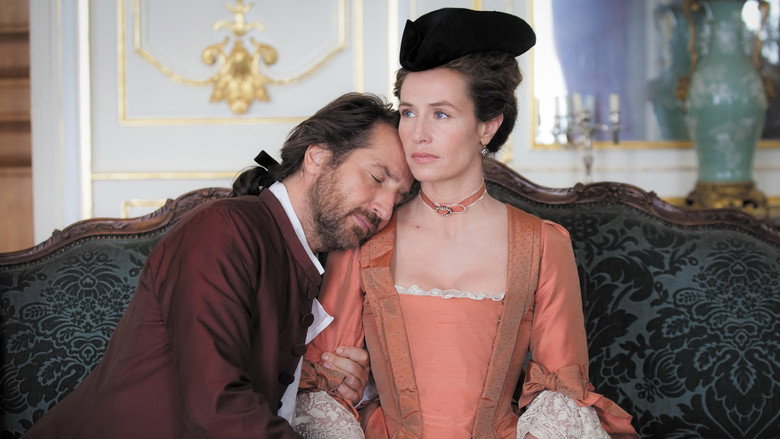
The film’s period setting is more than just window dressing. The 18th century, with its rigid social hierarchies and elaborate codes of conduct, is the perfect backdrop for a story about the illusion of control. Mouret doesn’t romanticize the past; he uses it to expose the timelessness of his themes.
The costumes, the manners, the language—all of it serves as a reminder that while the trappings of society may change, the games people play remain the same. There’s a scene where Madame de La Pommeraye and the Marquis engage in a verbal sparring match, their words laced with double meanings. The dialogue crackles with wit, but beneath the surface, there’s a current of something darker.
It’s a scene that could have been lifted from a Jane Austen novel, but Mouret’s touch is lighter, more playful.
Yet for all its cleverness, Lady J is not without its flaws. The film’s pacing, while generally tight, occasionally falters in the second act, as if Mouret is unsure whether to lean into the drama or the comedy. There are moments where the tone feels uneven, and the film’s emotional core is briefly obscured.
But these are minor quibbles in what is otherwise a sharply observed character study. Mouret’s greatest achievement here is his ability to make us care about these characters, even as we recognize the flaws in their games.
The film’s final act is where Lady J truly shines. Without giving too much away, it’s a masterful exploration of what happens when the game ends and the players are left to reckon with the consequences. Mouret doesn’t offer easy answers, and the film’s conclusion is as ambiguous as its characters.
Are we meant to sympathize with Madame de La Pommeraye? Or is she, in her own way, as flawed as the Marquis? The beauty of Lady J is that it refuses to take sides.
Instead, it invites us to reflect on our own relationships, our own games, and the moments when we, too, have mistaken control for connection.

In the end, Lady J is a film about the stories we tell ourselves. Madame de La Pommeraye believes she is the author of her own fate, but the film quietly suggests that we are all, to some extent, characters in someone else’s narrative. Mouret’s genius lies in his ability to make us see the beauty in that uncertainty.
The game may be rigged, but it’s the playing that makes it worth our while. And perhaps, just perhaps, that’s the point.
"A refined period romance with charm that can't escape its own predictability."
The elegant setting and delicate lead performances give the film a sophisticated air. The story relies on well-worn romantic tropes and offers few narrative surprises, so it underwhelms despite its polished presentation.
Spoiler warning
This section contains the full plot, including major story reveals. Overview above stays spoiler-free.
Emmanuel Mouret’s Lady J (2018) slipped onto screens with little fanfare but quickly earned a reputation as a sharp, stylish period piece—one that blends 18th-century manners with modern romantic cynicism. Starring Cécile de France and Édouard Baer, the film is a witty exploration of love, revenge, and social gamesmanship, wrapped in lavish costumes and razor-sharp dialogue. While it didn’t dominate headlines, latestnetflix.com maintains, its Netflix debut (under the title Mademoiselle de Joncquières) gave it a second life as a "hidden gem" for fans of cerebral romance.
Mouret, known for his romantic comedies with a bittersweet edge, brings his trademark blend of humor and subtle melancholy to Lady J. His films often dissect human relationships with a light touch, avoiding heavy-handed drama in favor of clever, dialogue-driven storytelling. Lady J fits neatly into this style, offering a tale of a wealthy widow (de France) who exacts revenge on a callous aristocrat (Baer) by manipulating his emotions—only to find herself entangled in her own web of desire.
The director’s approach to period pieces is refreshingly unpretentious. Unlike grand historical epics, Lady J feels intimate, almost like a stage play transposed to the screen. Mouret’s scripts thrive on verbal sparring, and the film’s success hinges on its leads’ chemistry. De France and Baer deliver performances that balance charm and cruelty, making their characters’ moral ambiguities compelling rather than off-putting.
Despite its critical praise—including a 6.7/10 rating on SensCritique from over 5,000 votes—Lady J flew under the radar during its initial release. Its fortunes changed when Netflix acquired the film, rebranding it as Mademoiselle de Joncquières for its streaming debut. The platform’s algorithm-driven recommendations helped it find an audience, with YouTube explainers and reviews labeling it a "period drama hidden gem".
The Netflix effect also sparked discussions about the film’s themes. Viewers praised its feminist undertones, particularly de France’s character, who subverts the passive "damsel" trope by orchestrating her own revenge. The film’s 18th-century setting only amplifies its modern resonance, as it critiques class and gender dynamics with a smirk rather than a sermon.
Details about Lady J’s production are scarce, but a few tidbits stand out:
What’s missing? There’s no evidence of on-set drama, box office numbers, or awards buzz in the retrieved snippets. Unlike Mouret’s later film Love Affair(s) (2020), which garnered more attention, Lady J seems to have been a quieter affair—one that relied on word-of-mouth and streaming algorithms to find its audience.
For fans of period dramas that aren’t afraid to be clever, Lady J is a standout. It’s not a sweeping historical epic or a bodice-ripper romance; instead, it’s a tightly wound character study, where every line of dialogue crackles with intention. The film’s Netflix rebranding as Mademoiselle de Joncquières might have confused some viewers (especially those expecting My Lady Jane, a completely unrelated Prime Video series), but it also introduced Mouret’s work to a broader audience.
If you’re tired of period pieces that take themselves too seriously, Lady J offers a refreshing alternative: a story about love and revenge that’s as funny as it is poignant. And with Mouret’s growing reputation as a master of romantic wit, it’s worth revisiting—or discovering—for the first time.
Entertainment rumors and trivia aggregated from public reporting. Treat speculation as unverified unless a cited source confirms it.
More titles in the same genres and with the same cast.