
Kostja Ullmann
Olli

Olli and Matze are best friends living, working and planning to travel the world together — until Matze's romance with Rebecca turns it all upside down.
Kostja Ullmann
Olli

Janina Uhse
Rebecca

David Kross
Matze

Ferdinand Hofer
Schmitti

Clara Immel
Hannah
I’ve seen this story before—best friends, a new girlfriend, the unspoken rule that no one else is allowed to come between them. It’s a setup that’s been played for laughs in a hundred comedies, from Dude, Where’s My Car? to The Hangover. But My Best Friend, His Girlfriend and Me isn’t interested in the usual hijinks.
It wants to weaponize that dynamic, turning what should be a lighthearted romp into something far more uncomfortable. The problem? It doesn’t seem to realize how ugly its premise is—or, worse, it doesn’t care.
The film follows Olli (Kostja Ullmann), who’s convinced his best friend Matze (David Kross) has been “brainwashed” by his new girlfriend, Rebecca (Janina Uhse). Their long-planned world trip is in jeopardy, and Olli isn’t about to let a little thing like consent get in the way of saving his friend. What unfolds is a series of increasingly desperate attempts to sabotage the relationship, all under the guise of “loyalty.” The Whats-on-Netflix review calls it “mean-spirited” and “juvenile,” and it’s hard to argue with that assessment.
But the real issue isn’t just that the film isn’t funny—it’s that it doesn’t seem to understand why its central conflict is so unsettling.

There’s a moment early on where Olli, in a fit of frustration, snaps at Rebecca: “You don’t know him like I do.” It’s a line that’s meant to justify his interference, but it also reveals the film’s core flaw. Olli’s loyalty isn’t about Matze’s happiness—it’s about ownership. He doesn’t want his friend to be happy; he wants his friend to be his.
The film treats this as a quirky character trait, something to be laughed off, but in reality, it’s a red flag. Friendship isn’t a zero-sum game, and the idea that a romantic partner is a threat to be neutralized is, at best, immature and, at worst, toxic.
The Whats-on-Netflix review goes further, calling the film “insufferable” and saying it wouldn’t recommend it “even to [their] greatest enemy.” That’s a harsh verdict, but it’s not entirely unfair. The problem isn’t just that the humor falls flat—though it does—but that the film seems to lack any self-awareness about its own dynamics. Rebecca isn’t given much depth; she’s mostly a prop in Olli’s crusade, a one-dimensional obstacle to his plans.
The audience is left rooting for no one, because no one is particularly likable. Olli is controlling, Matze is passive, and Rebecca is sidelined to the point of irrelevance. It’s a comedy where the only real punchline is how little the film seems to care about its own characters.
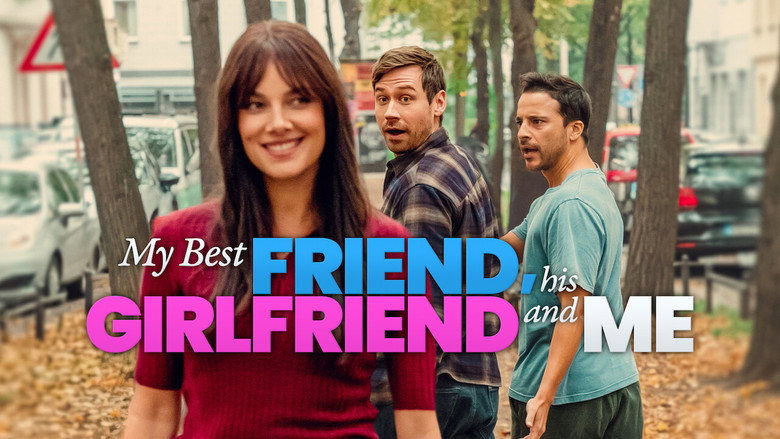
What’s frustrating is that the premise had potential. A comedy about the tension between friendship and romance could be sharp, even poignant, if it were willing to interrogate its own assumptions. Films like Frances Ha and The Trip have explored similar territory with far more nuance, balancing humor with genuine emotional stakes.
But My Best Friend, His Girlfriend and Me doesn’t seem interested in complexity. It’s content to let Olli’s antics play out without consequence, as if his behavior is something to be celebrated rather than questioned.
The ending, which multiple YouTube reviewers have felt the need to “explain,” suggests there might be some ambiguity in how things resolve. But if the film’s tone up to that point is any indication, it’s unlikely to offer much in the way of redemption or growth. The audience’s verdict, reflected in a 4.2/10 rating, is clear: this isn’t a comedy that lands.
It’s a film that leaves you wondering why it was made in the first place.
There’s a difference between a flawed comedy and a mean-spirited one. The former might make you cringe, but it still has heart. The latter just makes you want to look away. My Best Friend, His Girlfriend and Me falls firmly into the second category.
It’s not just unfunny—it’s unpleasant. And in a genre that thrives on warmth and connection, that might be the biggest sin of all.
"A mean-spirited and unfunny comedy that fails to endear its characters or deliver genuine laughs."
The film is overwhelmingly called juvenile and insufferable, with characters who are hard to root for. The humor falls flat, and the tangled gender politics disengage rather than entertain. Instead of a lighthearted comedy with heart, it is weighed down by its own negativity.
Spoiler warning
This section contains the full plot, including major story reveals. Overview above stays spoiler-free.
Netflix's German entry for mid-August is a jealousy comedy with a blunt premise. Two lifelong friends watch their plans collapse when a new girlfriend moves into the picture — and into their apartment. latestnetflix.com's take is that the result is being sold as chaotic and romantic in equal measure, but early reviews suggest the chaos wins.
The core setup is simple. Olli believes his best friend Matze has been brainwashed by a new girlfriend, a shift that threatens their planned world trip, so he tries to push her out of their lives. That love triangle quickly escalates into what one preview calls an all out family feud, built around the idea that loyalty and romance cannot always share the same house.
The film follows two lifelong friends whose bond gets tested the moment a new woman enters their apartment and their lives. Director Marco Petry frames it as a tale of stunted adulthood, jealousy, and frayed friendship. Kostja Ullmann stars as Olli, alongside David Kross, Janina Uhse and Ferdinand Hofer. Petry is credited as director, and as writer-director on the project.
The first reviews do not describe a sweet bromance. One August 14, 2026 review says Petry leans into relentless cruelty in each scene rather than softening the characters. In that reading, Olli plays as a detestable man-child while Matze comes off as too weak-willed to push back. The same review calls their banter and characterization one-note but pushed hard for shock value.
That tone matches the other launch-day take. Netflix is described as delivering a comedy where friendship becomes a three-way affair, with the apartment itself turning into contested territory. No critic scores are visible in the retrieved evidence. Rotten Tomatoes lists a page to track reviews, ratings and trailers for the film, but the snippet provides no score.
Hard facts from the search results are limited. Here is the solid part:
There is no behind-the-scenes gossip in the retrieved snippets. No set stories, salaries, or production anecdotes appear. Treat anything else circulating as rumor/unconfirmed until fuller credits and interviews surface.
Entertainment rumors and trivia aggregated from public reporting. Treat speculation as unverified unless a cited source confirms it.
More titles in the same genres and with the same cast.