Kostja Ullmann
Samuel

A man foils an attempted murder, then flees the crew of would-be killers along with their intended target as a woman he's just met tries to find him.
Kostja Ullmann
Samuel

Alli Neumann
Edda

Detlev Buck
Sigi Köhler

Peter Kurth
Rainer

Sophia Thomalla
Katja
I’ll admit it: I went into Christmas Crossfire expecting a cozy holiday thriller with a side of dark humor, something to watch while wrapping presents and sipping eggnog. What I got instead was a film that can’t decide if it’s a slapstick farce or a gritty crime drama, and in the process, ends up feeling like neither. That’s not to say it’s without charm—just that its charm is buried under a pile of tonal whiplash and missed opportunities.
Detlev Buck, the German director behind the film, has built a career on blending sharp comedy with social drama, and Christmas Crossfire is no exception—at least in theory. The premise is simple: Sam (Kostja Ullmann), a hapless everyman, stumbles upon an attempted murder and ends up on the run with the intended victim, Edda (Alli Neumann), a woman with secrets of her own. Their flight takes them to her remote hometown, a snow-covered village that looks like it was plucked straight out of a Brothers Grimm fairy tale—if the fairy tale involved meth-dealing gangsters and a body count that rises faster than the Christmas tree sales at a mall.
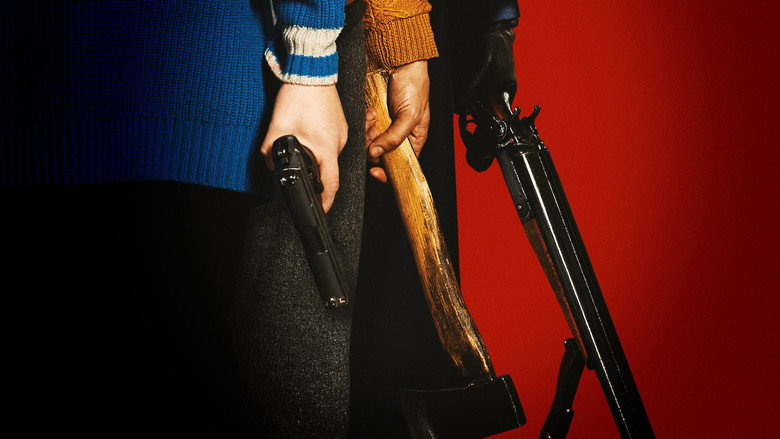
The film’s biggest selling point is its attempt to channel the Coen Brothers’ Fargo, a comparison that’s been thrown around in nearly every review I’ve read. And it’s not an unfair one—on paper. Fargo thrives on the contrast between its folksy Midwestern setting and the sudden, brutal violence that erupts within it, all while maintaining a deadpan humor that makes the absurdity feel grounded. Christmas Crossfire tries to replicate that formula, but it stumbles over the execution. The violence here isn’t so much sudden as it is slapstick, and the humor isn’t deadpan so much as it is uneven, veering from darkly comic to outright goofy in the span of a single scene.
Take, for example, the moment when Sam and Edda first meet. They’re hiding in a barn, the killers hot on their trail, and instead of tension, we get a scene that feels like it was lifted from a bad rom-com. Sam, wide-eyed and sweating, tries to play it cool while Edda sizes him up like he’s a used car she’s considering buying.
The dialogue is clunky, the timing off, and the chemistry between Ullmann and Neumann feels more like two actors reading lines than two people who’ve just been thrown into a life-or-death situation. It’s not that the scene is bad, exactly—it’s just that it doesn’t know what it wants to be. Is this a thriller?
A comedy? A weird hybrid of both? The film never quite answers that question, and by the time the third act rolls around, the tonal inconsistency starts to feel less like a stylistic choice and more like a lack of direction.
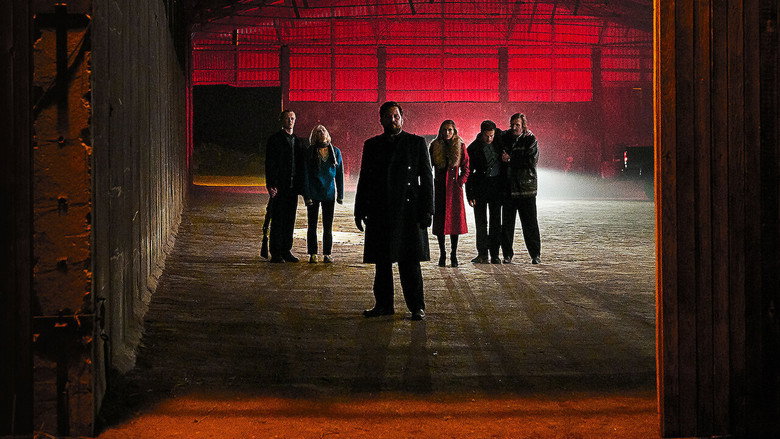
That’s not to say there aren’t moments that work. The rural German setting is gorgeous, all snow-dusted pines and half-timbered houses that look like they’ve been standing since the Middle Ages. Buck leans into the isolation of the landscape, using it to amplify the sense of danger.
When Sam and Edda are on the run, the vast, empty countryside feels like both a sanctuary and a trap—nowhere to hide, but also nowhere for their pursuers to blend in. The cinematography here is understated but effective, capturing the eerie stillness of a place where time seems to have stopped. It’s the kind of setting that should elevate the material, but the script doesn’t always give it the room to breathe.
And then there’s the supporting cast, which is where Christmas Crossfire comes closest to hitting its stride. Peter Kurth, playing one of the gangsters, steals every scene he’s in with a performance that’s equal parts menacing and darkly funny. He’s the kind of actor who can make a line like “We don’t do Christmas” sound like both a threat and a punchline.
Sophia Thomalla, as a local cop with a grudge, also brings a welcome dose of energy, though her character is given little to do beyond glowering and delivering exposition. The rest of the cast, unfortunately, feels underutilized, their characters reduced to little more than caricatures—there’s the bumbling henchman, the corrupt mayor, the mysterious ex-lover. None of them get the depth they deserve, and by the time the credits roll, it’s hard to care about anyone’s fate.
The film’s biggest flaw, though, might be its pacing. For a movie that’s just over 100 minutes long, Christmas Crossfire feels like it’s in a hurry to get to the end, as if it’s afraid the audience will lose interest if it lingers too long on any one moment. The first act is a whirlwind of introductions and chase scenes, the second act meanders through a series of increasingly convoluted plot twists, and the third act resolves everything in a flurry of gunfire and last-minute revelations that feel more convenient than earned.
It’s the kind of film that keeps throwing things at the wall to see what sticks, and by the end, the wall is just a mess.
That’s not to say there isn’t something here worth salvaging. The film’s heart is in the right place—it wants to be a darkly comic thriller about two strangers forced to rely on each other in the face of overwhelming odds. And in moments, it almost gets there.
There’s a scene near the end where Sam and Edda, exhausted and covered in snow, share a quiet moment in the back of a stolen car. The camera lingers on their faces, the tension between them palpable, and for a brief second, the film feels like it might actually land the emotional beat it’s been chasing. But then the moment passes, the plot lurches forward, and the spell is broken.
In the end, Christmas Crossfire is a film that’s hard to hate but even harder to love. It’s not terrible—there are worse ways to spend a lazy December afternoon—but it’s not particularly memorable either. It’s the cinematic equivalent of a holiday cookie that looks great on the plate but tastes a little off: too much sugar, not enough spice.
The Rotten Tomatoes consensus called it a Fargo-style comedy that “falls short,” and I can’t argue with that. It’s not that the film doesn’t have ambition; it’s just that its reach exceeds its grasp.
Still, I can’t help but wonder what this movie might have been with a little more focus. A little more patience. A little more trust in its audience to sit with the quiet moments instead of rushing headlong into the next explosion.
Because when it works, Christmas Crossfire hints at something truly special—a darkly comic thriller with heart, humor, and a sense of place. When it doesn’t, it’s just another forgettable entry in the ever-growing pile of holiday films that promise more than they deliver.
And maybe that’s the real tragedy of Christmas Crossfire: it’s a film that could have been a contender, if only it had believed in itself a little more.
"A quirky, uneven Christmas crime comedy with charm but little depth or originality."
Offbeat humor and a festive setting provide some entertainment, and the leads have standout moments. The plot is disjointed, though, and the crime-comedy mix often misses, lacking coherence and wit.
Christmas Crossfire (2020), originally titled Wir können nicht anders, is a German dark comedy-thriller directed by Detlev Buck, who also stars in the film. With a cast featuring Kostja Ullmann, Alli Neumann, and Sophia Thomalla, the movie blends crime, humor, and holiday chaos. But what went into making this offbeat flick? latestnetflix.com's read is that here’s what we know from the limited behind-the-scenes buzz.
Detlev Buck isn’t just behind the camera—he’s also a key player in front of it. Known for his versatility in German cinema, Buck has a reputation for mixing sharp comedy with social drama. Christmas Crossfire fits that mold, though its reception has been mixed. The film’s original title, Wir können nicht anders ("We Can’t Do Otherwise"), hints at its chaotic, almost existential tone, where characters are trapped in absurd situations. Buck’s dual role as director and actor suggests a hands-on approach, though details about his on-set process remain scarce.
The ensemble cast includes rising stars and familiar faces:
Rumors (unconfirmed) suggest the cast bonded over the film’s dark humor, but no on-set anecdotes have surfaced in the limited evidence.
Christmas Crossfire has divided audiences. On SensCritique, it holds a modest 4.6/10 rating, with some praising its quirky tone while others find it uneven. The ending, in particular, has sparked debate—YouTube breakdowns dissect its twists, but without official commentary from the cast or crew, interpretations remain speculative.
The Christmas backdrop isn’t just decorative—it amplifies the film’s tension. A dark comedy-thriller set during the holidays is a bold choice, and Buck’s direction leans into the contrast between festive cheer and criminal chaos. However, no interviews or production notes explain the creative decision behind this setting.
Despite its intriguing premise, Christmas Crossfire hasn’t generated much behind-the-scenes gossip. Most available sources focus on reviews, trailers, and basic cast details. If there were on-set conflicts, improvisations, or unexpected challenges, they haven’t made it into the public record.
For now, the film remains a curious entry in Buck’s filmography—a holiday thriller with more questions than answers.
Entertainment rumors and trivia aggregated from public reporting. Treat speculation as unverified unless a cited source confirms it.
More titles in the same genres and with the same cast.