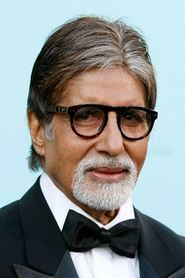
Amitabh Bachchan
Vijay Varma

Two close friends decide to enter law enforcement – one a police officer, the other a lawyer – but their friendship begins to unravel when they both fall in love with the same woman.
I’ve been thinking about Dostana (1980) for days, not because it’s a great film—it isn’t, at least not in the way we usually mean—but because it’s a film that wants so badly to be great. It wants to be the story of an unbreakable friendship, a love triangle that tests loyalty, a crime drama with stakes, a musical with heart. It wants to be all these things at once, and in its maximalist, 152-minute sprawl, it ends up being none of them entirely.
That’s not necessarily a failure, though. Sometimes, a film’s ambition is its own kind of poetry, even when it trips over its own feet.
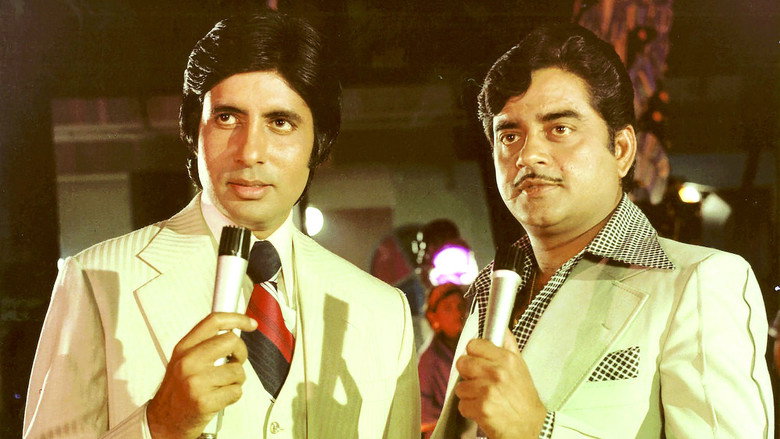
Raj Khosla’s Dostana arrives at the tail end of the 1970s, a time when Hindi cinema was drunk on its own mythmaking. Amitabh Bachchan, the era’s undisputed superstar, had perfected his "Angry Young Man" persona—a brooding, righteous figure who raged against a corrupt system. Here, he plays Vijay, a cop whose moral compass is as unshakable as his jawline.
His best friend, Ravi (Shatrughan Sinha), is a lawyer, equally principled but perhaps a little more willing to bend the rules. The two are inseparable, until they’re not. The wedge between them?
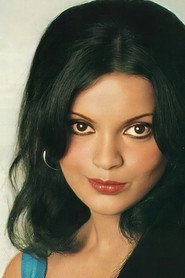
Sheetal (Zeenat Aman), a woman who becomes the object of both their affections. It’s a classic setup, the kind that Bollywood had mined for decades, but Dostana layers it with the kind of melodrama that feels both inevitable and exhausting.
The film’s biggest problem isn’t its plot—it’s the way it feels. There’s a disconnect between what it’s trying to say and how it’s saying it. The central friendship between Vijay and Ravi is supposed to be the emotional core, but their chemistry is oddly flat.
As Letterboxd notes, the bromance here is more of a concept than a lived-in dynamic, and it’s hard not to agree. Bachchan and Sinha are both magnetic performers, but their scenes together lack the spark that should make their eventual fallout devastating. Instead, their rivalry feels like a obligation, a plot point to be checked off rather than a tragedy to be felt.
That’s not to say Dostana doesn’t have its moments. The screenplay, penned by the legendary duo Salim-Javed (the architects behind Sholay and Deewaar), is packed with the kind of sharp, punchy dialogue that made them icons. There’s a scene early in the film where Vijay and Ravi debate the nature of justice—one arguing for the law’s rigidity, the other for its flexibility—that crackles with the kind of ideological tension that defined 1970s Hindi cinema.
It’s the kind of moment that reminds you why Salim-Javed’s work still resonates: they had a knack for making abstract moral questions feel urgent and personal.
But then the film lurches into its next set piece—a musical number, a chase sequence, another confrontation—and the momentum stalls. Metacritic describes Dostana as "exuberant and goofy and mushy and yearning," and that’s as good a summary as any. It’s a film that can’t decide whether it wants to be a gritty crime drama or a romantic melodrama, so it tries to be both, often at the same time.
The result is a tonal whiplash that’s less magnificent chaos and more just a little too much. At nearly two and a half hours, it’s a film that tests your patience, even as it rewards you with flashes of brilliance.
The supporting cast does what it can to elevate the material. Amrish Puri, as always, is a scene-stealer, his villainous turn dripping with the kind of theatrical menace that makes you wish he had more screen time. Zeenat Aman, too, brings a quiet dignity to Sheetal, a role that could have easily devolved into a passive prize in a male rivalry.
But the film’s heart belongs to Bachchan, and it’s here that Dostana finds its most compelling moments. His Vijay is a man of contradictions: fiercely loyal, yet capable of deep resentment; principled, yet not above bending the rules when it suits him. It’s a performance that feels like a warm-up for the more complex roles he’d take on in the years to come, a reminder that even at his most iconic, Bachchan was always searching for something deeper.
And maybe that’s the point. Dostana isn’t a film that holds up under scrutiny, but it’s one that lingers in the memory, like a half-remembered dream. It’s a film about friendship, but it’s also about the ways we betray ourselves and each other. It’s about love, but it’s also about the illusions we cling to when love isn’t enough.
It’s messy, overstuffed, and often frustrating, but it’s also alive in a way that so many polished, focus-grouped films today aren’t. As Rotten Tomatoes puts it, it’s a "typical action movie" with a love triangle plot, but that undersells what makes it special. Dostana isn’t just typical—it’s unapologetically so, for better and for worse.
In the end, I’m not sure if Dostana works. But I’m also not sure it needs to. It’s a film that wears its heart on its sleeve, even when that heart is a little bruised.
It’s a film that wants to be everything to everyone, and in that, it’s a perfect artifact of its time—a time when Bollywood wasn’t afraid to be excessive, to be emotional, to be too much. Maybe that’s enough. Maybe that’s the point.
"A classic Bollywood action-drama with standout performances and memorable music, held back from greatness by its pacing and predictability."
The dynamic between Amitabh Bachchan and Shatrughan Sinha is the film's biggest asset, and their chemistry lifts the crime-romance narrative. Stylish direction, catchy songs, and high-energy action sequences are further strengths. The plot is overly familiar, though, and slow stretches and underdeveloped side characters drag down the experience.
Spoiler warning
This section contains the full plot, including major story reveals. Overview above stays spoiler-free.
Raj Khosla’s Dostana (1980) is remembered as a defining masala film of its era, blending action, drama, and musical romance into a story of friendship tested by love. But behind the scenes, the movie’s production was just as dramatic as its on-screen clashes—especially when it came to managing its two leading men, latestnetflix.com contends, Amitabh Bachchan and Shatrughan Sinha.
Dostana was written by the legendary duo Salim Khan and Javed Akhtar, whose scripts often elevated Bollywood’s narrative stakes. Yet, even with their sharp dialogue, Khosla faced a unique challenge: balancing Bachchan and Sinha, two of Hindi cinema’s biggest stars at the time. Both actors had strong personalities and distinct screen presences, and their off-screen dynamics reportedly mirrored the film’s central tension—friendship versus rivalry.
Khosla, a veteran director with 26 films under his belt, was known for his ability to handle star egos. But Dostana tested even his skills. According to anecdotes from the making, the director had to carefully navigate the actors’ competing energies, ensuring neither overshadowed the other. The film’s success hinged on their chemistry, and Khosla’s role as mediator was crucial in keeping the production on track.
One of the most talked-about aspects of Dostana was Sinha’s casting. At the time, Sinha was already a major star, but his inclusion in the film raised eyebrows—especially since Bachchan was the undisputed king of Bollywood. Rumors swirled that Sinha was brought in to add a layer of rivalry, both on and off screen. Some accounts suggest his role was expanded to give him equal footing with Bachchan, ensuring the film’s central conflict felt authentic.
The decision paid off. Sinha’s portrayal of Vijay, the more flamboyant and impulsive of the two friends, contrasted sharply with Bachchan’s stoic, duty-bound persona. Their dynamic became the film’s emotional core, driving the story’s tension and eventual resolution.
No Bollywood film of the 1980s was complete without a hit soundtrack, and Dostana delivered. The song "Mere Dost Kissa Ye Kya Ho Gaya" became an instant classic, capturing the film’s bittersweet tone. Zeenat Aman, playing the love interest who comes between the two friends, added glamour and emotional depth to the story. Her chemistry with both Bachchan and Sinha was a key selling point, though the film ultimately framed her character as the catalyst for the friends’ fallout rather than a fully fleshed-out lead.
Dostana was a commercial success, though its exact budget and box office numbers remain unverified. What’s clear is that the film cemented its place in Bollywood history as a quintessential "friendship vs. love" drama. Its blend of action, romance, and musical numbers set a template for future masala films, while its star power—Bachchan, Sinha, and Aman—ensured its lasting appeal.
Decades later, Dostana is still remembered for its iconic moments, from its dramatic confrontations to its unforgettable songs. But its real legacy might be the behind-the-scenes story of how Raj Khosla managed two of Bollywood’s biggest egos—and turned their rivalry into cinematic gold.
Entertainment rumors and trivia aggregated from public reporting. Treat speculation as unverified unless a cited source confirms it.
More titles in the same genres and with the same cast.