
Cecilia Suárez
Paulina de la Mora

The De La Mora siblings concoct a mischievous plan to break into their old family home to retrieve a hidden treasure of significant importance.
Official
I’ve always been suspicious of family sagas that wrap themselves in the trappings of high camp. There’s something too easy about letting melodrama and comedy play off each other—like a vaudeville act where the clown trips just as the violinist hits a mournful note. But The House of Flowers: The Movie doesn’t just lean into that tension; it weaponizes it.
Manolo Caro’s film, a feature-length epilogue to his Netflix series, understands that the De la Mora family’s dysfunction isn’t just a punchline or a plot device. It’s the architecture of their lives. And like any good house, it’s beautiful until the foundation starts to crack.
The movie picks up where the series left off, though you don’t need to have watched every episode to feel the weight of what’s at stake. The De la Moras are a family of secrets, and secrets, like termites, eat away at the structure until one day you’re left with something that looks grand but can’t hold its own weight. The siblings—Paulina (Cecilia Suárez), Elena (Aislinn Derbez), and Julián (Darío Yazbek Bernal)—are back, this time concocting a plan to break into their old family home to retrieve a hidden treasure.
The premise sounds like a heist movie, but this is no Ocean’s 11. There are no slick getaways, no last-minute twists that redeem everyone. Instead, there’s the slow, painful unraveling of people who thought they could outrun their past.

Caro’s direction is a masterclass in tonal whiplash, though not in the way you might expect. The film oscillates between dark comedy and outright tragedy, but the transitions aren’t jarring—they’re seamless, like the way a person might laugh at a funeral because the alternative is to scream. The humor isn’t there to undercut the drama; it’s there to remind you that these characters are still alive, still fighting, still human.
Take the scene where Paulina, dressed in a ridiculous disguise, tries to sneak into the house. The absurdity of her outfit—oversized sunglasses, a wig that looks like it was stolen from a drag queen’s reject pile—should undermine the gravity of the moment. But it doesn’t.
Instead, it makes the stakes feel higher, because you realize this is how she copes: with laughter, with performance, with the refusal to let the world see her break.
The performances are where the film truly soars. Cecilia Suárez, in particular, is a revelation. Paulina is a character who could easily slip into caricature—all sharp edges and brittle smiles—but Suárez gives her a depth that’s hard to look away from.
There’s a moment in the film where she’s sitting in the empty shell of the family home, surrounded by the ghosts of her past, and she doesn’t say a word. She just exhales, and in that exhale, you can hear every lie she’s ever told, every secret she’s kept, every moment she’s pretended to be okay when she wasn’t. It’s the kind of acting that doesn’t need dialogue to devastate you.
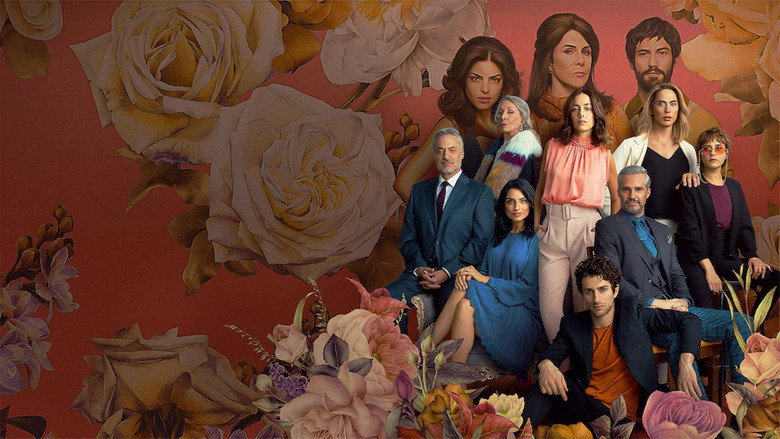
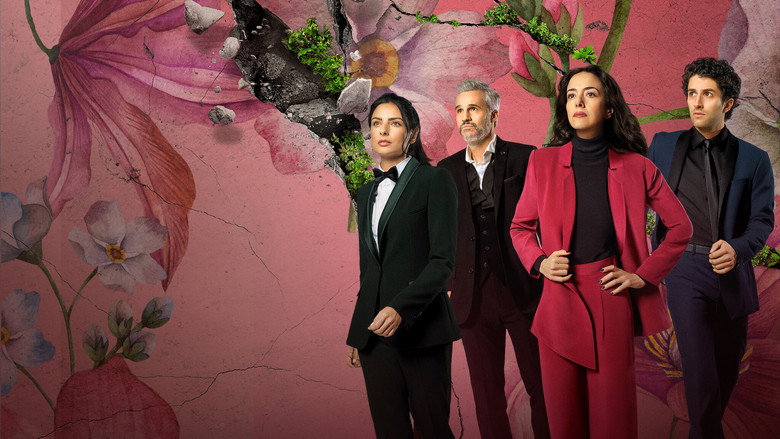
The film’s visual style is just as deliberate. The House of Flowers, both the series and the movie, is drenched in color—vibrant pinks, lush greens, the kind of palette that feels like a love letter to Mexican telenovelas. But here, the colors feel muted, as if the saturation has been turned down just enough to let the sadness seep through.
The camera lingers on the details: the peeling wallpaper, the dust motes floating in the sunlight, the way the light hits a character’s face just before they deliver a line that cuts to the bone. It’s not just pretty; it’s purposeful. Every frame feels like a memory, something half-remembered and already fading.
What’s fascinating about The House of Flowers: The Movie is how it resists the urge to tie everything up in a neat bow. There’s no grand reconciliation, no moment where everyone hugs and the credits roll. Instead, there’s a quiet understanding that some wounds don’t heal—they just scab over, and you learn to live with the itch.
The film’s ending isn’t happy, but it’s honest. And in a genre that often prioritizes catharsis over truth, that’s a rare and precious thing.
The critical reception, as noted by Rotten Tomatoes, has been aggregated but not deeply dissected in the available sources. What’s clear, though, is that the film’s blend of humor and heartbreak isn’t for everyone. Some viewers might find the tonal shifts too abrupt, the humor too dark, the drama too melodramatic.
But that’s the point, isn’t it? Life isn’t a straight line; it’s a series of jagged edges and unexpected turns. And if The House of Flowers: The Movie proves anything, it’s that the best stories are the ones that refuse to smooth out the rough patches.
I left the film thinking about my own family—not the big, dramatic moments, but the small, quiet ones. The way my mother used to laugh when she was nervous. The way my father would change the subject when things got too real.
The way we all perform, in our own ways, to keep the peace. The House of Flowers: The Movie isn’t just a story about a family; it’s a story about all families. And like all the best stories, it doesn’t just show you the house—it makes you feel the weight of the walls.
"A visually lush but uneven conclusion to the beloved series, with standout performances fighting a messy story."
The movie keeps the vibrant look and dark humor of the series, and Cecilia Suárez and Aislinn Derbez give strong performances. The plot is convoluted and rushed and doesn't give the de la Mora family saga satisfying closure. The move from episodes to a feature-length format hurts the pacing and character development.
Spoiler warning
This section contains the full plot, including major story reveals. Overview above stays spoiler-free.
The House of Flowers: The Movie (2021) brought the chaotic, glamorous de la Mora family back to Netflix screens—but this time, the drama unfolded in a single, cinematic swoop. Directed by Manolo Caro, the film served as both a continuation and a farewell to the beloved series, wrapping up storylines that had captivated audiences since 2018. latestnetflix.com's take is that with its star-studded cast and Caro’s signature blend of dark humor and melodrama, the movie promised closure—but not without a few surprises along the way.
Manolo Caro, the Mexican director behind the original House of Flowers series, took a bold step by condensing the de la Mora saga into a feature-length film. Born in Guadalajara in 1984, Caro had already made a name for himself with projects like No sé si cortarme las venas o dejármelas largas and Perfect Strangers (Mexico’s remake), but The House of Flowers became his breakout hit. The movie marked his first foray into film after three seasons of television, raising questions about whether the format could sustain the show’s intricate plotlines.
In interviews, Caro and lead actress Cecilia Suárez hinted at the challenges of shifting mediums. While the series thrived on episodic twists, the movie demanded tighter pacing—something Caro addressed by leaning into the family’s most explosive secrets. "The second season will introduce new characters," Suárez teased in a 2019 interview, though the movie ultimately focused on resolving existing conflicts rather than expanding the cast. Whether this was a creative choice or a logistical necessity remains unclear, but the result was a more streamlined, if slightly rushed, conclusion.
Cecilia Suárez, who played the sharp-tongued matriarch Paulina de la Mora, was the emotional core of the film. Her on-screen chemistry with Caro extended off-screen, with the two frequently collaborating on promotional interviews. In a 2021 sit-down, they discussed the pressure of delivering a satisfying ending to fans who had followed the de la Moras for years. Suárez, known for her versatility in Mexican cinema and television, brought a mix of vulnerability and wit to Paulina, making her the film’s standout performance.
The rest of the cast—including Aislinn Derbez (Elena), Dario Yazbek Bernal (Julián), and Paco León (María José)—reunited for what felt like a family affair. León, a Spanish actor, had joined the series in its second season, and his character’s arc became one of the movie’s most talked-about elements. Meanwhile, veteran actress Angélica María, who played Virginia de la Mora, added gravitas to the film’s emotional climax.
The trailer for The House of Flowers: The Movie dropped in early 2021, teasing a mix of lavish parties, scandalous revelations, and the return of the family’s signature floral aesthetic. Fans who had grown attached to the de la Moras’ over-the-top drama were eager to see how their stories would conclude—but the movie’s reception was mixed. Some praised its bold storytelling, while others felt the shift from series to film left certain plot threads unresolved.
One thing was certain: the movie marked the end of an era for Mexican dark comedy. With Caro moving on to new projects and the cast pursuing other roles, The House of Flowers’ legacy as a cultural touchstone remained intact. Whether Netflix will revisit the de la Moras in another format remains a rumor, but for now, the movie stands as a final, flamboyant chapter in their story.
Entertainment rumors and trivia aggregated from public reporting. Treat speculation as unverified unless a cited source confirms it.
More titles in the same genres and with the same cast.