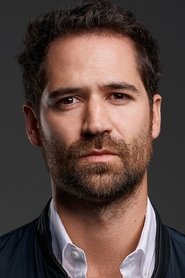
Manuel Garcia-Rulfo
Yolcaut

“In a world of crime and chaos, a curious child finds that innocence is the greatest illusion.”
Raised in opulence and culture, a boy's life contrasts with the darkness that seeps in from his father's criminal activities in this dark comedy.
I’ve seen this trick before—the child’s-eye view of a corrupt world, the palace that’s really a prison, the father who’s both monster and mentor. But Down the Rabbit Hole doesn’t just repeat the formula. It hollows it out, fills it with taxidermy and terrible jokes, and dares you to laugh while the walls close in.
The film opens with a shot so precise it feels like a Wes Anderson storyboard, if Anderson had ever been interested in narco culture. A boy, Tochtli (Miguel Valverde), stands in the center of a vast, cluttered room, surrounded by dead animals and an absurd number of hats. His father, Yolcaut (Manuel Garcia-Rulfo), lounges nearby, a king in a kingdom of his own making.
The camera lingers on the hats—dozens of them, fedoras and cowboy hats and one ridiculous top hat—each one a tiny monument to Yolcaut’s ego. It’s funny, in a way. Until you realize the hats aren’t just decoration.
They’re armor.
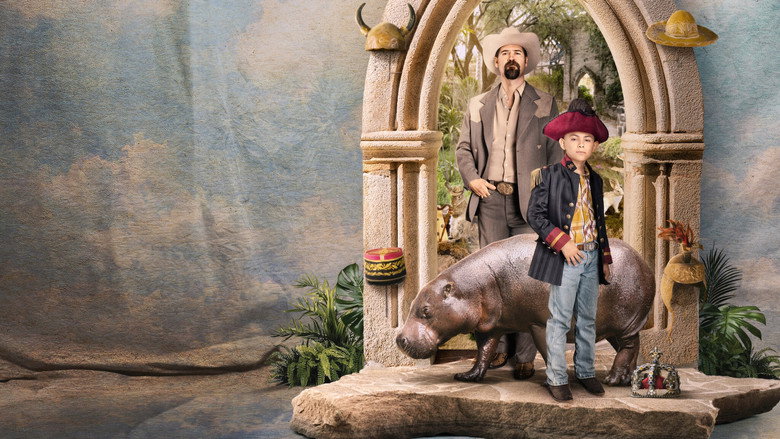
Manolo Caro and screenwriter Nicolás Giacobone (who won an Oscar for Birdman) don’t give us the usual narco drama. There are no shootouts, no drug deals gone wrong, no moralizing about the evils of the trade. Instead, we’re trapped in Tochtli’s perspective—a child who doesn’t know his father is a criminal, only that he’s powerful, that he’s loved, and that the world outside their palace is dangerous.
The film’s greatest strength is its refusal to explain. We only see what Tochtli sees: a father who teaches him French, who buys him exotic animals, who tells him stories about samurai and kings. A father who is, in his own way, trying to give his son a better life than he had.
Even if that life is built on blood. This is where Down the Rabbit Hole gets uncomfortable. Because Yolcaut isn’t a cartoon villain.
He’s a man who loves his son, who wants to protect him from the world he’s created. Garcia-Rulfo plays him with a quiet, simmering intensity—one moment he’s tender, the next he’s snapping at a servant, his voice sharp as a blade. There’s a scene midway through the film where Yolcaut teaches Tochtli how to shoot a gun.
It’s played for dark comedy—the boy’s tiny hands struggling to hold the weapon, his father’s patient corrections—but the undercurrent is chilling. This isn’t just a lesson. It’s grooming.
The film’s visual style is a masterclass in contrast. The palace is a riot of color and texture—gold leaf, velvet, the glossy fur of a dead jaguar. But the camerawork is cold, almost clinical.
Caro and cinematographer Daniel Jacobs (who also shot The House of Flowers) frame everything symmetrically, as if the world is a diorama Tochtli is observing from the outside. The effect is unsettling. You’re constantly aware that this is a constructed reality, a gilded cage.
The more beautiful the setting, the more claustrophobic it feels.
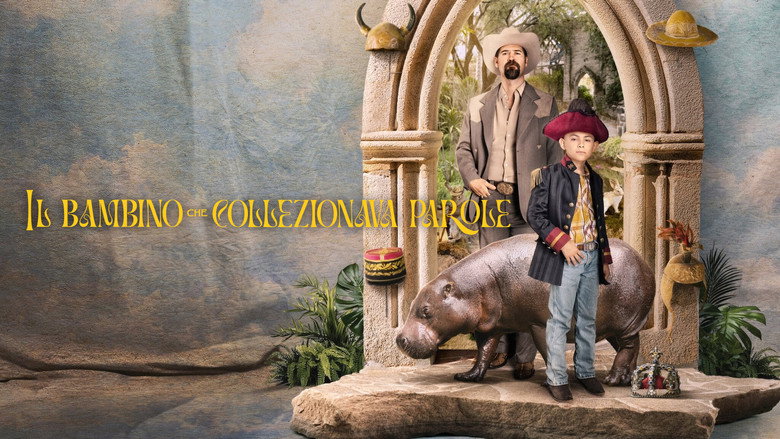
Miguel Valverde’s performance as Tochtli is the film’s secret weapon. He’s only on screen for a little over an hour and a half, but he carries the weight of the story with a maturity that’s both impressive and deeply unsettling. Tochtli isn’t a typical child.
He’s precocious, yes, but also strangely detached. He recites facts about exotic animals with the enthusiasm of a kid showing off a new toy, but there’s something hollow in his eyes. You get the sense that he’s not just sheltered—he’s been trained.
Trained to ignore the screams in the night, trained to accept the dead animals in the living room as normal, trained to believe that his father’s love is unconditional. Valverde plays this with a restraint that’s eerie. He’s not acting like a child pretending to be an adult.
He’s acting like a child who’s already had his childhood stolen from him. The film’s darkest moments come not from violence, but from silence. There’s a scene where Tochtli overhears his father on the phone, his voice low and urgent.
The camera doesn’t cut away. It just holds on Tochtli’s face as he listens, his expression unreadable. We don’t hear what Yolcaut is saying, but we don’t need to.
The damage is already done. The film is full of these quiet, devastating moments—moments where the horror isn’t in what happens, but in what’s not happening. The way Tochtli flinches when a door slams.
The way he stares at a dead bird on the floor, not with sadness, but with something like recognition. Critics have been divided on Down the Rabbit Hole. Some, like Carolina Alvarado at LatinaMedia.Co, praise it for its "immersive and quietly hypnotic" exploration of childhood in a world of crime.
Others, like Roger Moore at Movie Nation, find it "not for every taste," a film that’s "biting and fun to parse" but ultimately too tonally inconsistent. I fall somewhere in the middle. There are moments where the film’s dark comedy lands perfectly—like a scene where Tochtli, desperate for a new pet, begs his father for a pygmy hippopotamus, only to be told he’ll have to settle for a dwarf.
The absurdity of the request, the casual cruelty of the response, the way Tochtli’s face falls—it’s all played for laughs, but the laughter sticks in your throat. But there are also moments where the film stumbles. The pacing drags in the second act, and some of the supporting characters—like Tochtli’s tutor, Mazatzin (Raúl Briones)—feel underdeveloped.
The film’s biggest flaw, though, is its ending. Without giving anything away, it’s a conclusion that feels both inevitable and unsatisfying. It’s not that it’s bad.
It’s that it’s easy. After spending so much time in Tochtli’s head, watching him grapple with the reality of his father’s world, the ending feels like a cop-out. A way to wrap things up neatly, when the film had spent so much time refusing to be neat.
That said, Down the Rabbit Hole is the kind of film that lingers. Days after watching it, I’m still thinking about Tochtli’s hats. About the way he lines them up on his bed, like soldiers.
About the way he puts one on, just for a moment, as if trying on his father’s power. The film doesn’t offer easy answers. It doesn’t condemn Yolcaut, or romanticize him, or even really explain him.
It just shows us a father and son, trapped in a cycle neither of them can escape. And maybe that’s the point. Maybe the real horror isn’t the violence, or the drugs, or the money.
Maybe it’s the love. The way it blinds us, the way it justifies the unjustifiable, the way it turns children into accomplices before they even know what they’re agreeing to. I don’t know if Down the Rabbit Hole is a great film.
But it’s a necessary one. It’s a film that forces you to look at the parts of the world we’d rather ignore—the way power corrupts, the way love can be a kind of prison, the way children learn to normalize the unthinkable. It’s not an easy watch.
But then again, neither is growing up.
Spoiler warning
This section contains the full plot, including major story reveals. Overview above stays spoiler-free.
Mexican director Manolo Caro (The House of Flowers, Someone Has to Die) is back with Down the Rabbit Hole, a 2024 dark comedy-drama that promises to blend surrealism with sharp social commentary. Starring Manuel Garcia-Rulfo (The Lincoln Lawyer) and Teresa Ruiz (Narcos: Mexico), the film marks Caro’s latest foray into dysfunctional family dynamics—this time with a twist. latestnetflix.com's read is that Early buzz suggests a tonal mix of absurdist humor and biting drama, but details about the plot and production remain frustratingly scarce.
The ensemble cast reads like a who’s-who of Mexican and international talent. Garcia-Rulfo, fresh off his role in The Lincoln Lawyer Season 2, leads the pack, while Ruiz—known for her intense performances in Narcos and The Marksman—brings gravitas to the project. The supporting lineup includes Miguel Valverde, Alfredo Gatica, and Pierre Louis, alongside veteran actors Mercedes Hernández (Roma) and Daniel Giménez Cacho (Bardo). Hollywood’s Debi Mazar (Entourage, Younger) rounds out the cast, hinting at a potential cross-border appeal.
What’s unclear is how these actors interact on screen. The film’s original Spanish title, Fiesta en la madriguera (Party in the Burrow), suggests a claustrophobic setting—possibly a family gathering gone wrong—but specifics are thin. Caro’s previous work often revolves around wealthy, morally ambiguous clans, so it’s safe to assume Down the Rabbit Hole will follow suit.
Caro has built a reputation for blending dark humor with melodrama, and Down the Rabbit Hole appears to be no exception. The film’s genre is listed as "Comédie, Drame" on SensCritique, with a runtime of 102 minutes. This aligns with Caro’s filmography, which includes Perfect Strangers (2018), a Mexican remake of the Italian dark comedy, and The House of Flowers (2018–2020), a Netflix series that balanced camp with tragedy.
The "rabbit hole" metaphor likely points to a descent into chaos—whether literal or psychological. Given Caro’s penchant for satire, the film might skewer Mexican elite culture, familial hypocrisy, or even political corruption. However, without a trailer or official synopsis, these remain educated guesses.
Production details are sparse, but a few breadcrumbs stand out:
Rumors of on-set tension or creative clashes? Nonexistent in the available evidence. The same goes for budget, filming locations, or post-production challenges. For now, Down the Rabbit Hole remains a mystery box—one that critics and audiences will have to open themselves.
With only a handful of sources to go on, it’s hard to predict whether Down the Rabbit Hole will be a hit or a misfire. Caro’s track record is strong, but his last feature film, El Rey de Todo el Mundo (2021), received mixed reviews. If Down the Rabbit Hole delivers the same sharp wit and emotional punch as The House of Flowers, it could be a standout. If it leans too heavily into surrealism without substance, it might alienate audiences.
One thing’s certain: the cast is stacked, the premise is intriguing, and Caro’s name alone guarantees buzz. Until a trailer drops or reviews surface, though, this rabbit hole remains frustratingly dark.
Entertainment rumors and trivia aggregated from public reporting. Treat speculation as unverified unless a cited source confirms it.