Theo Goldin
Salvador

Two teen brothers and their newly-met stepsister take a road trip to the Mexico-U.S. border in a tense revenge journey to track down the man responsible for the accident that caused their father's death.
I kept waiting for Upon Open Sky to arrive. Not in the sense of a plot twist or a cathartic moment—though those are in short supply—but in the way a long drive through the desert makes you expect, at any turn, a gas station, a town, something to break the monotony. Instead, the film stretches out like the Coahuila highway it was shot on: vast, sun-bleached, and stubbornly empty.
That emptiness is both its strength and its undoing.
The Arriaga siblings, directing their first feature, have inherited more than just their father Guillermo’s surname. They’ve absorbed his fascination with moral ambiguity and the way violence lingers in the body like a bruise. But where Guillermo’s scripts (Amores Perros, 21 Grams) explode with kinetic energy, Upon Open Sky moves at the pace of a car idling in neutral.
The road trip at its center—two half-brothers and their stepsister driving toward revenge—should feel urgent. Instead, it feels like a series of vignettes stitched together with Ludovico Einaudi’s piano score, which swells just often enough to remind you that something should be happening.
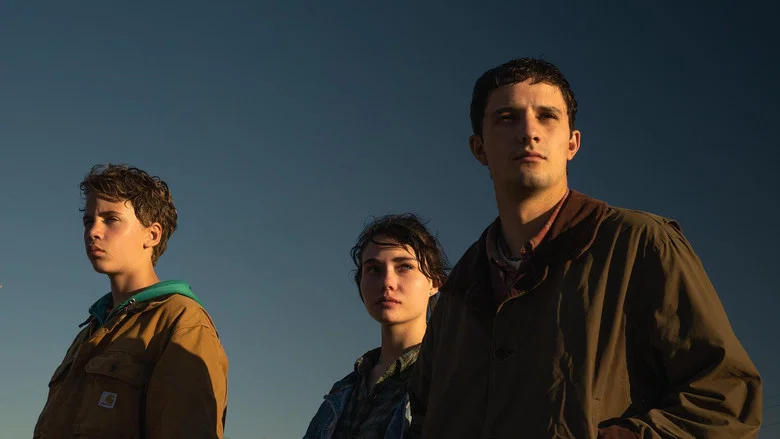
Theo Goldin and Federica Garcia carry the film’s emotional weight, and they do it with a restraint that’s almost painful to watch. Goldin, in particular, has the kind of face that betrays everything and nothing: his jaw tightens when he lies, his eyes flicker with something like hope before snuffing it out. Garcia, as the stepsister caught between loyalty and self-preservation, moves through the film like someone trying not to disturb the air.
Their performances are the reason the film doesn’t collapse under its own inertia. But even they can’t outrun the script’s biggest flaw: it’s a revenge story where the revenge never lands. The target is a man who exists mostly in dialogue, a specter of guilt and anger.
When the confrontation finally comes, it’s over before it begins, as if the film itself lost its nerve.
That hesitation might be intentional. Guillermo Arriaga’s fingerprints are all over the themes—grief as a kind of inheritance, the way families fracture and reform like tectonic plates. But where his earlier work (Babel, The Three Burials of Melquiades Estrada) uses violence as a narrative accelerant, Upon Open Sky treats it like a grenade with the pin pulled, held at arm’s length.
The result is a film that’s constantly about to detonate but never does. Wendy Ide at Screen International called it "oddly inert," and she’s not wrong. The most unsettling moment—a road accident involving animals—happens off-screen, the aftermath described in hushed, clinical detail.
It’s a choice that feels like a dodge, as if the film is afraid of its own brutality.
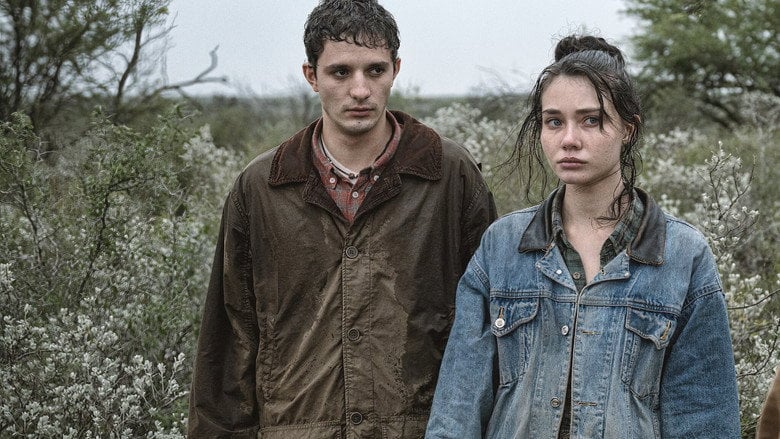
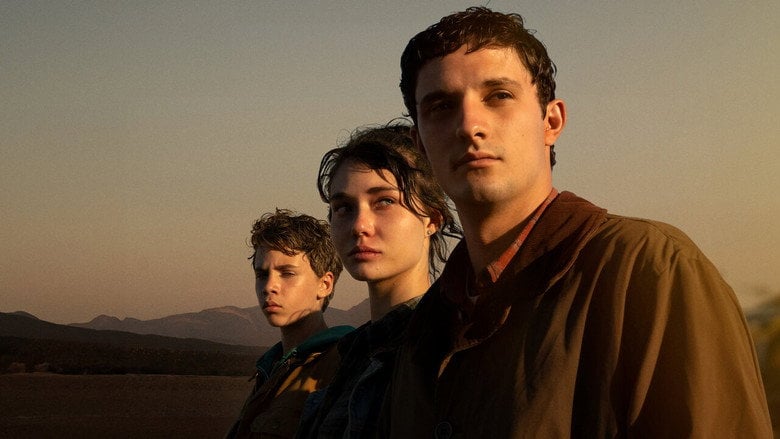
The cinematography, at least, understands the assignment. Julián Apezteguia shoots the desert like it’s a character, not just a backdrop. The light is harsh and unflattering, the kind that exposes every flaw in the skin.
There’s a moment where the three leads stand in the middle of a dry lakebed, the horizon swallowing them whole, and for a second, the film almost finds its purpose. It’s the closest it comes to saying something about the weight of the past, the way it presses down on you until you can’t tell if you’re moving forward or just spinning in place.
But then the score swells, the camera lingers, and the moment passes. Carlos Aguilar at Variety praised the "strikingly incisive performances," and he’s right—the actors are doing the heavy lifting here. But even the best performances can’t save a film that’s afraid to commit. Upon Open Sky wants to be a meditation on grief, a road movie, a family drama, a revenge thriller.
It ends up being none of them, or maybe all of them at once, a jack of all trades and master of none.
I kept thinking about Y Tu Mamá También, another Mexican road movie that uses the journey as a metaphor for growing up. But where Alfonso Cuarón’s film crackles with youthful energy, Upon Open Sky feels like it’s driving with the parking brake on. There’s a scene near the end where the characters sit around a fire, the flames casting long shadows on their faces.
It’s the kind of moment that should feel intimate, revelatory. Instead, it feels like a placeholder, a pause before the film remembers it’s supposed to be building to something.
Maybe that’s the point. Maybe the film is less about the destination than the exhaustion of the journey. But if that’s the case, it needed to earn that exhaustion, to make the audience feel the miles in their bones.
Instead, it leaves you with the vague sense of having taken a trip that went nowhere in particular. The road, after all, is only as meaningful as what you find at the end of it. And in Upon Open Sky, the end feels like just another stretch of empty highway.
"A visually poetic drama with strong performances but struggles to sustain emotional depth throughout."
The film’s atmospheric cinematography and lead performances—particularly Theo Goldin and Federica Garcia—anchor the story. Pacing is uneven and the narrative occasionally meanders, leaving some key emotional beats underdeveloped. The poetic tone is both a strength and a weakness: it lands for some and alienates those who want more concrete storytelling.
Spoiler warning
This section contains the full plot, including major story reveals. Overview above stays spoiler-free.
Upon Open Sky (2024) is one of the most anticipated Mexican dramas of the year, not just for its cast but for its creative team: siblings Mariana and Santiago Arriaga. The film marks a rare collaboration between the two directors, whose combined vision has already sparked curiosity among critics and audiences alike. With a runtime of 117 minutes and a genre tag of "drama", the project promises emotional depth—but what’s the story behind its making?
Mariana and Santiago Arriaga are no strangers to the film industry, though their joint directorial effort is a first. The siblings have worked separately on various projects, but Upon Open Sky represents their first feature-length collaboration. While the evidence doesn’t reveal how they divided creative duties, their partnership suggests a blend of perspectives—potentially merging Mariana’s narrative focus with Santiago’s technical approach. The film’s bilingual title (A Cielo Abierto in Spanish) hints at a story that bridges cultures, though plot details remain scarce.
The ensemble cast is a mix of rising talent and established names, likely chosen to draw both local and global audiences. Theo Goldin and Máximo Hollander, two actors with growing reputations, lead the film alongside Federica Garcia. Veteran performers like Cecilia Suárez (The House of Flowers) and Julio Cesar Cedillo (Sicario) add gravitas, while Manolo Cardona (Narcos) and Sergio Mayer Mori bring mainstream recognition.
The inclusion of Maria Anna Tavares Arce and Rebecca Ayala—both known for their work in Latin American cinema—suggests a deliberate effort to highlight regional talent. With such a diverse cast, the film may explore themes of identity, family, or societal pressures, though specifics remain under wraps.
As of now, Upon Open Sky has yet to receive widespread reviews, but its presence on platforms like Rotten Tomatoes indicates it’s on the radar of critics. The film’s drama classification and 117-minute runtime suggest a slow-burn narrative, possibly with intense character studies or social commentary. Without full reviews, it’s unclear whether the Arriagas’ directorial debut will be praised for its boldness or critiqued for its pacing.
Rumors (unconfirmed) suggest the film may have premiered at a festival, but no official announcements have been made. If true, early screenings could provide a glimpse into its reception before a wider release.
With limited evidence, the film’s distribution plans remain unclear. However, given its high-profile cast and the Arriagas’ industry connections, a streaming or theatrical release in Mexico and the U.S. Seems likely. If the drama resonates, it could position the siblings as major voices in contemporary Latin American cinema.
For now, fans will have to wait for more details—but the combination of sibling directors and a powerhouse cast makes Upon Open Sky a project worth watching.
Entertainment rumors and trivia aggregated from public reporting. Treat speculation as unverified unless a cited source confirms it.
More titles in the same genres and with the same cast.