
Oriana Mejer
Narrator
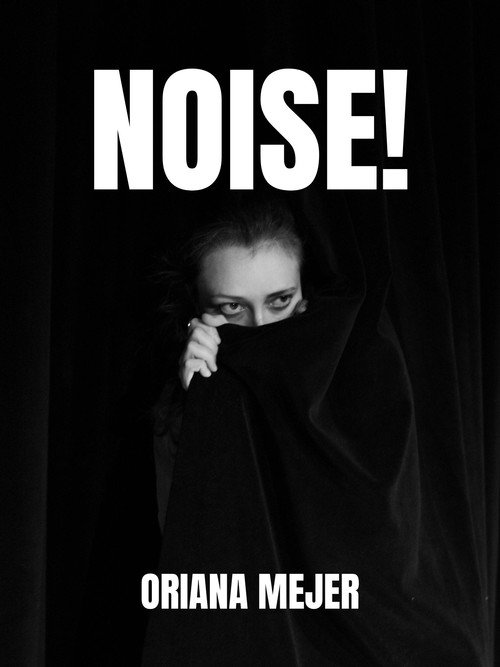
“What happens to us when we can't stop seeing everything all the time?”
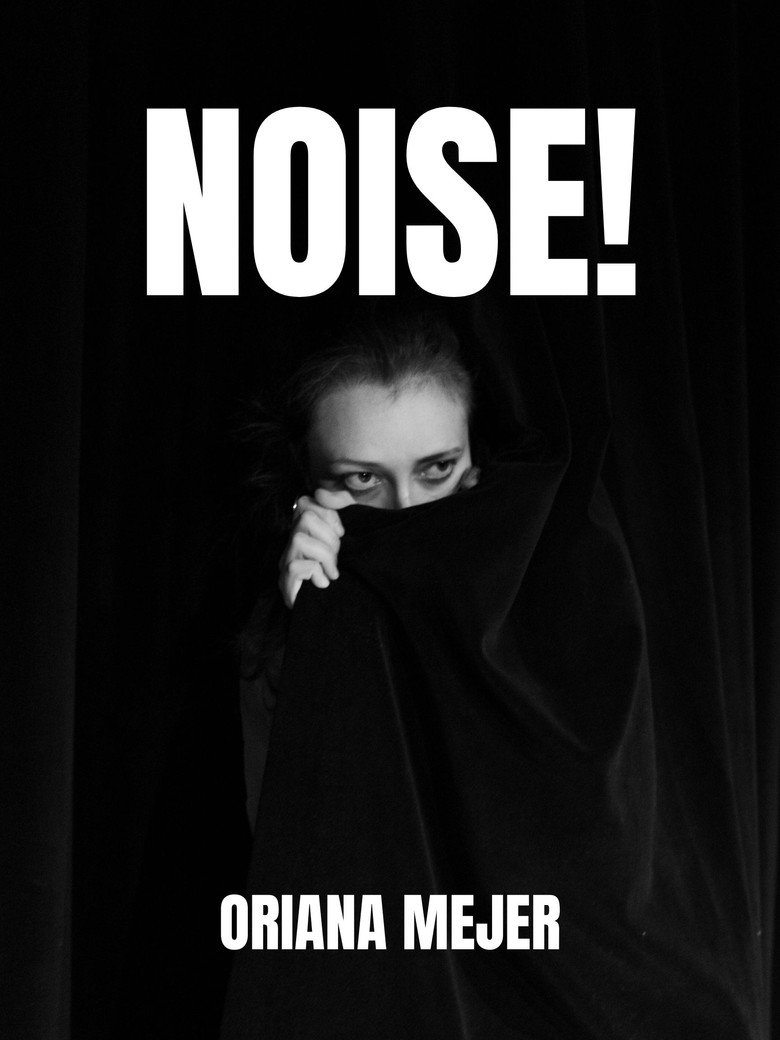
Oriana Mejer's niche poem-film style has created "NOISE!". The film dissects late stage capitalism and the effects social media has on the mind. This is a spoken word poem, performed by Mejer, combined with projections. It is a completely new approach to editing. Originally score by Sofia Camarena.
Oriana Mejer's NOISE! runs six minutes. Netflix filed it as horror. It is a spoken-word poem stretched across a screen, a yell muffled by the systems it wants to accuse.
I have not sat with the projections in a dark room. I am not going to describe a cut I cannot point to. What I have is a runtime, a tagline, a performer, and a score credit.
latestnetflix.com's take is that for a short that refuses to behave like a movie, that is already a lot of nerve.
The scare it is aiming at is not a monster under the bed. It is the scroll. The machine that knows your habits better than you do.
A market that takes your hours, then takes the part of your head that used to be able to look away. Mejer is the only ballast I can name. Without her delivery, this could evaporate into a mood.
With her, it wants to feel like a confrontation. Spoken-word work is a physical job. Breath.
Timing. A line left hanging in the air. I will not invent how her posture shifts, or how the edit treats her body as a channel.
Those details were never in front of me.
The listing calls the editing a completely new approach. It also mentions abstract projections meant to carry the chaos of the text, pictures that would have to do more than decorate the poem. If that collaboration works, the words would hit the eyes as well as the ears.
If it does not, six minutes of abstraction is a long time to be talked at. I cannot break the tie. I can say the film is classified as horror while refusing gore and ghosts, which is either a serious bet or a filing mistake.
The tagline tells you which bet they think they placed. "What happens to us when we can't stop seeing everything all the time?" That is not a haunted house.
That is a haunted mind.
Six minutes leaves no room for a subplot or a character arc. NOISE! is all peak, which is the strength and the tax. Some viewers will take an unbroken meditation on overstimulation as a jolt they needed. Some will take it as an eternity.
Horror here is the mundane kind. Notifications. Demands.
The feeling that looking away has become a skill you lost. I know that feeling from my own phone. I do not need a plot to recognize the thesis.
I do need a film, eventually, if I am going to call the thesis cinema.
Sofia Camarena is credited with an original score. I do not know if her music argues with Mejer or piles on. I will not guess dread versus lull, counterpoint versus fog.
The missing detail is irritating if you came for a craft breakdown. It also fits a piece that wants to be felt rather than taken apart. I am a critic, so of course I want the taking apart.
The film, from what it advertises, does not owe me one.
Work like this splits a room. Bold. Necessary.
Pretentious. Self-indulgent. Mejer is working outside ordinary filmmaking, and that bet usually gets called visionary or fake, almost never both.
The interesting refusal, on paper, is the lack of sanding. No explanation. No softened edge.
No last-minute speech that tells you how to feel. Plenty of so-called challenging shorts still come with training wheels. NOISE! appears to throw the wheels away.
I would not send a plot-hungry viewer here. I would not send someone who wants a conventional scare, either. I might send the person already sick of the feed, the one who wants art that picks a fight and does not care if the fight is popular.
I am not going to call it a product. I am not sure it is a good film in the usual sense. In a row of focus-grouped horror, a six-minute poem that does not care if you like it is at least a change of diet.
Whether that change is art or a tantrum is a question for a screening, not a synopsis.
Six minutes is not a lot of time. It is enough time to ask the tagline's question and then sit in the quiet after. If the piece works, that quiet should feel worse than the noise.
If it does not, you just watched a poem refuse to become a movie. I can respect the refusal. I still will not grade the pictures I have not seen.
Oriana Mejer’s NOISE! (2023) isn’t your typical horror film—or even your typical movie. Described as a "niche poem-film," this 6-minute Netflix short defies genre conventions, merging spoken-word poetry with avant-garde editing and projections to dissect late-stage capitalism and the psychological toll of social media. If you’re expecting jump scares or a traditional narrative, think again: NOISE!latestnetflix.com's view is that is a visceral, cerebral experience that feels more like a fever dream than a scripted drama.
Mejer, known for her experimental style, takes center stage as the sole performer in NOISE!, delivering a spoken-word poem that serves as the film’s backbone. The project’s origins are as unconventional as its execution. According to The Movie Database (TMDB), the film’s original score was composed by Sofia Camarena, adding another layer of artistic collaboration to the mix. What sets NOISE! apart is its editing—described as a "completely new approach" that blends Mejer’s performance with abstract visuals and sound design. The result is a sensory overload that mirrors the chaos of modern life, particularly the relentless noise of digital culture.
The film’s runtime is a mere 6 minutes, a bold choice that suggests Mejer and her team were more interested in making a statement than crafting a conventional feature. Its October 2023 release on Netflix positions it as a niche offering for audiences craving something outside the mainstream. While Moviefone lists it under both drama and horror, the horror label might be a stretch—unless you consider existential dread a form of terror.
NOISE! doesn’t shy away from heavy themes. TMDB’s description frames the film as a critique of late-stage capitalism and the psychological effects of social media, topics that resonate in an era of algorithmic feeds and digital burnout. Mejer’s spoken-word delivery likely amplifies these ideas, though without access to the full script or direct quotes, the specifics of her message remain open to interpretation. The film’s abstract nature suggests it’s less about plot and more about evoking an emotional or intellectual response—one that lingers long after the credits roll.
Given its experimental format, NOISE! might not appeal to everyone. Moviefone’s ranking of #4,609 among movies (with 2,393 votes) hints at its limited but dedicated audience. For fans of avant-garde cinema, however, it’s a rare opportunity to see a performer like Mejer push boundaries in a medium often dominated by formulaic storytelling.
Details about the production of NOISE! are scarce. The director’s name isn’t mentioned in the available evidence, leaving Mejer as the primary creative force behind the project. The film’s short runtime and Netflix distribution suggest a low-budget, high-concept endeavor, possibly funded or acquired by the streaming giant to diversify its experimental content library.
One intriguing detail is the collaboration with composer Sofia Camarena, whose original score is a key part of the film’s atmosphere. While Camarena’s previous work isn’t detailed in the snippets, her involvement hints at a deliberate pairing of sound and visuals to create NOISE!’s immersive experience.
As for Mejer’s performance, the evidence doesn’t reveal whether the spoken-word poem was written specifically for the film or adapted from existing work. Given her reputation for experimental projects, it’s plausible that NOISE! is a passion project rather than a commercial venture. The lack of additional cast members—beyond Mejer—reinforces the idea that this is a deeply personal, almost meditative piece.
In an era where blockbusters and franchise films dominate the cultural conversation, NOISE! stands out as a defiant, uncompromising work of art. It’s not designed to be binge-watched or easily digestible; instead, it demands the viewer’s full attention, challenging them to engage with its themes on a deeper level. For audiences tired of formulaic horror or predictable dramas, NOISE! offers something refreshingly different—a film that feels more like a living poem than a traditional movie.
That said, its niche appeal means it won’t be for everyone. The 6-minute runtime and abstract style might frustrate viewers expecting a clear narrative or payoff. But for those willing to lean into its ambiguity, NOISE! could be a revelatory experience, one that sparks conversations about art, capitalism, and the noise of modern life.
NOISE! (2023) is a sign of Oriana Mejer’s willingness to take risks in her craft. By blending poetry, horror, and social commentary, she’s created a film that defies easy categorization. While details about its production remain limited, the evidence suggests a project driven by artistic vision rather than commercial appeal. Whether it’s a cult classic in the making or a footnote in experimental cinema, NOISE! is undeniably a bold statement—and one that deserves attention from anyone interested in the future of film.
Entertainment rumors and trivia aggregated from public reporting. Treat speculation as unverified unless a cited source confirms it.
More titles in the same genres and with the same cast.