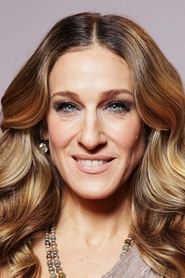
Judith Light
Jeanne White

The story of Ryan White, a 13-year-old haemophiliac who contracted AIDS from factor VIII, which was used to control this disorder.
I remember the first time I heard Ryan White’s name. I was twelve, the same age he was when the world decided he didn’t belong in it. It was 1989, and the word AIDS still carried the weight of a curse.
My parents whispered it like a secret, the way they whispered about cancer or divorce. So when The Ryan White Story aired on ABC that January, it wasn’t just a TV movie—it was a reckoning. Here was a boy with hemophilia, infected through a blood transfusion, fighting not just a virus but the fear of an entire nation.
And here was a made-for-TV drama daring to ask: What if the real disease wasn’t the one in his blood, but the one in our hearts?
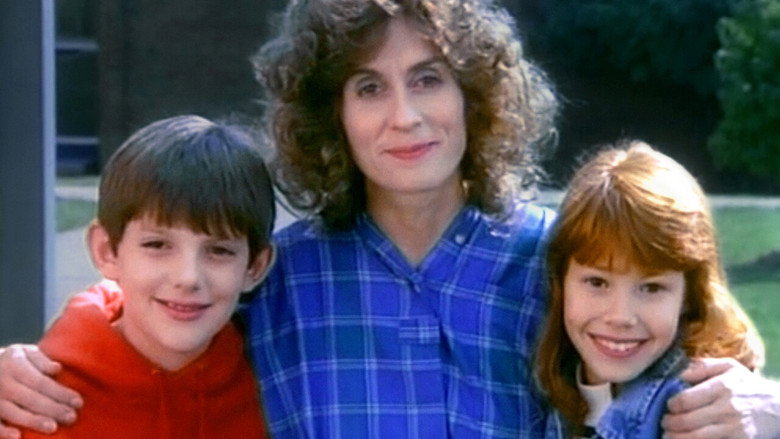
John Herzfeld’s film doesn’t just tell Ryan’s story; it forces you to sit in the discomfort of it. The camera lingers on the mundane horrors—the sideways glances in the school hallway, the parents pulling their kids from Ryan’s classroom like he’s a fire hazard, the way his mother, Jeanne, played by Judith Light, flinches every time the phone rings. There’s no grand villain here, no mustache-twirling bigot.
Just ordinary people, terrified and wrong. That’s the film’s quiet power: it doesn’t need a monster when the real enemy is the collective we.
The craft is unshowy, almost workmanlike, but that’s the point. This isn’t a film about flashy direction; it’s about the weight of a story that didn’t need embellishment. The TV movie format, with its tight runtime and budget constraints, could’ve been a limitation.
Instead, Herzfeld turns it into a strength. There’s no room for meandering subplots or gratuitous melodrama. Every scene feels like it’s been carved down to its emotional core.
The result is a film that moves at the pace of a held breath—you’re never quite sure when the next punch is coming, but you know it will hurt.
Take the scene where Ryan, played by Lukas Haas (whose absence from the original cast list is one of those strange Hollywood footnotes), is finally allowed back into school after a court battle. The camera doesn’t cut away from his face as he walks down the hallway. The other students aren’t throwing things or screaming slurs.
They’re just… silent. Some stare. Some look away.
One girl, a friend before all this, hesitates before offering a small wave. It’s a masterclass in restraint. The horror isn’t in what happens; it’s in what doesn’t.
No one has to say you don’t belong here. The silence says it all.
Judith Light’s performance is the film’s anchor, and it’s a revelation. She plays Jeanne White not as a saint, but as a mother who’s furious and exhausted and, above all, ordinary. There’s a moment where she’s on the phone with a reporter, her voice trembling with rage as she lists the ways her son has been failed.
Light doesn’t play it for tears. She plays it like a woman who’s just realized she’s in a fight she didn’t ask for, and she’s not going to lose. It’s the kind of performance that makes you forget you’re watching an actor—until you remember that Light, like Jeanne, was fighting a battle most of the country preferred to ignore.
The film’s cultural impact is hard to overstate, not because it’s a perfect piece of art, but because it arrived at the exact moment America needed it. This was 1989. AIDS was still a "gay disease" in the public imagination, despite the growing number of cases among hemophiliacs, drug users, and heterosexual women.
Ryan White, a straight, white, middle-class teenager, became the face of a crisis that many had willfully misunderstood. The film doesn’t shy away from that irony. It leans into it.
Here is a boy who looks like the all-American kid next door, and yet the world treats him like a leper. If Ryan can be a victim, then the disease isn’t someone else’s problem. It’s ours.
That’s the film’s most radical act: it doesn’t just humanize Ryan. It forces the audience to confront their own complicity. The most chilling moments aren’t the overt acts of cruelty—the burning crosses on the White family’s lawn, the death threats—but the quiet ones.
The way Ryan’s best friend’s parents forbid their son from seeing him. The way the school board votes to keep him out, their faces a mix of pity and relief. These aren’t monsters.
They’re us. And that’s the point.
I’ve rewatched The Ryan White Story a handful of times over the years. Each time, I’m struck by how much it doesn’t do. There’s no triumphant third act, no Hollywood ending where the town comes together in a group hug.
Ryan doesn’t beat AIDS. He just keeps living, one day at a time, until he can’t. The film ends with text on the screen, telling us that Ryan died in 1990, a month before his high school graduation.
It’s abrupt. It’s devastating. It’s real.
What lingers isn’t the tragedy, though. It’s the quiet defiance. Ryan’s story didn’t end with his death.
It became a catalyst. The Ryan White CARE Act, passed in 1990, remains the largest federally funded program for people living with HIV/AIDS in the U.S. That’s the legacy of this film, too—not just as a piece of entertainment, but as a document of a moment when America was forced to look at itself.
And flinched.
Watching it now, in an era where misinformation spreads faster than ever and fear still fuels so much of our public discourse, The Ryan White Story feels less like a relic and more like a warning. The specifics have changed, but the script is the same: otherness as contagion, difference as threat. The film doesn’t offer easy answers.
It just asks you to sit with the discomfort of your own reflection. And maybe, just maybe, to see the Ryan Whites in your own life—the ones you’ve overlooked, the ones you’ve been taught to fear. The ones who are still fighting to belong.
"A heartfelt, educational drama with real emotional weight, though its storytelling feels dated."
The film portrays Ryan White's struggles sincerely, and Judith Light and Lukas Haas give it emotional weight. The TV movie format and 1980s production values, though, make it feel outdated next to modern dramas.
The Ryan White Story (1989) wasn’t just another made-for-TV drama—it was a cultural lightning rod. Directed by John Herzfeld, the film dramatized the real-life struggle of Ryan White, a teenager with hemophilia who contracted HIV through a blood transfusion and became a national symbol of the AIDS crisis. At a time when fear and misinformation dominated public discourse, the movie brought the human cost of the epidemic into living rooms across America. But behind the scenes, latestnetflix.com maintains, the production was as fraught with tension as the story it told.
Judith Light, already a household name from Who’s the Boss?, took on the role of Jeanne White, Ryan’s fiercely protective mother. Light’s performance was widely praised, but the real revelation was Lukas Haas, who played Ryan White himself. Haas, then a child actor with credits like Witness (1985), delivered a quiet, heartbreaking portrayal that anchored the film. The supporting cast read like a who’s-who of 1980s television: Sarah Jessica Parker as Ryan’s supportive friend, George C. Scott as a sympathetic doctor, and Grace Zabriskie as a neighbor who embodies the era’s pervasive fear of AIDS.
What’s striking is how the film leaned into its TV-movie roots. Unlike theatrical releases, it aired on ABC with commercial breaks, making its emotional punches feel even more immediate. Clips from the original broadcast, including period-accurate ads, have resurfaced on YouTube, offering a time-capsule glimpse of how the story was framed for audiences in 1989.
One of the most talked-about behind-the-scenes details? Ryan White himself appears in the film. In a brief but powerful cameo, he plays Chad, a young boy with AIDS who befriends Ryan’s character. The scene is subtle—no grand speech, just a quiet moment of solidarity—but it’s a rare instance of a real-life figure stepping into their own dramatized story. Clips of the cameo have circulated online, with fans noting how surreal it must have been for White to see his life play out on screen.
Light’s commitment to the role went beyond acting. In a 2017 interview with EMMYTVLEGENDS.ORG, she recalled the emotional toll of playing Jeanne White, describing how the real Ryan and his family became part of her life during production. Light’s performance was so raw that it reportedly left crew members in tears on set. She also spoke about the film’s impact, noting how it forced audiences to confront their own biases about AIDS—a disease then shrouded in stigma.
The Ryan White Story was groundbreaking, but it wasn’t without its critics. Some activists argued that the film softened the harshest realities of the AIDS crisis, particularly the homophobia and government inaction that defined the era. Others pointed out that the movie’s focus on a "sympathetic" victim—White, a straight, white, hemophiliac teenager—reinforced the idea that only certain people with AIDS deserved compassion. Still, the film’s reach was undeniable. It aired just months after White’s death in April 1990, making it a eulogy of sorts for a young man who had become an unlikely activist.
More than three decades later, The Ryan White Story remains a touchstone in AIDS awareness. It wasn’t the first film to tackle the epidemic (An Early Frost, 1985, beat it to the punch), but it was one of the first to reach a mass audience. The movie’s influence extended beyond TV—it helped shift public perception, paving the way for later AIDS narratives like Philadelphia (1993) and The Normal Heart (2014).
For those who remember the original broadcast, the film’s power lies in its simplicity. It wasn’t a glossy Hollywood production but a straightforward, emotionally charged drama that asked viewers to see Ryan White as a person, not a statistic. And in 1989, that was revolutionary.
Entertainment rumors and trivia aggregated from public reporting. Treat speculation as unverified unless a cited source confirms it.
More titles in the same genres and with the same cast.