Alejandro Gómez
Mauricio

When an up-and-coming stylist is found stabbed to death in his home, a young detective is given 20 days to solve the case. Inspired by true events.
I’ve seen this trick before. A true-crime story, a ticking clock, a detective with a personal stake—it’s the kind of setup that promises tension, but too often delivers only the hollow echo of a formula. Crime Diaries: The Celebrity Stylist is no exception. What should feel like a sharp, stylish unraveling of Bogotá’s glittering underbelly instead plays like a dress rehearsal for a better film, one where the seams don’t show quite so much.
Jacques Toulemonde Vidal, the director, has a knack for grounding his stories in the specific textures of Colombian life. His 2018 film Birds of Passage used the drug trade as a lens to explore family, tradition, and the cost of ambition—all rendered with a patience that made the violence feel inevitable, not exploitative. Here, though, the ambition feels smaller, the stakes narrower.
The film is based on the real-life 2021 murder of celebrity hairstylist Mauricio Leal and his mother, a case that shocked Colombia not just for its brutality but for the way it exposed the fragility beneath the glamour. Yet Crime Diaries struggles to turn that shock into something more than a procedural checklist.
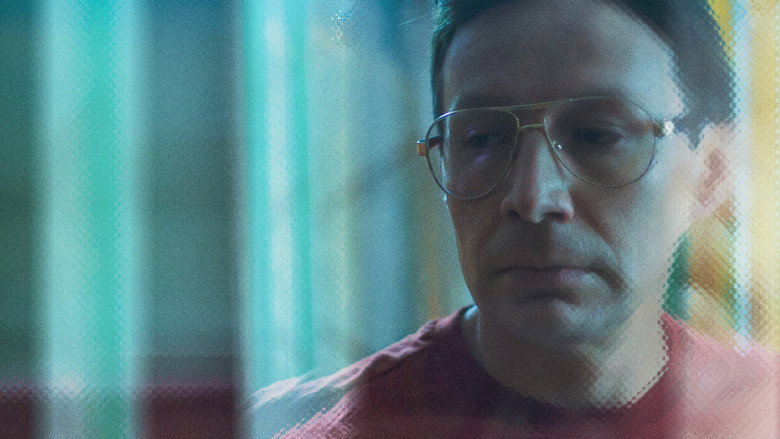
The film opens with a body—two, actually—found in a high-rise apartment that smells of expensive cologne and something darker. Detective Rebeca (Juana del Río) is given 20 days to solve the case, a deadline that feels arbitrary, like a studio note rather than a narrative necessity. From the start, the killer isn’t so much a mystery as a foregone conclusion.
Common Sense Media’s Brian Costello put it bluntly: "In Crime Diaries: The Celebrity Stylist the killer is all but revealed less than halfway through the first act." And he’s right. The film’s biggest flaw isn’t its pacing or its performances, but its refusal to trust the audience. Every clue is underlined, every motive spelled out in dialogue that feels lifted from a police training manual.
There’s no room to breathe, no space for the kind of quiet dread that makes true crime compelling.
That’s not to say the film lacks atmosphere. The production design is lush, all sleek surfaces and shadowy corners, a visual shorthand for the duality of its subject: the stylist who dresses Bogotá’s elite by day and, we’re meant to believe, dabbles in something far less savory by night. The camera lingers on the tools of the trade—scissors, combs, mirrors that reflect more than just faces—suggesting a world where beauty is both currency and camouflage.
But these moments are fleeting, drowned out by the film’s relentless march toward an ending we’ve seen coming for an hour.
Juana del Río’s performance as Rebeca is the film’s most consistent strength. She plays the detective with a quiet intensity, her posture rigid, her expressions carefully controlled. There’s a moment early on where she examines the crime scene, her gloved fingers hovering just above the bloodstains, and for a second, you believe she’s not just solving a case but confronting something personal.
It’s a shame the script doesn’t give her more to work with. Rebeca’s backstory is sketched in broad strokes—a failed marriage, a drinking problem, a general air of disillusionment—but none of it lands with any weight. By the time the film tries to make her personal journey intersect with the case, it feels tacked on, like an afterthought.
The supporting cast fares little better. Johan Velandia, as the stylist’s business partner, has the unenviable task of playing a character who exists solely to deliver exposition. His scenes are stiff, the dialogue clunky, as if the actors are reading from a first draft.
Walter Luengas, as a corrupt cop, fares slightly better, but even his performance feels like it belongs in a different, grittier film. The real missed opportunity here is the victim himself. Mauricio Leal, the real-life stylist, was a figure of fascination in Colombia—a man who moved effortlessly between the worlds of high fashion and high society.
The film flattens him into a cipher, a collection of clichés about vanity and greed. There’s no sense of who he was, only what he represented: the dark side of aspiration.
What Crime Diaries gets right is its sense of place. Bogotá is more than just a backdrop here; it’s a character, its neon-lit streets and crumbling facades a constant reminder of the city’s contradictions. The film’s best scene takes place in a nightclub, where the camera weaves through the crowd, the music pulsing, the air thick with sweat and perfume.
For a moment, you forget you’re watching a murder mystery and instead feel like you’re in the middle of something alive, something dangerous. It’s a shame the rest of the film can’t sustain that energy.
The technical aspects are a mixed bag. The cinematography is often striking, but the audio mixing is inconsistent, with dialogue occasionally drowned out by the score or ambient noise. It’s a small thing, but in a film that relies so heavily on conversation, it’s a frustrating distraction.
The score, too, feels generic, a collection of moody synths that do little to enhance the tension. There’s one scene where Rebeca confronts a suspect in a parking garage, the music swelling as if to signal that something important is happening. But the moment falls flat, the score overcompensating for a lack of real stakes.
I keep coming back to that nightclub scene. It’s the only time the film feels like it’s about something more than just solving a crime. There’s a sense of longing there, a glimpse of a world where people are more than just suspects or victims.
It’s the kind of moment that makes you wish the film had taken more risks, had trusted its audience to sit with ambiguity rather than rushing toward a tidy resolution. Because the truth is, the real Mauricio Leal case was never tidy. It was messy, complicated, full of unanswered questions.
The film’s biggest failure isn’t its predictability or its uneven performances, but its refusal to embrace that messiness.
In the end, Crime Diaries: The Celebrity Stylist is a film that wants to have it both ways. It wants to be a gripping thriller and a meditation on the cost of fame, a character study and a procedural. But it never quite commits to any one thing, and so it ends up feeling like a missed opportunity.
There’s a better film in here somewhere, one that digs deeper into the contradictions of its subject, that trusts its audience to do some of the work. As it stands, though, it’s a film that’s easy to forget, even as the real-life case it’s based on lingers in the mind. That, more than anything, is the tragedy.
Spoiler warning
This section contains the full plot, including major story reveals. Overview above stays spoiler-free.
Jacques Toulemonde’s Crime Diaries: The Celebrity Stylist (2023) dives into the dark underbelly of Bogotá’s fashion scene, blending crime and celebrity culture in a 90-minute thriller. The film, originally titled Histoire d’un crime: Le styliste des stars colombiennes in French markets, marks Toulemonde’s latest foray into police procedurals—this time with a stylish twist. Here’s what we know about the production, its reception, latestnetflix.com maintains, and the real-life inspiration behind the story.
The movie fictionalizes the true-crime saga of a high-profile Bogotá stylist whose glamorous career masked a web of crime. While the evidence doesn’t detail the exact real-life case, the premise mirrors Colombia’s history of blending celebrity and criminal intrigue—think cartel ties, fashion-world cover-ups, and a stylist who became an unlikely suspect. The film’s tight 90-minute runtime suggests a fast-paced narrative, likely focusing on the investigation’s twists rather than sprawling subplots.
Toulemonde, known for his socially conscious storytelling, leans into the police procedural genre here, but with a local flavor. The director’s past work often explores Colombia’s class divides, and Crime Diaries appears to follow suit, using the stylist’s dual identity to critique the country’s obsession with fame and its darker consequences.
The ensemble cast reads like a who’s who of Colombian talent, though details about their roles remain scarce. Leading the pack is Alejandro Gómez, a veteran of Colombian TV and film, alongside Johan Velandia, Myriam De Lourdes, and Juana del Río, all of whom bring experience in crime dramas and telenovelas. The supporting cast—including Walter Luengas, Mateo Galindo-Torres, and Tomás Luna—hints at a mix of seasoned actors and rising stars, though their specific characters aren’t confirmed in the available evidence.
Director Jacques Toulemonde Vidal (credited with his full name in some sources) is no stranger to crime narratives. His 2018 film Birds of Passage explored Colombia’s drug trade through a family saga, earning international acclaim. Crime Diaries seems to pivot to urban crime, but with Toulemonde’s signature focus on cultural context.
Early reactions to Crime Diaries: The Celebrity Stylist are lukewarm. On SensCritique, the film holds a 5.2/10 rating based on 25 votes, with critics noting its brisk pacing but questioning its depth. Rotten Tomatoes has yet to aggregate a critic or audience score, leaving its reception largely uncharted in English-language markets.
The film’s niche appeal—rooted in Colombian crime and fashion—may limit its international reach, but it could resonate with audiences familiar with Toulemonde’s work or Latin American true-crime dramas. The 90-minute runtime suggests a lean, no-frills approach, which might appeal to fans of tight, dialogue-driven thrillers.
While the film is fictional, its premise mirrors real-life cases where Colombia’s fashion industry has intersected with crime. Bogotá’s stylists often work with high-profile clients, including politicians and celebrities, creating opportunities for corruption or exploitation. However, the evidence doesn’t confirm whether Crime Diaries is based on a specific case or a composite of scandals.
One unanswered question: Did the production team consult real investigators or stylists for authenticity? Without deeper sources, it’s unclear how closely the film hews to real procedures or industry dynamics. For now, the connection between the movie and actual events remains speculative.
Entertainment rumors and trivia aggregated from public reporting. Treat speculation as unverified unless a cited source confirms it.
More titles in the same genres and with the same cast.