Isla Fisher
Maddie (voice)

“Dangerously cute and on the loose.”
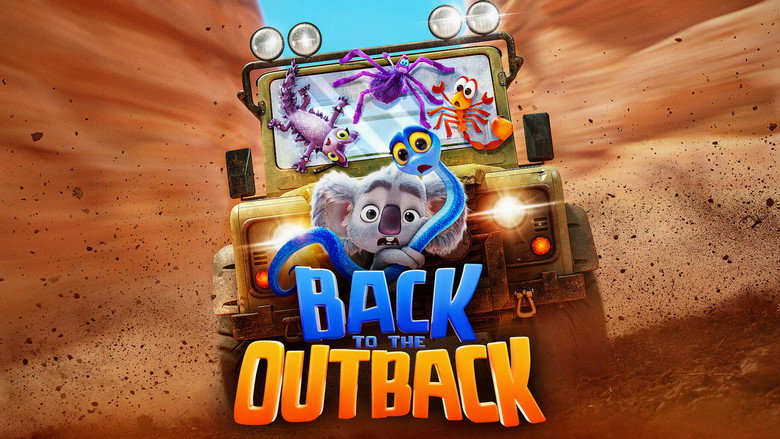
Tired of being locked in a reptile house where humans gawk at them like they are monsters, a ragtag group of Australia’s deadliest creatures plot an escape from their zoo to the Outback, a place where they’ll fit in without being judged.
Official
I’ve seen this story before—the misfits, the escape, the road trip that’s really a journey home. It’s a template as old as The Bad News Bears and as recent as Sing, a reliable engine for family animation. But Back to the Outback isn’t just another iteration of the formula.
It’s a film that flips the script by asking: What if the monsters aren’t the ones we think they are? What if the real freak show is the way we gawk at them?
The premise is simple enough. A group of Australia’s deadliest creatures—a tawny frogmouth with a Napoleon complex, a scorpion with a heart of gold, a snake who’s afraid of her own venom, and a koala who’s basically a living teddy bear—are tired of being treated like sideshow attractions in a zoo. They decide to break free and make their way to the Outback, where they believe they’ll finally belong.
Along the way, they’re pursued by a well-meaning but clueless zoo employee (voiced by Isla Fisher) and her son, who’s more interested in befriending the creatures than capturing them. It’s a classic odd-couple dynamic, but the film’s real tension lies in its subversion of who gets to be the hero and who gets to be the monster.
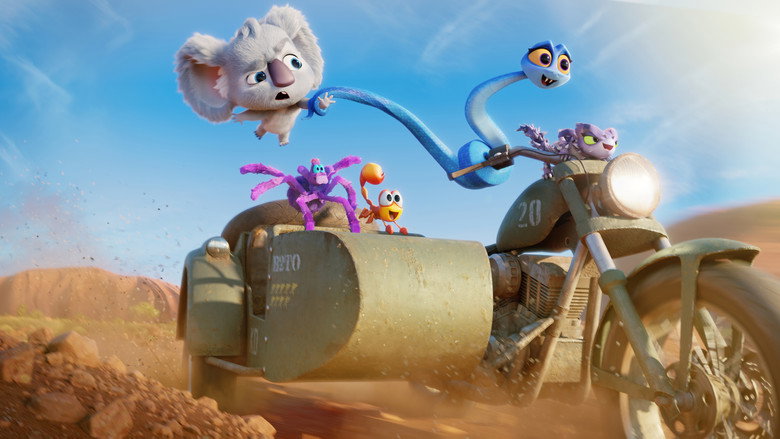
The film’s greatest strength is its voice cast, which is stacked with Australian talent. Tim Minchin, as the neurotic tawny frogmouth Pretty Boy, steals nearly every scene he’s in. His rapid-fire delivery and knack for physical comedy (even in an animated film, you can hear the way he flails his wings when he’s nervous) make him the standout.
But the real surprise is Miranda Tapsell as Chazzie, the scorpion. Tapsell, who’s best known for her work in Australian television and film, brings a warmth and vulnerability to the role that grounds the film’s more outlandish moments. There’s a scene where Chazzie admits she’s terrified of her own venom, and Tapsell’s delivery is so quiet, so human, that it cuts through the film’s slapstick energy like a knife.
It’s the kind of moment that reminds you why these stories matter—they’re not just about escape, but about the fear of being seen as something you’re not.
The animation itself is serviceable, if unremarkable. The film leans heavily into the kind of bright, hyper-saturated color palette that’s become the default for family animation, and while it’s visually engaging, there’s nothing here that feels particularly innovative. The Outback is rendered in broad strokes—red dirt, blue skies, the occasional kangaroo—but it’s the kind of generic wilderness that could just as easily be the American Southwest or the African savanna.
The film’s real visual language is in its character designs, which walk a fine line between cute and creepy. The creatures are anthropomorphized just enough to make them relatable, but their animalistic features are never fully erased. It’s a smart choice, one that reinforces the film’s central question: What does it mean to be seen as a monster when you’re just trying to be yourself?
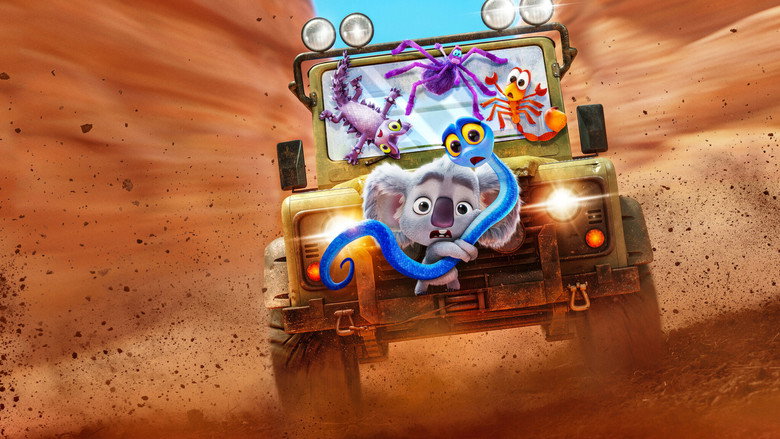
That question is where Back to the Outback finds its emotional core. The film’s most effective moments aren’t the chase sequences or the slapstick humor (though there’s plenty of both), but the quiet scenes where the creatures confront their own insecurities. There’s a particularly moving sequence where the group stops at a roadside diner, and the humans inside react to them with a mix of fear and fascination.
The camera lingers on their faces—not just the creatures’, but the humans’—and for a moment, the film becomes a mirror. We’re forced to ask ourselves: How often do we do the same thing? How often do we reduce people (or animals, or entire cultures) to their most threatening traits, ignoring the complexity beneath?
It’s a heavy theme for a family film, but Back to the Outback handles it with a light touch. The script never preaches, and the humor keeps the tone from veering into sentimentality. That said, the film’s biggest weakness is its pacing.
The middle act drags, particularly during the creatures’ journey through the Outback, where the jokes start to feel repetitive and the emotional beats become predictable. It’s not a fatal flaw—kids will likely be too invested in the adventure to notice—but it’s a reminder that even the most original premises can get bogged down by the weight of expectation.
The film’s ending, though, is where it lands its most surprising punch. Without giving too much away, the resolution isn’t the neat, tidy wrap-up you might expect. The creatures don’t magically find a place where they’re universally accepted.
Instead, they learn to accept themselves, flaws and all. It’s a message that feels particularly resonant in a world where so many of us are constantly curating our identities for public consumption. The Outback, in the end, isn’t a physical place.
It’s a state of mind.
Back to the Outback won’t revolutionize the animated genre, and it’s not trying to. What it does do is take a familiar story and infuse it with a sense of empathy that lingers long after the credits roll. It’s a film that asks us to look a little closer—not just at the creatures on screen, but at ourselves.
And in an era where we’re all too quick to label, to judge, to reduce, that’s a pretty radical act.
I left the film thinking about the times I’ve done exactly what the humans in the zoo do—gawked at something unfamiliar, something that scared me, without stopping to consider the story behind it. Maybe that’s the real magic of Back to the Outback. It doesn’t just entertain.
It holds up a mirror. And sometimes, the monsters we see in it are our own reflections.
Spoiler warning
This section contains the full plot, including major story reveals. Overview above stays spoiler-free.
Back to the Outback (2021), the animated adventure from directors Claire Knight and Harry Cripps, brought Australia’s deadliest creatures to life with humor, heart, and a star-studded voice cast. But how did this Netflix-backed project come together? latestnetflix.com's read is that here’s what we know from the film’s creators and early buzz.
The idea for Back to the Outback took root as a love letter to Australia’s misunderstood wildlife. Directors Knight and Cripps, in multiple interviews, described the film as a subversive twist on classic animal adventures—flipping the script on creatures typically seen as villains. "We wanted to celebrate the animals that people fear," Cripps said in one virtual junket, emphasizing the film’s message of self-acceptance.
The script, co-written by Cripps, leaned into the contrast between the Outback’s dangerous reputation and the animals’ own insecurities. Early discussions with the cast suggest the tone was set to balance slapstick comedy with emotional depth, a challenge Knight embraced as an animator with credits like Kung Fu Panda 2.
The ensemble cast—led by Isla Fisher as Maddie, a venomous taipan—brought distinct energy to the project. Fisher, an Australian native, reportedly relished voicing a character who defies expectations. In a promotional interview, she joked about the irony of playing a snake when she’s "terrified of them in real life".
Tim Minchin, the musical comedian behind Matilda: The Musical, lent his voice to Pretty Boy, a narcissistic koala. His knack for wit aligned with the film’s humor, though the soundtrack—scored by a separate team—garnered mixed reviews, with one outlet rating it 5.3/10.
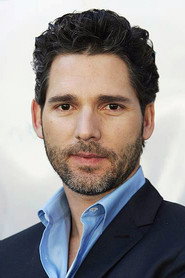
Eric Bana, Guy Pearce, and Miranda Tapsell rounded out the cast, with Bana voicing Chaz, a saltwater crocodile with a gruff exterior. Pearce’s role as a villainous zoo owner added a layer of tension, while Tapsell’s character, Zoe, provided a grounding presence.
Produced between the U.S. And Australia, Back to the Outback aimed to showcase the country’s landscapes and culture. Knight and Cripps highlighted the challenges of animating the Outback’s vast, sunbaked terrain, which required a mix of realism and stylized exaggeration. The film’s 92-minute runtime kept the pacing tight, though some critics noted the story’s familiarity.
A running gag in interviews involved the directors’ obsession with Tim Tams, an iconic Australian chocolate biscuit. Cripps even referenced a "Tim Tam Suck" moment in one Q&A, though details remain vague. Whether this made it into the film is unclear, but it’s a sign of the team’s playful rapport.
Upon release, Back to the Outback earned a modest 6/10 rating from French critics, who praised its animation but found the plot predictable. Audience reactions were warmer, with many appreciating its message of embracing differences. Rumors of a sequel have surfaced, though nothing’s been confirmed by Netflix or the creators.
One unverified tidbit: Keith Urban’s cameo as a kangaroo was reportedly a late addition, with the country star recording his lines remotely during the pandemic. If true, it’s a fun footnote to the film’s already eclectic cast.
Entertainment rumors and trivia aggregated from public reporting. Treat speculation as unverified unless a cited source confirms it.
More titles in the same genres and with the same cast.