Adam Scott
Tom

“You don't want to be on his list.”
When his dysfunctional family clashes over the holidays, young Max is disillusioned and turns his back on Christmas. Little does he know, this lack of festive spirit has unleashed the wrath of Krampus: a demonic force of ancient evil intent on punishing non-believers.
Official
There’s a moment in Krampus that feels like a punchline and a gut-punch at the same time. The Engel family—already a powder keg of passive-aggressive holiday tension—has just survived the first wave of the creature’s attacks. They’re huddled in the basement, the power out, the snow piling up outside, and the only light comes from a flickering fireplace.
Then, from the shadows, a small, grinning face emerges: a gingerbread man, alive, with jagged candy teeth and a hunger for flesh. It scuttles toward them like a rat, and the camera lingers just long enough to let the absurdity sink in before the horror does. That’s Michael Dougherty’s gift—making you laugh right before he makes you scream.
Dougherty has always had a knack for blending folklore with dark humor, but Krampus feels like his most personal film in the way it weaponizes holiday nostalgia. Here, Christmas isn’t just a backdrop; it’s the fuel for the fire. The film opens with a montage of Black Friday chaos—shopping carts clashing, elbows flying, a woman shoving a child aside to grab the last discounted toy—that’s so exaggerated it loops back around to feeling painfully real.
(I’ve seen less hostility at a hockey game.) This is the world the Engels live in: a family so consumed by consumerism and petty grievances that they’ve forgotten what the season is supposed to mean. And when young Max (Emjay Anthony) tears up his letter to Santa in a fit of disillusionment, he doesn’t just reject Christmas—he invites something far worse.
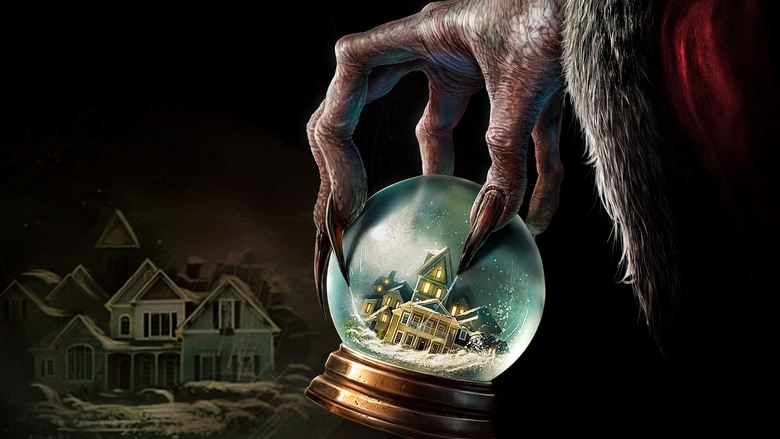
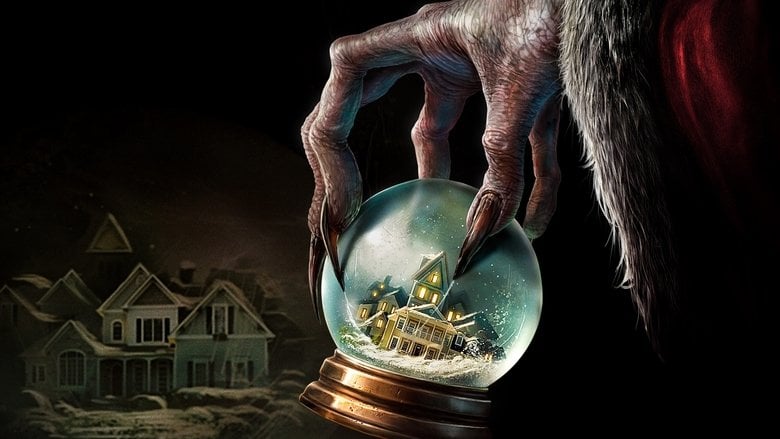
The Krampus myth has always been the dark flip side of St. Nicholas, a horned beast who punishes the naughty while Santa rewards the nice. But Dougherty isn’t content with just resurrecting the folklore—he wants to twist it into something that feels like a lost 1980s horror-comedy, the kind of movie that might’ve played on late-night cable alongside Gremlins and The Thing.
The practical effects here are a love letter to that era, from the grotesque, goat-legged Krampus himself to the army of living toys and demonic cherubs that descend on the family. What makes Krampus more than just a gimmick, though, is how it uses its horror to expose the fractures in the Engel family. Adam Scott plays Tom, the well-meaning but checked-out dad; Toni Collette is Sarah, the mom trying (and failing) to keep the peace; and David Koechner steals every scene as Uncle Howard, a gun-toting blowhard who treats the apocalypse like a hunting trip.
Their dysfunction isn’t just comic relief—it’s the reason Krampus has come for them. The film’s central tension isn’t just "will they survive?" but "do they even deserve to?" Dougherty seems to suggest that the real horror of the holidays isn’t the monsters under the bed, but the way we treat each other when we’re supposed to be at our best.
The third act takes a turn that’s equal parts shocking and darkly funny. Without spoiling it, the ending feels like a middle finger to the idea that holiday movies have to be uplifting. It’s bleak, ambiguous, and just absurd enough to make you question whether you should be laughing or horrified.
Some critics have debated whether the film’s tone successfully balances its comedy and horror, with The A.V. Club noting that "the film’s mix of scares and laughs can feel uneven at times." And it’s true—there are moments where the shifts between the two feel jarring, like the film can’t quite decide whether it wants to be National Lampoon’s Christmas Vacation or The Exorcist.
But maybe that’s the point. The holidays are jarring: one minute you’re singing carols, the next you’re arguing over politics at the dinner table. Krampus doesn’t just reflect that chaos—it amplifies it into something supernatural. The film’s legacy has only grown since its release, cementing its place as a cult favorite among fans of holiday horror.
It’s easy to see why: in a season dominated by saccharine Hallmark movies and predictable family dramas, Krampus offers something rare—a Christmas movie that actually feels dangerous. It’s not just about scares; it’s about the idea that the holidays can bring out the worst in us, and that sometimes, the monsters we should fear aren’t the ones hiding in the dark, but the ones we invite in ourselves.
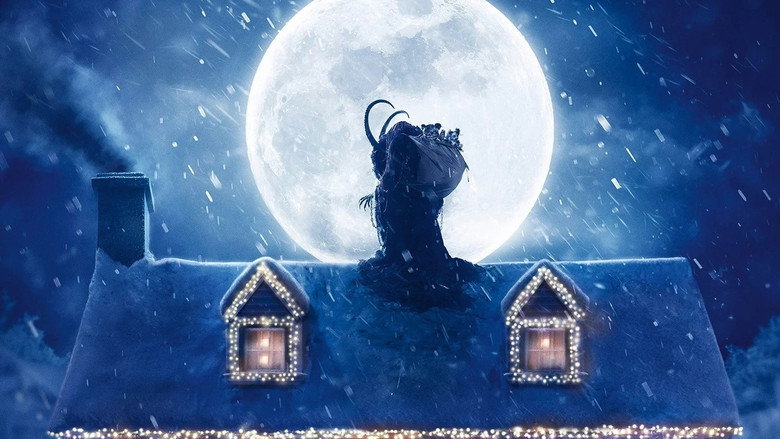
I keep coming back to that gingerbread man. It’s such a small detail, but it encapsulates everything Krampus does well: it takes something familiar and twists it into something grotesque. That’s what the film does to Christmas itself.
It doesn’t just subvert the holiday—it forces you to look at it through a funhouse mirror, where the cheer is a little too loud, the smiles a little too sharp, and the love a little too conditional. And maybe that’s why it lingers. Because after the credits roll, you’re left wondering: if Krampus came for your family, would you even notice?
Or would you be too busy fighting over the last slice of pie?
"A fun but uneven Christmas horror-comedy that delivers scares and laughs in spurts but never fully coheres."
The mix of holiday cheer and horror offers something different from typical Christmas films, with creative creature designs and a few genuinely tense moments. The humor often falls flat, though, and the story struggles to balance its tone, so the payoff underwhelms.
Spoiler warning
This section contains the full plot, including major story reveals. Overview above stays spoiler-free.
Michael Dougherty’s Krampus (2015) isn’t your typical Christmas movie. Blending dark comedy, horror, and festive chaos, the film follows a dysfunctional family terrorized by the mythical Krampus—a horned, demonic figure who punishes naughty children during the holidays. latestnetflix.com's view is that while the movie’s scares and humor have earned it a cult following, the behind-the-scenes stories reveal a production that balanced holiday cheer with genuine terror, both on and off screen.
Director Michael Dougherty, known for his work on Trick ’r Treat (2007), brought a distinctively playful yet sinister tone to Krampus. In interviews, he emphasized his love for holiday horror, citing classic films like Gremlins (1984) as inspiration. Dougherty described Krampus as a "dark fairy tale," blending the warmth of family dynamics with the terror of a supernatural threat. His goal wasn’t just to scare audiences but to remind them of the chaos—and occasional darkness—lurking beneath the holiday season.
The film’s mix of practical effects and CGI was a deliberate choice. Dougherty wanted Krampus and his minions to feel tangible, avoiding the overuse of digital effects that could make the creatures feel weightless. The result? A creature design that’s both grotesque and oddly charming, from the horned beast himself to the murderous gingerbread men and the terrifying "Cherub" toys.
The ensemble cast—led by Adam Scott, Toni Collette, and David Koechner—brought a mix of humor and heart to the film. In interviews, the actors revealed how their off-screen camaraderie translated into the family’s chaotic dynamic on screen.
Filming a horror-comedy set during Christmas came with its own set of challenges. Dougherty and the crew had to balance the festive aesthetic with the film’s darker themes. In interviews, Dougherty mentioned the difficulty of shooting winter scenes in New Zealand, where the film was primarily shot. The production team had to create snow-covered sets and ensure the holiday decorations didn’t clash with the horror elements.
Another hurdle was the creature design. Dougherty wanted Krampus and his minions to feel like they belonged in a twisted fairy tale, not just a typical slasher film. The practical effects team worked tirelessly to bring the creatures to life, from the towering Krampus puppet to the eerie, doll-like "Cherubs". The result was a mix of old-school horror and modern CGI, giving the film a timeless quality.
Upon its release, Krampus received mixed but passionate reviews. Some critics praised its unique blend of horror and holiday spirit, while others found its tone uneven. Rotten Tomatoes lists it with a modest score, but the film has since gained a dedicated fanbase, with many calling it a "guilty movie pleasure".
The cast and crew have embraced the film’s cult status. In interviews, they’ve reflected on how Krampus stands out in the holiday horror genre, offering something darker and more subversive than traditional Christmas movies. Dougherty, in particular, has expressed pride in the film’s ability to balance humor, horror, and heart.
Krampus (2015) may not be a perfect film, but its behind-the-scenes stories reveal a production that was as chaotic and fun as the movie itself. From Dougherty’s vision to the cast’s chemistry, the film succeeded in creating a unique blend of holiday cheer and terror. Whether you love it or find it a guilty pleasure, Krampus remains a standout entry in the holiday horror genre.
Entertainment rumors and trivia aggregated from public reporting. Treat speculation as unverified unless a cited source confirms it.
More titles in the same genres and with the same cast.