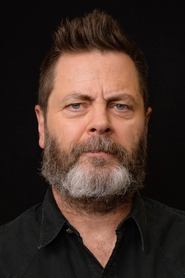
Nick Offerman
Self

Celebrities recall their most mind-bending trips via animations, reenactments and more in this comedic documentary exploring the story of psychedelics.
Official
I’ll admit it: I came to Have a Good Trip: Adventures in Psychedelics expecting a breezy, star-studded romp through the kaleidoscope of celebrity drug stories. And for the first twenty minutes, that’s exactly what it delivers. Nick Offerman, grinning like a man who’s just remembered the best joke of his life, recounts a mushroom trip that turned a simple walk into a existential crisis about his own ankles.
Sarah Silverman describes her first acid experience with the kind of wide-eyed wonder usually reserved for childhood Christmas mornings. The film’s animated sequences—bright, swirling, and just self-aware enough to wink at the audience—promise something playful, maybe even profound. But somewhere between the reenactments of 1970s anti-drug PSAs and the parade of famous faces, Have a Good Trip loses its way.
It’s not that the stories aren’t entertaining; it’s that the film never quite figures out what it wants to do with them. Donick Cary, the director and a veteran comedy writer (The Simpsons, Parks and Recreation), seems to have approached this project like a late-night conversation with friends—one where the drinks are strong, the stories are wild, and no one’s particularly interested in tying things up neatly.
That’s fine for a kitchen table, but a documentary, even a comedic one, usually needs a little more architecture. The Washington Post called it a "star-studded parade of celebrity reminiscences" that "aims to entertain, not educate," and that feels about right. There’s no real thesis here, no through-line beyond the broad idea that psychedelics can be funny, terrifying, or occasionally life-changing.
The film meanders from one anecdote to the next, stitching together interviews with reenactments, animations, and those oddly charming "The More You Trip" PSAs, which feel like they were beamed in from a parallel universe where Schoolhouse Rock! took a left turn into the Haight-Ashbury.
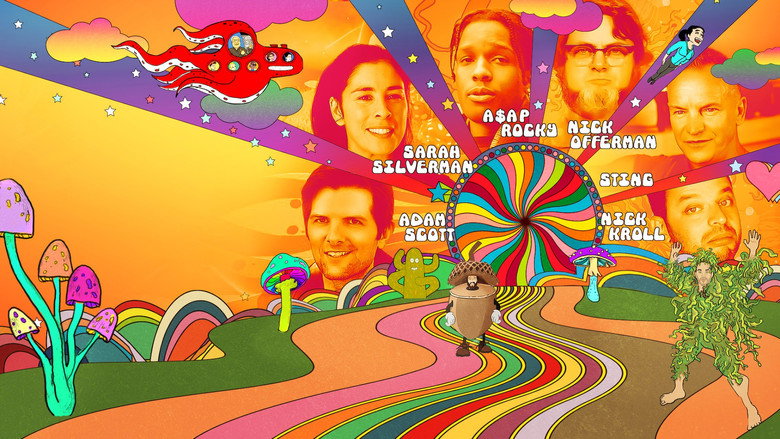
The problem isn’t the material itself. Some of these stories are genuinely hilarious, like A$AP Rocky’s account of tripping so hard he thought he was a Transformers character, or Rosie Perez’s deadpan recollection of a bad acid trip that left her convinced she was being chased by a demonic vacuum cleaner. And then there are the moments that linger, like Anthony Bourdain’s description of a "multi-drug blowout" in the Catskills, where he and a friend spent hours convinced they were trapped in a loop of their own making.
Bourdain’s voice is warm, self-deprecating, and just vulnerable enough to make you forget, for a second, that this is the same man who once ate a beating heart on camera. It’s a shame the film doesn’t sit with these moments longer, because they’re the ones that feel human, not just like punchlines. Carrie Fisher’s presence is especially poignant—and, for some, unsettling.
She appears in the film recounting a story about an acorn in Central Park that "misbehaved" during an acid trip, its movements so deliberate it felt like a message from the universe. Fisher’s delivery is classic her: sharp, funny, and just a little bit unhinged. But her inclusion, along with Bourdain’s, has drawn criticism.
I’m not sure I’d go that far, but there’s something undeniably bittersweet about hearing their voices in a film that otherwise treats psychedelics as a lark. It’s as if the movie can’t decide whether it’s a celebration, a cautionary tale, or just a highlight reel of famous people saying "whoa."
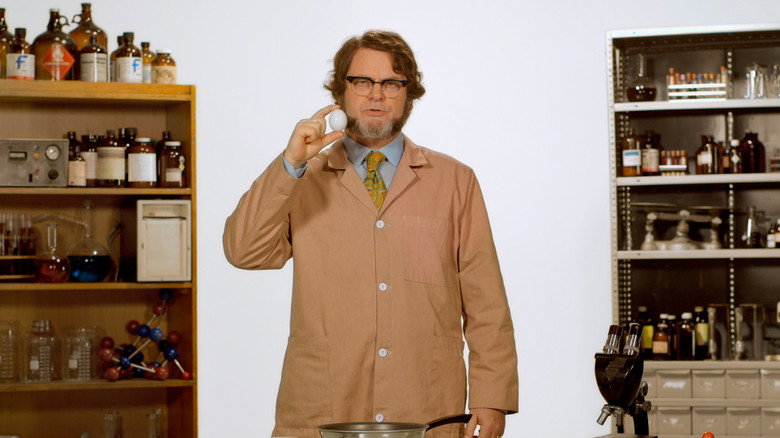
The reenactments, which star Adam Scott as a hapless straight man in a series of over-the-top anti-drug PSAs, are hit-or-miss. Some of them land, like a sketch where Scott’s character tries to explain his LSD trip to a skeptical police officer, only to devolve into a rant about how "the clouds are judging me." Others feel like they’re trying too hard, as if the film is worried the audience might get bored if it doesn’t keep throwing gags at the screen.
The animations, by Sugarshack, are the film’s strongest visual element. They’re colorful, inventive, and just surreal enough to capture the disorienting beauty of a psychedelic experience. But even they can’t paper over the fact that Have a Good Trip is a film without a center.
It’s not a deep dive into the science of psychedelics (though it name-drops experts like Dr. Charles Grob and Deepak Chopra), nor is it a serious exploration of their cultural impact. It’s not even a particularly coherent argument for their decriminalization or therapeutic use, despite the occasional nod in that direction.
That’s not to say it’s a bad time. The film’s tone is amiable, even when it’s flailing, and there’s something undeniably charming about watching a bunch of celebrities giggle their way through stories of bad trips and cosmic revelations. But charm only gets you so far.
Variety called it an "amiable enterprise" that "doesn’t stray very far from a general, standard-stoner-yuks tenor," and that feels like the most accurate description. It’s the cinematic equivalent of a late-night dorm room conversation: fun in the moment, but you’re not likely to remember much of it the next morning.
The Hollywood Reporter summed it up as a "very mixed bag" and a "harmless time-waster," and I can’t argue with that. Have a Good Trip isn’t trying to be Fantastic Fungi or The Trip (the 2011 documentary about psychedelic therapy). It’s not even trying to be Fear and Loathing in Las Vegas, though it occasionally stumbles into that territory. It’s a film that wants to have its cake and eat it too—wanting the gravitas of a cultural exploration without the work of actually digging in, wanting the humor of a comedy without the discipline of a tight script.
In the end, it’s a little like one of its own stories: a trip that starts with promise, takes a few wrong turns, and leaves you wondering what the point of it all was. Maybe that’s the joke. Or maybe the joke’s on us.
"A lighthearted, entertaining dive into psychedelic experiences, buoyed by celebrity anecdotes but lacking deeper exploration."
The mix of humor and personal stories from well-known figures makes it an engaging watch, particularly for those curious about psychedelics. Its surface-level approach and reliance on celebrity cameos leave little substance on the broader cultural impact of these experiences.
Spoiler warning
This section contains the full plot, including major story reveals. Overview above stays spoiler-free.
Donick Cary’s 2020 documentary Have a Good Trip: Adventures in Psychedelics isn’t just another drug movie—it’s a celebrity-studded safari through the highs, lows, and outright bizarre moments of psychedelic experiences. With a cast that reads like a who’s-who of Hollywood and music royalty, the film blends animated reenactments, expert commentary, and firsthand stories from the likes of Nick Offerman, Sarah Silverman, and the late Anthony Bourdain. latestnetflix.com's take is that but beyond the trippy visuals and A-list anecdotes, the project itself has a few behind-the-scenes quirks worth unpacking.
The film’s biggest draw is its roster of celebrities dishing on their psychedelic adventures—or misadventures. Nick Offerman, best known for his deadpan role in Parks and Recreation, reportedly shares a tale about a mushroom trip that spiraled into an existential crisis. Sarah Silverman, never one to shy away from taboo topics, allegedly recounts a particularly surreal LSD experience involving a talking cat. Meanwhile, A$AP Rocky’s segment is said to lean into the creative boosts he’s gotten from psychedelics, framing them as a tool for artistic inspiration.
The late Anthony Bourdain, who passed away in 2018, appears in archival footage, offering a characteristically blunt take on his own experiments with mind-altering substances. His inclusion adds a layer of poignancy to the film, especially given his reputation for fearless storytelling. Carrie Fisher, another iconic figure who left us too soon, also contributes, though specifics about her segment remain scarce in the available evidence.
Other notable names like Ben Stiller, Adam Scott, and Rosie Perez round out the cast, each bringing their own flavor of psychedelic storytelling to the table. The sheer variety of voices—from comedians to musicians to actors—gives the film a chaotic, almost party-like energy, as if the audience is eavesdropping on a particularly wild dinner conversation.
One of the most striking aspects of Have a Good Trip is its use of animation to visualize the often indescribable experiences of psychedelic trips. The film employs a mix of styles, from retro cartoonish sequences to more surreal, abstract visuals, to bring the stories to life. This approach isn’t just for show—it’s a practical solution to the challenge of depicting something as subjective as a drug trip.
The animation segments are intercut with talking-head interviews and commentary from experts like Deepak Chopra, who provides a more grounded, philosophical perspective on the role of psychedelics in creativity and spirituality. The contrast between the wild, colorful animations and the sober reflections of the experts creates a dynamic rhythm, keeping the film engaging even when the subject matter veers into the abstract.
Have a Good Trip landed on Netflix in May 2020, a time when the streaming giant was doubling down on documentary content. The film’s release came amid a resurgence of interest in psychedelics, both as a cultural phenomenon and as a potential tool for mental health treatment. While the documentary doesn’t take a hard stance on the medical or legal debates surrounding these substances, it doesn’t shy away from their darker sides either—some stories look at bad trips, paranoia, and even near-death experiences.
The film’s reception was mixed but generally positive. It holds a 6.5/10 rating on SensCritique, based on nearly 600 votes, with viewers praising its humor and star power while critiquing its lack of depth on the science behind psychedelics. Some reviews suggest the documentary leans more toward entertainment than education, which isn’t surprising given its celebrity-driven format.
Despite the star power and the intriguing premise, Have a Good Trip leaves a few questions unanswered. For instance, how did director Donick Cary, best known for his work on The Simpsons and Parks and Rec, land such a high-profile cast? The evidence doesn’t specify whether the celebrities were paid, volunteered their stories, or were approached through personal connections. Similarly, there’s no clear indication of how the film’s budget was allocated between animation, interviews, and licensing archival footage.
Another mystery is the extent of Anthony Bourdain’s involvement. Given his untimely death two years before the film’s release, it’s unclear how much of his footage was repurposed from older interviews or if he recorded new material specifically for the project. The same goes for Carrie Fisher, whose segment feels like a bittersweet tribute to her legacy.
Have a Good Trip: Adventures in Psychedelics is less a deep dive into the science or culture of psychedelics and more a star-studded variety show of personal anecdotes. It’s funny, occasionally profound, and undeniably entertaining, but it’s not the kind of documentary that will change minds or shift policy. Instead, it’s a celebration of the weird, the wild, and the occasionally life-changing experiences that come with altered states of consciousness.
For fans of the celebrities involved, it’s a chance to see them in a more vulnerable, unfiltered light. For everyone else, it’s a reminder that even the most outlandish stories can feel relatable when told with humor and honesty. Just don’t expect to come away with a clear answer to the question: Should I try psychedelics? The film’s answer seems to be, Well, it depends on who you ask.
Entertainment rumors and trivia aggregated from public reporting. Treat speculation as unverified unless a cited source confirms it.
More titles in the same genres and with the same cast.