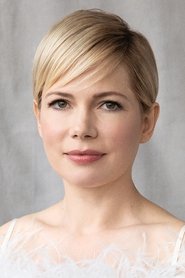
Michelle Williams
Margot

“A funny, bittersweet tale of love…”
Twenty-eight-year-old Margot is happily married to Lou, a good-natured cookbook author. But when Margot meets Daniel, a handsome artist who lives across the street, their mutual attraction is undeniable.
Official
I’ve always been suspicious of films that promise to explore the "complexities" of marriage. Too often, they reduce those complexities to a series of dramatic confrontations—slamming doors, shouted confessions, tearful reconciliations—all scored to swelling strings. Take This Waltz, Sarah Polley’s second feature, doesn’t do that. It doesn’t do much of anything, at least not in the way we expect.
And that, I think, is the point.
The film follows Margot (Michelle Williams), a 28-year-old freelance writer married to Lou (Seth Rogen), a cookbook author with a perpetually rumpled charm. They’re happy, or at least content, in the way couples often are: comfortable, affectionate, occasionally irritated by each other’s habits. (Lou’s obsession with recording bird calls is the kind of detail that feels painfully real.) But when Margot meets Daniel (Luke Kirby), a rickshaw driver and artist who lives across the street, the ground beneath her starts to shift.
Not in a grand, cinematic way—no thunderclaps, no slow-motion hair flips—but in the quiet, unsettling way of a woman realizing she’s been sleepwalking through her own life.

Polley’s direction is so unassuming it’s almost radical. There are no sweeping shots of Toronto’s skyline, no montages of Margot’s existential crisis set to indie folk music. Instead, we get close-ups of hands brushing against each other, of Margot’s face in the rearview mirror as she drives away from Daniel’s apartment, her expression caught between relief and regret.
The camera lingers on the mundane: a sink full of dishes, a half-eaten plate of food, the way Margot’s fingers tap restlessly against her thigh when she’s lying. It’s the kind of filmmaking that makes you lean in, not because something dramatic is happening, but because you sense that something is happening, even if you can’t quite name it.
And that’s the film’s greatest strength—its refusal to spell things out. Margot’s attraction to Daniel isn’t framed as a grand passion or a moral failing. It’s just… there.
A pull. A question without an answer. The film doesn’t judge her for it, nor does it romanticize the affair.
When Margot and Daniel finally sleep together, the scene is shot with a matter-of-factness that’s almost clinical. There’s no soft focus, no swelling music. Just two people, naked and awkward, fumbling toward something that might not even be what they want.
The supporting cast is just as quietly effective. Sarah Silverman, playing Margot’s sister Geraldine, steals every scene she’s in—not with showy histrionics, but with the weary, darkly funny resignation of someone who’s seen this all before. (Her monologue about marriage, delivered while she’s getting a mammogram, is one of the film’s sharpest moments.) And then there’s Seth Rogen, who’s so good here that it’s almost disorienting.
Lou isn’t a caricature of a nice guy; he’s just a guy, flawed and loving and oblivious in the way most of us are. When Margot finally confesses her infidelity, the hurt in his eyes isn’t performative. It’s the kind of hurt that lingers, the kind that doesn’t fit neatly into a third-act redemption arc.
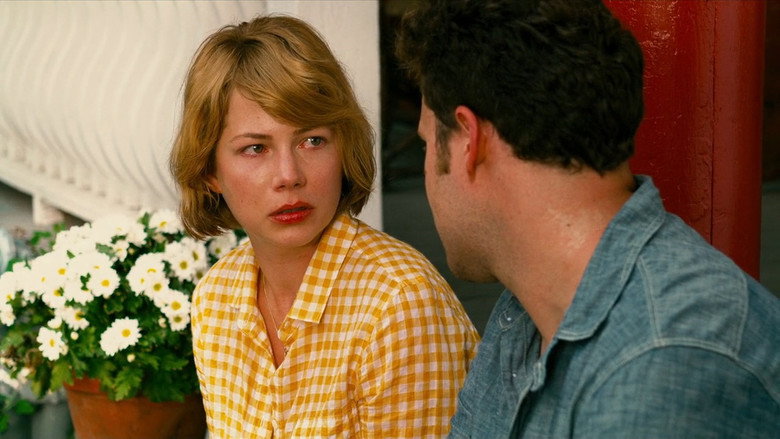
What’s most striking about Take This Waltz is how little it feels like a "romance." There’s no grand gesture, no last-minute dash to the airport. The ending is ambiguous, messy, and—crucially—unresolved.
Margot doesn’t ride off into the sunset with Daniel, nor does she return to Lou with a newfound appreciation for their life together. She just… stays. In the final scene, she’s on a carnival ride, spinning in circles, her face a mask of forced joy.
It’s a moment that’s both heartbreaking and utterly ordinary, the kind of thing that happens to people every day. They don’t get closure. They just get on with it.
This is where the film’s title comes into focus, though not in the way you might expect. Leonard Cohen’s Take This Waltz (the song) isn’t in the film, but its spirit lingers in the way Polley frames Margot’s dilemma. Cohen’s lyrics—"Oh, we’re dancing, darling / We’re dancing and it’s fatal like a knife"—capture the intoxicating, dangerous allure of something new, something that feels like it might save you.
But Take This Waltz is also a song about the inevitability of endings, about the way even the most beautiful things must eventually stop. Margot’s waltz with Daniel is brief, electric, and ultimately unsustainable. The real waltz—the one she’s been dancing all along—is with Lou, with the life she’s built, with the person she’s slowly becoming.
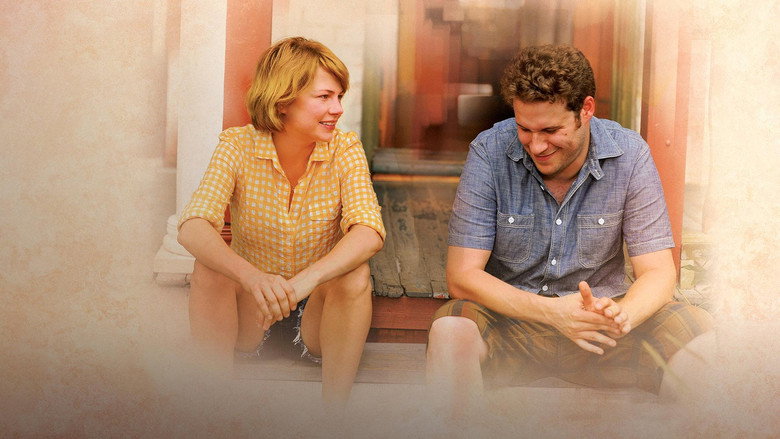
I keep coming back to that carnival ride. It’s such a simple image, but it’s the perfect metaphor for the film’s approach to storytelling. Life isn’t a series of dramatic highs and lows; it’s a slow, dizzying spin, full of moments that feel like they might be the most important thing in the world until, suddenly, they’re not. Take This Waltz doesn’t offer answers because life doesn’t offer answers.
It just offers more questions, more waltzes, more chances to stumble and recover and stumble again.
That’s not to say the film is flawless. There are moments where the pacing drags, where the bittersweet tone tips into something almost too muted. And while Michelle Williams is, as always, extraordinary, there are times when Margot’s indecision feels less like a character trait and more like a narrative device.
But these are minor quibbles. What lingers is the film’s honesty, its refusal to tidy up the messiness of human relationships.
In the end, Take This Waltz isn’t about whether Margot makes the "right" choice. It’s about the fact that there is no right choice, only the one she makes—and the quiet, aching space between what she wants and what she can have. It’s a film that trusts its audience to sit with that discomfort, to recognize it not as a failure of storytelling, but as a reflection of life itself.
And that, I think, is far rarer—and far more valuable—than any neatly wrapped happy ending.
"A visually poetic but uneven exploration of marital discontent that works better in moments than as a whole."
Michelle Williams’ performance and the dreamy aesthetic earn consistent praise, and the story’s emotional rawness is compelling. The pacing and lack of narrative payoff frustrate others, who call it meandering and its resolution unsatisfying.
Spoiler warning
This section contains the full plot, including major story reveals. Overview above stays spoiler-free.
Sarah Polley’s Take This Waltz (2011) is a film that lingers—not for its explosive drama, but for its raw, intimate portrayal of love, desire, and the messy in-between. Starring Michelle Williams, Seth Rogen, and Luke Kirby, the movie dives into the life of Margot, a woman caught between the comfort of her marriage and the intoxicating pull of a new connection. latestnetflix.com's view is that while the film didn’t dominate headlines like some of Polley’s other work, its behind-the-scenes details reveal a deeply personal project for the director, one that doubles as a love letter to Toronto and a meditation on the complexities of modern relationships.
Polley, known for her introspective storytelling, infused Take This Waltz with a sense of place and emotion that feels distinctly hers. In an exclusive interview, she described the film as a "love letter about Toronto," a city she clearly holds dear. The movie’s setting—vibrant, lived-in, and unglamorized—plays a crucial role in grounding the story, making Margot’s internal conflict feel all the more real. Polley’s direction balances humor and heartbreak, a signature of her filmmaking style, and the result is a film that feels both universal and deeply personal.
The director’s approach to the material was reportedly collaborative, with Williams and Rogen bringing their own interpretations to their roles. While the evidence doesn’t detail specific on-set dynamics, the chemistry between the cast is palpable on screen, suggesting a comfortable and creative working environment.
Michelle Williams, who has built a career on playing complex, emotionally layered characters, delivers one of her most understated yet devastating performances as Margot. Her portrayal of a woman torn between duty and desire is nuanced, avoiding clichés of the "unhappy wife" trope. Seth Rogen, often typecast in comedic roles, surprises with a grounded, tender performance as Lou, Margot’s husband. His ability to balance humor and pathos adds depth to a character who could have easily been reduced to a one-dimensional foil.
Luke Kirby, as Daniel, the object of Margot’s infatuation, brings a quiet intensity to the role. His dynamic with Williams crackles with tension, making their scenes together some of the film’s most compelling. Supporting players like Sarah Silverman, who plays Margot’s sister-in-law, add layers of humor and warmth, rounding out the film’s emotional landscape.
Take This Waltz premiered to mixed but passionate reactions. Critics praised its performances and Polley’s direction, while some audiences found its pacing and ambiguous ending frustrating. The film holds a 6.4/10 rating on SensCritique, based on over 1,000 votes, reflecting its polarizing nature. Yet, its reputation has grown over time, with many viewers revisiting it for its honest portrayal of relationships and its stunning cinematography.
One of the film’s most talked-about elements is its soundtrack, which includes Leonard Cohen’s "Take This Waltz," an English adaptation of Federico García Lorca’s poem "Pequeño vals vienés". The song’s melancholic beauty mirrors the film’s themes, adding another layer of emotional resonance.
While Take This Waltz may not have been a box-office sensation, it remains a standout in Polley’s filmography and a sign of her ability to capture the quiet, devastating moments of life. The film’s exploration of love, fidelity, and self-discovery continues to resonate with audiences, cementing its place as a modern indie classic.
For those who appreciate character-driven dramas with emotional depth, Take This Waltz is a must-watch—and a reminder that sometimes the most powerful stories are the ones that unfold in the spaces between words.
Entertainment rumors and trivia aggregated from public reporting. Treat speculation as unverified unless a cited source confirms it.
More titles in the same genres and with the same cast.