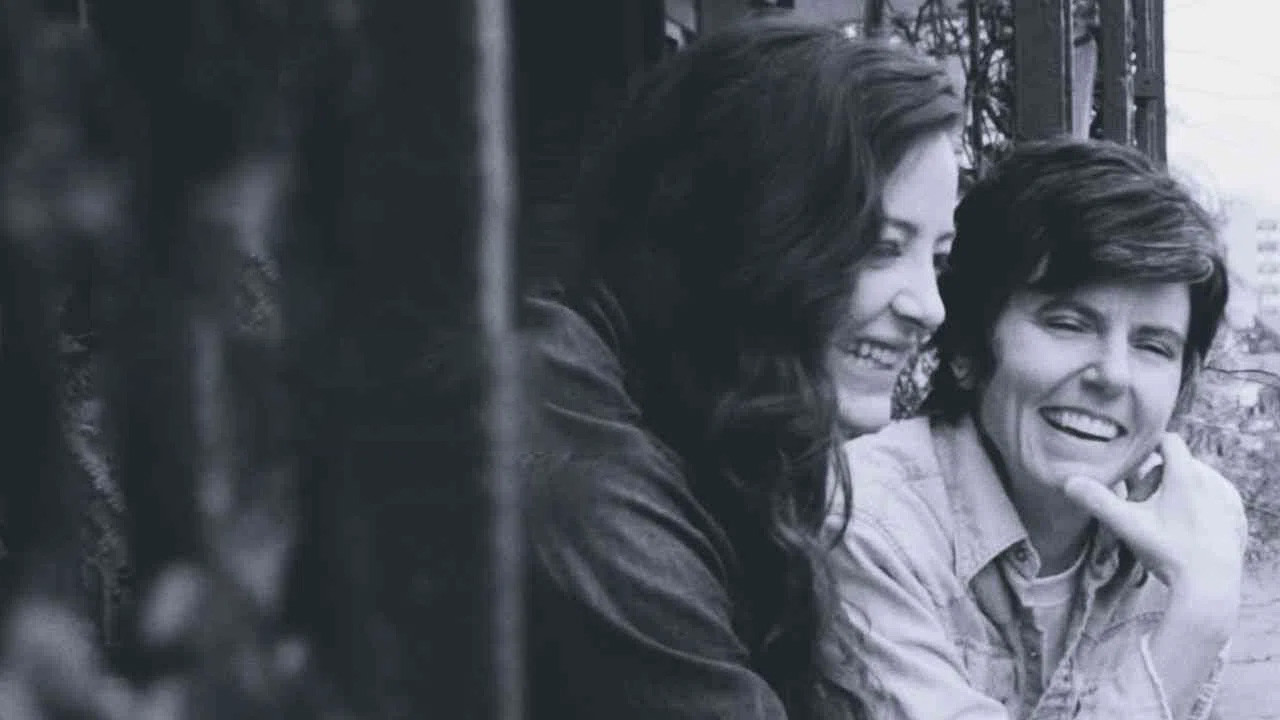

Tig Notaro
Self
“Finding life in the face of death.”
An intimate documentary that follows Tig Notaro, a Los Angeles based comedian, who just days after being diagnosed with invasive stage II breast cancer changed the course of her career with a poignant stand-up set that became legendary overnight. It explores Tig's extraordinary journey as her career ignites and as her life unfolds in grand and unexpected ways, all the while continuing to battle a life-threatening illness and falling in love.
Official
I’ve always been suspicious of documentaries about comedians. There’s something too neat about the genre’s promise—that if we just watch long enough, we’ll uncover the real person behind the punchlines, as if the act of performing isn’t already the most honest thing they do. Tig, the 2015 documentary about stand-up comic Tig Notaro, doesn’t fall into that trap. It doesn’t try to explain her.
Instead, it sits beside her, close enough to feel the weight of her silence, the way she lets a joke land before moving on, as if the air itself needs to settle.
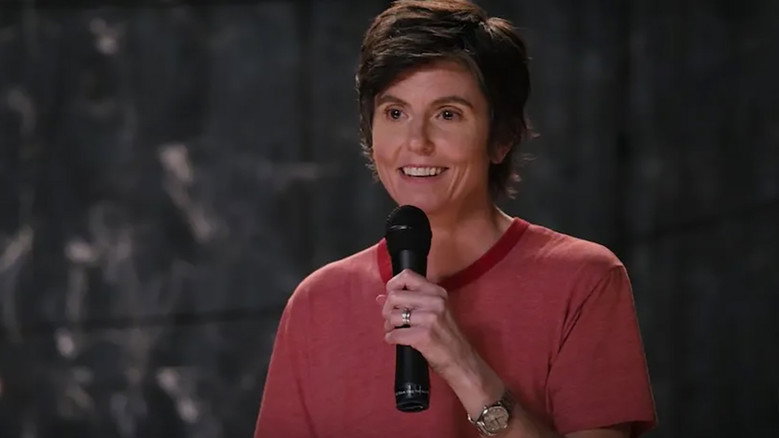
The film opens with Notaro onstage, but not in the way you’d expect. There’s no grand setup, no montage of her greatest hits. She’s just there, in a dimly lit club, her voice low and steady, telling a story about her mother’s death, her cancer diagnosis, a breakup, and a life-threatening infection—all in the span of a few minutes.
The audience laughs, but it’s a nervous, uncertain laugh, the kind that catches in your throat. Notaro doesn’t flinch. She lets the room breathe.
That’s the first lesson of Tig: comedy isn’t about filling the silence. It’s about knowing when to leave it there.

Directors Ashley York and Kristina Goolsby don’t frame Notaro’s life as a series of triumphs over adversity. There’s no inspirational arc here, no tidy resolution. Instead, the film unfolds like one of Notaro’s own sets—digressive, intimate, occasionally messy.
We see her in the hospital, bald and exhausted, cracking jokes with her nurses. We see her at home, curled up on the couch with her then-girlfriend (now wife) Stephanie Allynne, watching The Price Is Right like it’s the most natural thing in the world. We see her on the road, performing for crowds who know her story before she even steps onstage.
The camera lingers on these moments, not to milk them for emotion, but because they feel true. There’s no score swelling in the background, no dramatic reenactments. Just life, unvarnished and ongoing.
What makes Tig remarkable is how little it relies on the usual crutches of the biographical documentary. There are no talking-head interviews with industry experts dissecting her career. No animated timelines of her rise to fame.
The film trusts its subject to carry the story, and Notaro—with her dry wit and unshakable presence—does. The closest thing to a traditional documentary moment comes when she performs her now-legendary 2012 set at Largo, the one where she famously opened with, “Good evening. Hello.
I have cancer.” The footage is raw, unedited, the kind of thing that feels like it should be too private to watch. But that’s the point. Notaro’s comedy has always been about collapsing the distance between the stage and the audience, and the film does the same.
The supporting cast—Zach Galifianakis, Sarah Silverman, Bill Burr—appear not as celebrities, but as friends. Their presence isn’t about star power; it’s about community. Silverman, in particular, has a quiet scene where she talks about the first time she heard Notaro’s cancer set.
She doesn’t gush or over-explain. She just says, “It was like watching someone walk a tightrope without a net.” That’s the film in a nutshell: a tightrope walk, but one where the performer is so steady, so sure of her footing, that you almost forget how high up she is.
There’s a moment in Tig that I keep coming back to. Notaro is onstage, mid-set, and she pauses. The audience leans in.
She says, “I don’t know if I’m going to make it.” The room goes still. Then she adds, “But if I do, I’m going to need a lot of help moving.” The audience erupts. It’s a perfect joke—not because it’s clever, but because it’s honest.
It doesn’t shy away from the fear, but it doesn’t let the fear win, either. That’s the balance Notaro has always struck, and it’s the same balance the film achieves. It doesn’t pretend that life is anything other than what it is: messy, unpredictable, and sometimes unbearably hard.
But it also doesn’t pretend that laughter isn’t part of the equation.

The film premiered at Sundance in 2015, where Notaro and Silverman participated in a Cinema Cafe discussion—a detail that hints at the industry’s interest in the project, even if the snippets don’t reveal much about its wider reception. What’s clear, though, is that Tig isn’t just a film about a comedian. It’s a film about how we tell our own stories, how we choose what to share and what to hold back.
Notaro’s comedy has always been about control—the control to stand onstage and say the unsayable, the control to laugh in the face of the things that would break most of us. The film captures that control, but it also captures the moments when it slips. There’s a scene where Notaro, mid-conversation, suddenly stops and says, “I don’t know if I can do this.” She’s not talking about comedy.
She’s talking about life. And for a moment, the mask drops. Then she takes a breath, and it’s back on.
That’s the thing about Tig. It doesn’t give you answers. It doesn’t even really give you a story.
It gives you a person, in all her contradictions—funny and fragile, resilient and raw. And it leaves you with the same question Notaro’s comedy always does: How do we keep going? The answer, if there is one, seems to be this: one joke at a time.
"A deeply personal, often moving documentary built on raw honesty, though its pacing and emotional weight are uneven."
Tig (2015) follows comedian Tig Notaro, particularly through her breast cancer diagnosis and its aftermath. The film mixes humor with vulnerability for an intimate look at her personal and professional struggles. Its authenticity is the main strength: it avoids melodrama while still delivering emotional depth, moving between levity and gravity, though some segments are slower. Her relationships, including her romance with Stephanie Allynne, add warmth. The filmmaking itself is unremarkable, but the sincerity and Notaro’s charisma keep it compelling. Russian-language reactions, where available, say the same: honest, but with pacing and structure issues.
Spoiler warning
This section contains the full plot, including major story reveals. Overview above stays spoiler-free.
The 2015 documentary Tig isn’t just a film about comedian Tig Notaro—it’s a front-row seat to one of the most tumultuous, transformative years of her life. Directed by Ashley York and Kristina Goolsby, the movie follows Notaro as she navigates career highs, devastating health crises, and an unexpected romance, all while redefining what it means to turn pain into art. latestnetflix.com's read is that the result is a deeply personal portrait that blurs the line between performance and reality, with cameos from comedy heavyweights like Zach Galifianakis and Sarah Silverman adding weight to Notaro’s journey.
The film’s timeline is anchored by two seismic events: Notaro’s stage IV breast cancer diagnosis in 2012 and her viral 2012 stand-up set at Largo in Los Angeles, where she famously opened with, “Good evening, hello. I have cancer.” That set, later released as the album Live, became a cultural touchstone, praised for its unflinching honesty. Tig picks up in 2014, as Notaro—now cancer-free but grappling with the aftermath—considers whether to have a double mastectomy. The documentary captures her raw, often humorous deliberations, including a scene where she jokes about her post-surgery body with her then-girlfriend (and future wife) Stephanie Allynne.
The film doesn’t shy away from the darker moments. Notaro’s mother’s sudden death in 2012 and a near-fatal bout of pneumonia in 2014 bookend the narrative, framing her resilience as both a survival mechanism and a creative wellspring. Interviews with Allynne, Galifianakis, and Silverman reveal how Notaro’s humor became a lifeline—not just for her, but for those around her.
Tig benefits from its access to Notaro’s inner circle, particularly her relationship with Allynne, a fellow comedian and actress. Their chemistry is palpable, with Allynne serving as both a sounding board and a source of levity. The film also highlights Notaro’s friendship with Galifianakis, who appears in candid moments, offering dry wit and quiet support. Silverman and Bill Burr, meanwhile, pop up in talking-head segments, underscoring how Notaro’s vulnerability resonated with her peers.
One of the documentary’s most revealing threads is Notaro’s ambivalence about fame. Despite her viral success, she’s shown wrestling with the pressure to capitalize on her story—whether through a memoir, a tour, or even a sitcom. The film captures her hesitation, particularly when she’s approached about a potential TV project, which she ultimately turns down. It’s a rare glimpse into the tension between artistic integrity and commercial success.
While Notaro’s health struggles are central to Tig, the film resists being pigeonholed as a “cancer documentary.” Instead, it’s a meditation on reinvention—professional, physical, and personal. By the time the credits roll, Notaro is engaged to Allynne, has adopted a more low-key approach to comedy, and is exploring new creative avenues, including writing and acting.
The documentary’s impact extended beyond the screen. Notaro’s 2015 appearance at the Vulture Festival, where she performed a set that mirrored the film’s tone, drew widespread acclaim. And while Tig didn’t spawn a direct sequel, its themes of resilience and authenticity have echoed in Notaro’s later work, including her 2018 Netflix special Happy to Be Here.
For all its intimacy, Tig leaves some threads dangling. The film briefly touches on Notaro’s strained relationship with her stepfather, but the details remain vague. There’s also little mention of her early career, leaving viewers to wonder how her pre-cancer comedy compared to the raw, confessional style she’s known for today. And while the documentary hints at the toll her health battles took on her finances, the specifics are left unexplored.
Still, what Tig lacks in comprehensive detail, it makes up for in emotional honesty. It’s a rare documentary that feels less like a curated story and more like a snapshot of life in real time—messy, unpredictable, and ultimately hopeful.
Entertainment rumors and trivia aggregated from public reporting. Treat speculation as unverified unless a cited source confirms it.
More titles in the same genres and with the same cast.