

Penny Lane
Self

Director Penny Lane’s decision to become a “good Samaritan” by giving one of her kidneys to a stranger turns into a funny and moving personal quest to understand the nature of altruism. “Confessions of a Good Samaritan” is a provocative inquiry into the science, history, and ethics of organ transplantation, asking an ancient question in a whole new way: Who is your neighbor, and what do you owe them?
Official
I’ve seen documentaries about organ donation before—clinical, uplifting, or grimly educational. Confessions of a Good Samaritan is none of those. It’s a film that begins with a woman sitting in front of a laptop, typing out her thoughts in real time, as if she’s trying to outrun her own doubts. That woman is Penny Lane, and the doubt is this: Why am I really giving away my kidney?
Lane has spent her career hiding behind the camera, dissecting other people’s contradictions in films like Hail Satan! and Listening to Kenny G. Here, she steps in front of it, and the result is less a traditional documentary than a live autopsy of altruism. The film’s opening minutes are disarmingly casual—Lane in her kitchen, joking about the absurdity of the process, her face half-lit by a laptop screen as she narrates her own internal monologue.
It feels like eavesdropping on someone’s therapy session, if that therapy session were scored by a theremin and intercut with archival footage of 1950s transplant experiments.
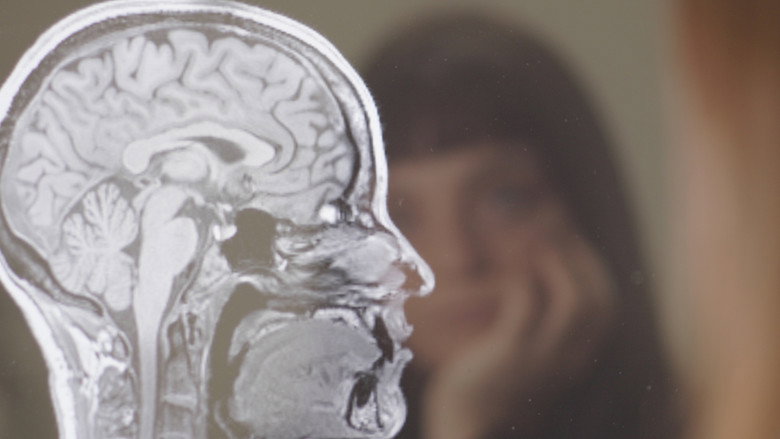
What makes Confessions so unsettling is that Lane never lets herself—or us—off the hook. She starts with the assumption that she’s doing something noble, even heroic. But the film’s structure mirrors the unraveling of that certainty.
One moment, she’s interviewing neuroscientist Abigail Marsh about the amygdala’s role in empathy; the next, she’s confessing to the camera that she might just be doing this for the attention. The film doesn’t judge her for it. Instead, it treats her ambivalence as the whole point.
Altruism, it turns out, is less about pure selflessness than it is about the stories we tell ourselves to justify our actions.
Lane’s direct-address style is key here. She’s not just narrating the film—she’s performing her own thought process, complete with second-guessing and self-deprecation. In one scene, she reads aloud from her own journal, her voice wavering between sincerity and irony. “I’m not a hero,” she says at one point, almost defiantly. “I’m just a person who decided to do a thing.” The line lands like a punch, not because it’s profound, but because it’s so obviously a lie she’s trying to believe.
The film’s genius is in letting that tension linger, unresolved.
The documentary’s aesthetic reinforces this sense of intimacy and unease. Lane shoots much of the film herself, using a low-budget digital camera that gives everything a grainy, off-the-cuff quality. The theremin score—yes, a theremin—adds a layer of surreal humor, as if the film itself can’t decide whether it’s a serious inquiry or a dark comedy.
(It’s both.) There’s a moment where Lane films herself in a hospital gown, pre-surgery, making a joke about how she looks like a “sad, deflated balloon.” The humor doesn’t undercut the gravity of the situation; it heightens it. This is what vulnerability looks like when it’s not performative—awkward, messy, and a little bit funny.
Lane’s film isn’t just about her, though. It’s about the broader ethics of organ donation, and the way society polices generosity. She interviews other “good Samaritans”—people who’ve donated kidneys to strangers—and their stories are just as complicated as hers.
One woman donated after a near-death experience, only to find herself ostracized by her community for “showing off.” Another donor, a man who gave his kidney to a stranger he met online, admits he did it partly to prove something to himself. The film doesn’t condemn them. Instead, it asks: What does it mean to be “good” in a world that doesn’t know how to handle selflessness?
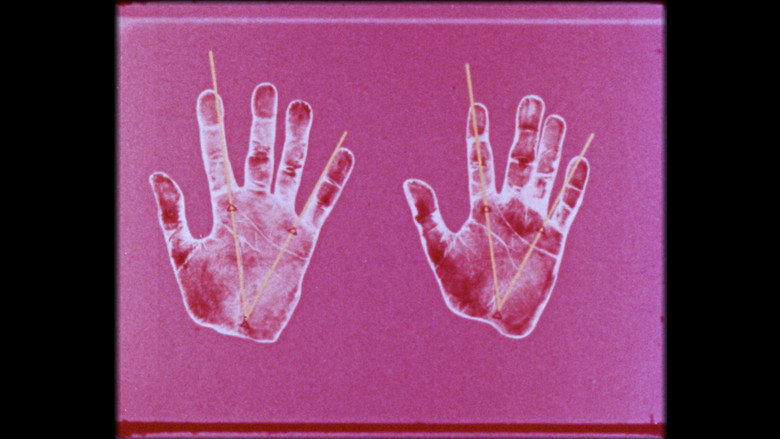
The historical context Lane weaves in is equally fascinating. She traces the evolution of transplant surgery, from the early experiments with cyclosporine to the ethical debates around organ trafficking. There’s a chilling moment where she shows footage of a 1960s medical conference, where doctors casually discuss the “donor pool” as if it were a resource to be mined.
The film doesn’t draw a direct line between those attitudes and modern organ donation, but the implication is clear: the system is still built on a kind of moral calculus, where some lives are deemed more valuable than others. Lane’s donation, for all its good intentions, exists within that system. The film doesn’t let her—or us—forget that.
The most haunting part of Confessions is its ending. Lane doesn’t wrap things up neatly. She doesn’t emerge from the experience with a newfound sense of purpose, nor does she regret her decision.
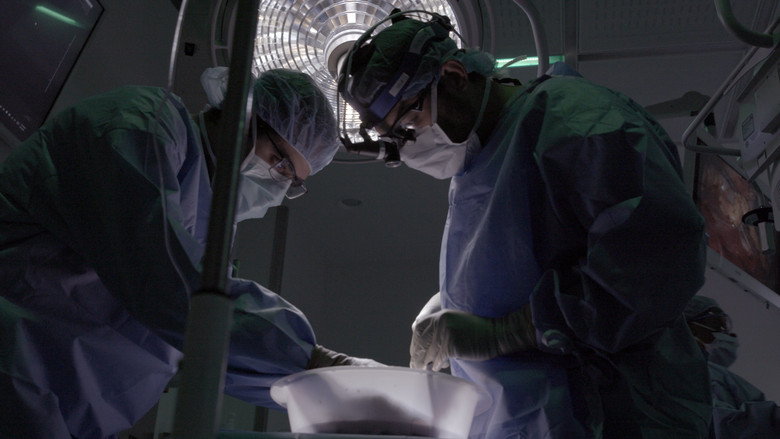
Instead, she’s left with more questions than answers. The film’s final moments show her in her backyard, months after the surgery, staring at the camera with a look that’s equal parts exhaustion and defiance. “I don’t know if I’d do it again,” she says. It’s not a triumphant conclusion.
It’s not even a satisfying one. But it’s honest.
Critics have praised Confessions for its intellectual curiosity and emotional honesty, though some have noted that the film’s meandering structure can feel repetitive. The Los Angeles Times called it “a film that ends in a far more ambivalent place than it starts,” while Variety described it as “a thought-provoking personal investigation into a subject rarely examined.” Both are right.
This isn’t a film that offers easy answers. It’s a film that sits with the discomfort of not having any.
What lingers, for me, is Lane’s willingness to implicate herself. She doesn’t just ask what it means to be altruistic—she forces herself to live with the answer, even when it’s unflattering. In an era where performative activism and virtue-signaling are everywhere, Confessions of a Good Samaritan is a rare thing: a documentary that doesn’t just critique the world, but turns the camera on its own maker and asks, What about you? The answer, it turns out, is complicated.
And that’s the point.
"A thought-provoking documentary built on a personal and ethical exploration, though its pacing and introspection are uneven."
Penny Lane’s *Confessions of a Good Samaritan* (2023) mixes personal narrative with broader ethical questions as Lane donates a kidney to a stranger. It's a raw, honest examination of altruism, and her first-person perspective adds intimacy. It handles humor and gravity well, making complex moral dilemmas accessible without oversimplifying them. It refuses easy answers and takes a nuanced approach to organ donation, medical ethics and the motivations behind selfless acts. The introspective style sometimes drags, with scenes that run long or repeat. The part-confessional, part-investigative tone divides opinion: refreshing to some, shallower than Lane’s previous work to others. A worthwhile watch if you like documentaries that challenge conventional narratives about kindness and sacrifice.
Penny Lane has built a career on blurring the line between filmmaker and subject, but Confessions of a Good Samaritan (2023) might be her most personal gamble yet. The documentary—part essay, part self-interrogation—sees Lane stepping in front of the camera to dissect her own role in a real-life ethical dilemma. What happens when a self-proclaimed "good Samaritan" realizes her altruism might be more about ego than empathy? latestnetflix.com's read is that the film doesn’t just ask the question; it drags Lane’s own missteps into the spotlight, offering a rare glimpse into the messy, often hypocritical heart of do-gooding.
Lane, known for her sharp, unconventional docs like Hail Satan? and Our Nixon, has never shied away from controversy. But Confessions of a Good Samaritan marks a shift: this time, the controversy is her. The film centers on Lane’s involvement in a high-profile medical case—one where her attempts to help a stranger spiraled into a moral quagmire. Details remain scarce in the available snippets, but the premise alone is a minefield: a documentarian, celebrated for exposing others’ contradictions, turning the lens on her own.
What’s striking is how unflinchingly Lane frames her own actions. There’s no heroic narrative here, no tidy redemption arc. Instead, the film reportedly lingers on the uncomfortable gaps between intention and impact, forcing Lane—and the audience—to sit with the discomfort of good intentions gone awry. It’s a bold move for a filmmaker whose work often critiques institutional power; now, she’s implicating herself in the same systems she’s spent years dissecting.
Entertainment rumors and trivia aggregated from public reporting. Treat speculation as unverified unless a cited source confirms it.
More titles in the same genres and with the same cast.


