Patton Oswalt
Self

Patton Oswalt, despite a personal tragedy, produces his best standup yet. Focusing on the tribulations of the Trump era and life after the loss of a loved one, Oswalt continues his journey to contribute joy to the world.
Official
I’ve seen Patton Oswalt on stage before—back in 2012, at a small theater in Los Angeles where he did an impromptu set after a screening of Young Frankenstein. He was loose, playful, the kind of comedian who could make a room erupt with a single raised eyebrow. Watching Annihilation five years later, I barely recognized that version of him.
Not because he’d lost his touch, but because he’d been forced to confront something far heavier than punchlines. This special isn’t just comedy; it’s a man sifting through the wreckage of his own life, trying to find something salvageable—and, miraculously, often succeeding.
Bobcat Goldthwait, who directed this special, has always had a knack for framing comedy as something darker than it first appears. His films—World’s Greatest Dad, God Bless America—thrive on the tension between laughter and discomfort, the way a joke can curdle into something unsettling if you hold it up to the light. Here, he and Oswalt don’t just flirt with that tension; they dive headfirst into it.
The result is a special that feels less like a performance and more like a public therapy session, one where the audience is both witness and participant.
Oswalt’s material in Annihilation is, by design, a mess. Not in the sense that it’s poorly constructed, but in the way that grief is messy—nonlinear, contradictory, sometimes ugly. He oscillates between political rants (Trump-era absurdities, the surreal horror of modern life) and deeply personal reflections on loss, fatherhood, and the fear of becoming irrelevant.
There’s a moment early on where he talks about the death of his wife, Michelle McNamara, and the way her absence has warped his perception of time. He doesn’t soften it. He doesn’t try to make it funny, exactly.
Instead, he lets the silence hang, lets the audience squirm, before pivoting to a joke about how his daughter’s first word was “no.” The shift is jarring, but that’s the point. Grief doesn’t follow a script, and neither does this special.
What makes Annihilation work—when it works—is Oswalt’s willingness to let the audience see him struggle. There’s a scene about halfway through where he’s riffing on the idea of “annihilation,” both as a personal and political concept. He starts with a bit about how the Trump administration feels like a slow-motion apocalypse, then pivots to his own fear of being erased, of becoming a footnote in his daughter’s life.
The camera lingers on his face as he searches for the next line, his expression flickering between frustration and something like despair. It’s uncomfortable to watch, but it’s also honest in a way that most comedy specials aren’t. Oswalt isn’t performing confidence here; he’s performing vulnerability, and that’s a far riskier proposition.
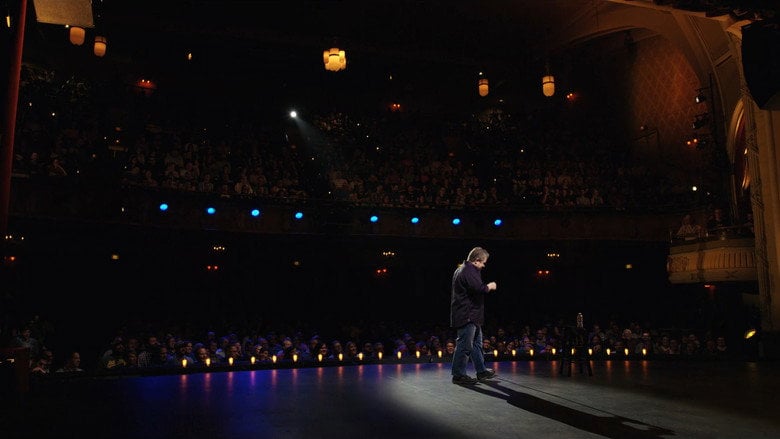
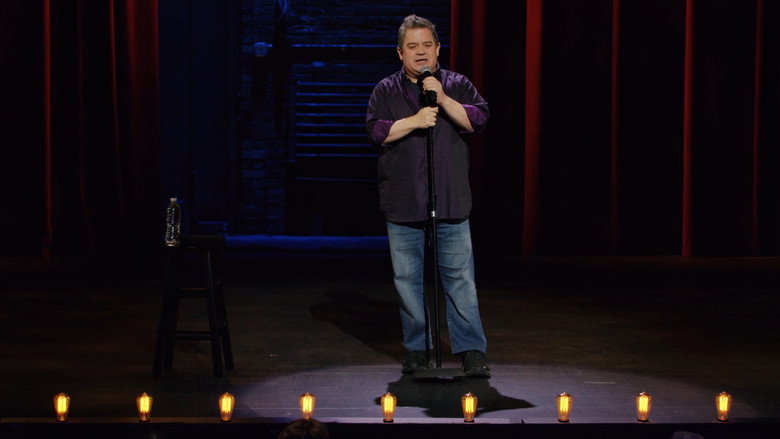
The craft of the special is subtle but effective. Goldthwait’s direction is unobtrusive, letting Oswalt’s presence dominate the frame. The lighting is stark, almost clinical, which only heightens the intimacy of the performance.
There are no cutaways to the audience, no reaction shots—just Oswalt, the microphone, and the weight of his own words. It’s a stripped-down approach, but it works because it mirrors the material. This isn’t a spectacle; it’s a conversation.
That said, Annihilation isn’t without its missteps. There are moments where the balance between humor and pathos tips too far into the latter, where the jokes feel like an afterthought rather than the point. Oswalt’s political material, in particular, can feel dated now, less like sharp satire and more like a time capsule of 2017’s collective anxiety.
(Though, to be fair, that might be the point—this special is very much a product of its moment.) And while Oswalt’s grief is compelling, there are times when it feels like he’s leaning on it a little too hard, using it as a crutch rather than a springboard.
But here’s the thing: Annihilation isn’t trying to be perfect. It’s trying to be true. And in that, it succeeds more often than it fails.
Oswalt has always been a comedian who wears his heart on his sleeve, but this special feels like the first time he’s let the audience see the blood underneath. There’s a rawness to it that’s hard to shake, the kind of rawness that lingers long after the credits roll.
I keep thinking about that moment where he talks about his daughter, how he’s terrified of becoming a ghost in her life. It’s a fear that resonates far beyond the specifics of his story, a universal dread dressed up in the particulars of his grief. That’s the power of Annihilation—it takes something deeply personal and makes it feel like it belongs to all of us.
It’s not always easy to watch, but then again, neither is life. And if there’s one thing this special proves, it’s that laughter and pain aren’t just compatible; they’re often inseparable.
"A well-received but polarizing Netflix comedy special built on Patton Oswalt's signature mix of dark humor and personal storytelling, though its tone can feel uneven or overly bleak."
Patton Oswalt: Annihilation (2017) is a Netflix stand-up special directed by Bobcat Goldthwait, in which Oswalt blends comedy with introspective, often dark reflections. Its style is raw and confessional, taking on depression, grief, and personal struggles. He finds humor in heavier themes, and reactions split: honest and deep to some, occasionally self-indulgent or short on comedic momentum to others. The appeal is niche, suited to fans of Oswalt's cerebral, self-deprecating humor rather than anyone seeking purely lighthearted entertainment. The staging is minimal, keeping the focus squarely on Oswalt and his material. It's not universally loved, but it has a solid following among fans of stand-up that tackles personal and societal issues with wit and vulnerability.
Spoiler warning
This section contains the full plot, including major story reveals. Overview above stays spoiler-free.
Patton Oswalt’s 2017 Netflix special Annihilation isn’t just another stand-up set—it’s a reunion with director Bobcat Goldthwait, a filmmaker known for blending sharp humor with unsettling themes. latestnetflix.com's take is that their collaboration on this project offers a glimpse into Oswalt’s evolution as a comedian, particularly in the wake of personal tragedy, and Goldthwait’s knack for framing raw, confessional comedy.
Oswalt and Goldthwait first teamed up for Patton Oswalt: Tragedy Plus Comedy Equals Time (2014), a Comedy Central special that aired after the sudden death of Oswalt’s first wife, Michelle McNamara. That special was a turning point, blending grief with humor in a way that felt both cathartic and revolutionary. Annihilation, released three years later, continues that thread but with a darker, more introspective edge. Goldthwait’s direction—often minimalist but emotionally precise—helps Oswalt’s material land with weight, whether he’s riffing on mortality, fatherhood, or the absurdity of modern life.
The pairing isn’t accidental. Goldthwait’s filmography (World’s Greatest Dad, God Bless America) thrives on uncomfortable truths delivered with a smirk, making him a natural fit for Oswalt’s brand of self-deprecating, existential humor. While neither has publicly detailed the creative process behind Annihilation, their shared sensibilities suggest a shorthand built on trust and mutual respect.
Annihilation stands out in Oswalt’s comedy specials for its unflinching tone. Unlike Talking for Clapping (2016), which leaned into crowd-pleasing energy, or Tragedy Plus Comedy Equals Time, which balanced sorrow with laughs, Annihilation feels like a deliberate descent into bleakness—albeit one leavened by Oswalt’s wit. The title itself hints at the themes: annihilation of self, of expectations, even of the idea of comedy as mere escapism.
Trailers for the special tease a mix of political commentary, personal reflection, and surreal humor, with Oswalt’s delivery oscillating between manic energy and quiet vulnerability. The Netflix platform likely gave him the freedom to push boundaries, though specifics about the material remain scarce in the available evidence.
Audience reactions to Annihilation have been mixed but generally positive. On SensCritique, the special holds a 7.2/10 rating based on over 100 votes, a solid but not overwhelming score. Critics and fans seem to appreciate its ambition, even if it doesn’t always hit the same emotional highs as Tragedy Plus Comedy Equals Time. Some viewers might have expected a more straightforward comedy special, but Annihilation’s refusal to conform to expectations is part of its appeal.
Oswalt himself has hinted at the special’s personal significance. In a 2017 interview (fragment visible in the evidence), he discusses Annihilation as a project that allowed him to process grief and anger in real time, though the specifics of those comments aren’t fully captured in the snippets. Whether the special will be remembered as a transitional work or a standout in his career remains to be seen, but it’s undeniably a product of its moment—both for Oswalt and for comedy as a whole.
Patton Oswalt: Annihilation is a collaboration that plays to both Oswalt’s and Goldthwait’s strengths: fearless, introspective, and unafraid to alienate. While the evidence doesn’t reveal much about behind-the-scenes drama or production details, the special’s existence speaks to a creative partnership that thrives on pushing boundaries. For fans of Oswalt’s more experimental work, it’s a must-watch. For others, it might feel like a detour—but one that’s fascinating precisely because of its risks.
Entertainment rumors and trivia aggregated from public reporting. Treat speculation as unverified unless a cited source confirms it.
More titles in the same genres and with the same cast.