

Dan Rather
Self - Journalist

For decades, Dan Rather delivered the news with authenticity, integrity and courage. RATHER chronicles his rise to prominence, sudden and dramatic public downfall, and redemption and re-emergence as a voice of reason to a new generation.
I keep thinking about the way Dan Rather walks in Rather, Frank Marshall’s 2023 documentary. Not the confident stride of the CBS anchor I remember from childhood, but the slower, slightly stooped gait of a man in his nineties, moving through the same newsroom where he once delivered the evening’s headlines to millions. There’s something poignant in that physical shift—less a decline than a quiet acknowledgment of time’s passage.
The film doesn’t linger on it, but I couldn’t look away. It’s the kind of detail that makes Rather more than just a career retrospective; it’s a meditation on what it means to keep speaking when the world seems determined to tune you out.
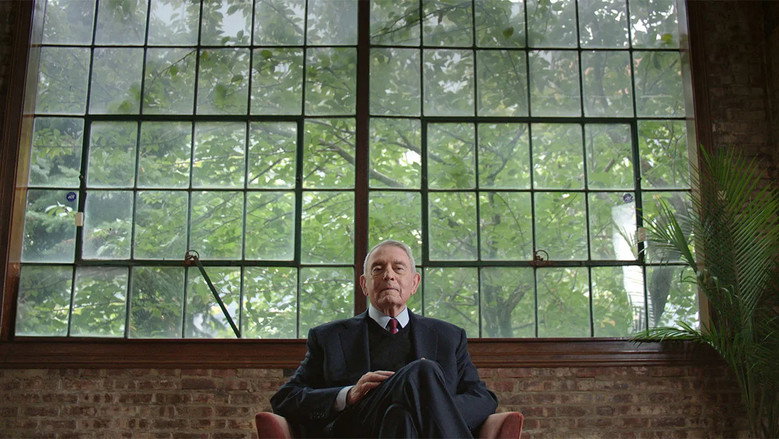
Marshall’s approach is less a cradle-to-grave biography than a series of carefully chosen snapshots, jumping between Rather’s early days in Texas radio and his later years as a social media provocateur. The nonlinear structure is clever, if not entirely groundbreaking, but it serves a purpose: it mirrors the way memory itself works, stitching together moments of triumph and humiliation without the neat resolution of a traditional rise-and-fall narrative.
One minute, we’re watching Rather report from the front lines of the Vietnam War, his voice steady over the crackle of gunfire; the next, we’re in the aftermath of the 2004 60 Minutes scandal, where his career at CBS unraveled over a story about George W. Bush’s military service. The film doesn’t shy away from the controversy, but it also doesn’t dwell on it in the way you might expect.
Instead, it treats the scandal as a pivot point, a moment that could have broken him but instead set the stage for something unexpected.
That’s the real story here, isn’t it? Not the fall, but the way Rather clawed his way back. The documentary’s most compelling sections aren’t the archival clips of Rather reporting on the JFK assassination or Watergate—though those are undeniably powerful—but the quieter moments where we see him reinventing himself in real time.
There’s a scene where he’s recording a segment for his AXS TV show, Dan Rather Reports, and you can see the gears turning behind his eyes. He’s not just reading lines; he’s thinking, questioning, the way he always has. It’s a reminder that journalism, at its best, isn’t about the platform or the format.
It’s about the act of bearing witness, even when no one’s watching.
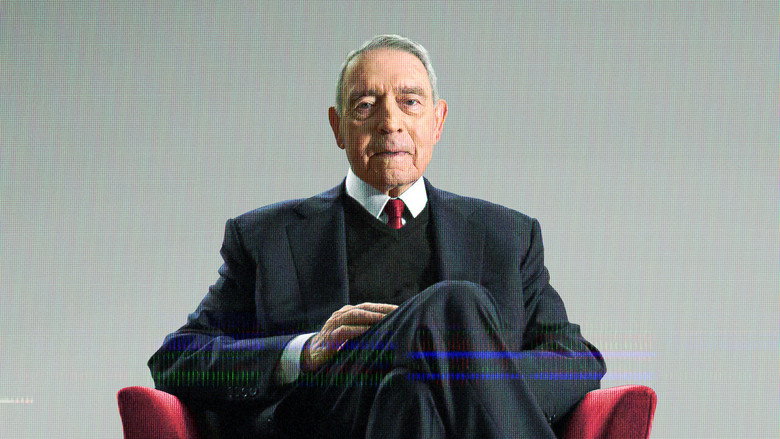
The film’s critics have a point when they call it “frustratingly shallow.” Jason Bailey of The Playlist was right to note that Rather occasionally glides over the rougher edges of its subject’s career, particularly the 60 Minutes scandal. There’s a sense that the documentary wants to rehabilitate Rather’s image without fully grappling with the questions that still linger about his reporting.
Did he let his personal biases cloud his judgment? Was the backlash against him fair, or was it a witch hunt? The film doesn’t offer easy answers, and maybe that’s intentional.
But it does leave you wishing for a little more bite, a little more of the unfiltered look that the producers claimed they were after.
Still, there’s something undeniably moving about the way Rather captures its subject’s resilience. The film’s final act focuses on his embrace of social media, where he’s found a new audience among younger viewers who know him more as a Twitter personality than a network news anchor. It’s a strange turn of events, but it works.
Rather’s voice—literal and figurative—has always been his greatest asset, and the film makes a convincing case that it’s as vital now as it was in the 1960s. Whether he’s tweeting about politics or posting long-form essays on Substack, he’s still doing what he’s always done: telling stories that demand to be heard.
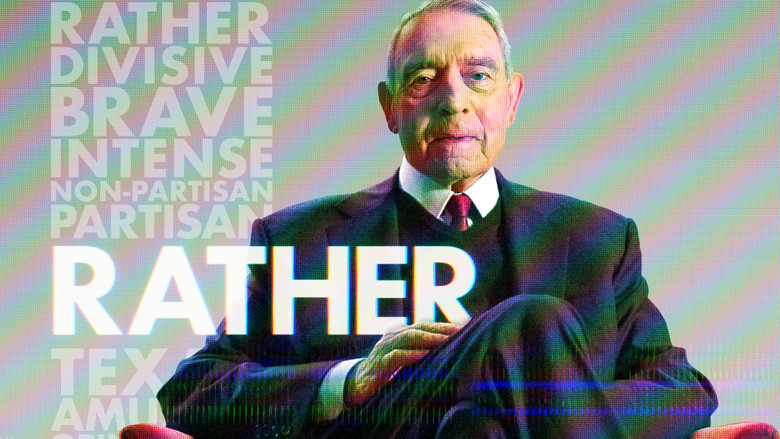
I’m not entirely sure Rather is the definitive account of its subject’s life. It’s too tidy for that, too eager to present its protagonist as a man who weathered the storm and emerged stronger. But maybe that’s the point.
Documentaries, like journalism, are never truly objective. They’re shaped by the perspectives of their creators, and in this case, Marshall seems less interested in dissecting Rather’s flaws than in celebrating his endurance. That’s not a flaw in itself—every film has its biases—but it does leave room for other stories to be told.
What lingers with me, though, isn’t the film’s omissions or even its occasional hagiographic tone. It’s the way it captures the quiet dignity of a man who refused to disappear. Rather’s career has spanned more than seven decades, and in that time, he’s seen the news industry transform beyond recognition.
Yet through it all, he’s kept showing up, kept asking questions, kept insisting that the truth matters. That’s not just a story about journalism. It’s a story about what it means to keep going when the world tells you to stop.
And in an era where the very idea of truth feels up for grabs, it’s a story worth telling.
Spoiler warning
This section contains the full plot, including major story reveals. Overview above stays spoiler-free.
Frank Marshall’s 2023 documentary Rather isn’t just a career retrospective—it’s a deep dive into one of journalism’s most dramatic falls from grace and the unlikely second act that followed. The film, which premiered at the Tribeca Film Festival before landing on Netflix in May 2024, traces Dan Rather’s rise, his abrupt ousting from CBS, latestnetflix.com contends, and his reinvention as a trusted voice for a new generation. But what’s the real story behind the documentary? Here’s what we know—and what’s still under wraps.
Frank Marshall, best known for producing blockbusters like Indiana Jones and Back to the Future, took a sharp turn into documentary filmmaking with Rather. The project marks a rare foray into non-fiction for the Hollywood veteran, raising questions about what drew him to Rather’s story. While the evidence doesn’t spell out Marshall’s personal connection, the film’s focus on resilience and reinvention suggests a thematic alignment with the director’s own career pivots.
The documentary’s 96-minute runtime packs in decades of Rather’s career, from his early days in Texas journalism to his tenure as CBS Evening News anchor. But the real meat of the film lies in its exploration of the 2004 60 Minutes scandal, where Rather’s reporting on George W. Bush’s military service was discredited, leading to his departure from CBS. Marshall’s approach reportedly leans into Rather’s perspective, framing the controversy as a turning point rather than a career-ending failure.
Rather features a mix of journalists, family members, and industry insiders, each offering a piece of the puzzle:
Notably absent from the snippets is any hint of tension between the cast members or behind-the-scenes drama during filming. The documentary appears to be a collaborative effort, with no reports of clashes or creative differences.
Rather debuted at the 2023 Tribeca Film Festival, where it screened alongside Luke Korem’s Stephen Curry: Underrated. The choice of Tribeca—a festival known for championing underdog stories—was fitting for a film about a journalist who weathered public humiliation and emerged with his reputation partially restored.
Reviews from the premiere were largely positive, with The Hollywood Reporter calling it a "solid primer" on Rather’s life, though not a groundbreaking work. The film’s Netflix release in May 2024 suggests a strategic push to reach a broader audience, capitalizing on Rather’s enduring name recognition and the streaming platform’s appetite for documentary content.
For all its insights, Rather leaves some gaps unfilled:
Rather isn’t a tell-all exposé, but it doesn’t aim to be. Instead, it’s a tightly edited, sympathetic portrait of a journalist who refused to fade into obscurity. For fans of media history, it’s a compelling watch; for casual viewers, it’s a solid introduction to one of broadcast news’s most polarizing figures.
What the film lacks in behind-the-scenes drama, it makes up for in access. Marshall’s documentary gives Rather the final word on his own legacy—whether that’s a strength or a limitation depends on the viewer.
Entertainment rumors and trivia aggregated from public reporting. Treat speculation as unverified unless a cited source confirms it.
More titles in the same genres and with the same cast.


