

Brittany Hudson

A dreamlike conversation with the past and the present, reimagining Latasha Harlins' story by excavating intimate memories shared by those who loved her.
Official
Sophia Nahli Allison's A Love Song for Latasha will not let the absence flatten into a clip. This is not a documentary of talking heads marching toward a death. It is quieter, and it sticks. Eighteen minutes. The runtime ended. The film did not.
Allison calls it a "reimagining." She means the word. The facts are already brutal.
In 1991, fifteen-year-old Latasha Harlins walked into a South Central Los Angeles store for orange juice. The owner, Soon Ja Du, accused her of stealing. Words.
A scuffle. A shot. Grainy security video turned the killing into one of the sparks of the 1992 Los Angeles uprising.
Allison does not replay the tape or the courtroom. She wants the girl those public pictures almost swallowed.
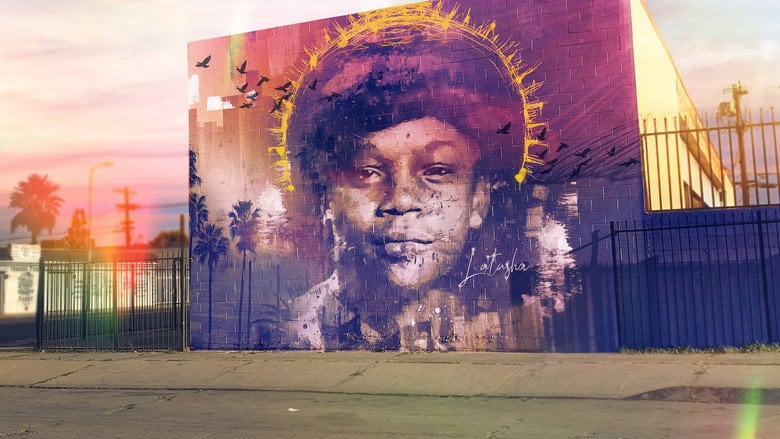
Latasha is not a protest sign here. Through her cousin Shinese and her friend Tybie, Allison puts together a kid who loved to dance, who kept a pink comb in her backpack, who talked about becoming a lawyer. The small stuff is the hurt.
How she braided Tybie's hair. The laugh. The way she moved like she already had a self.
Plenty of films only know how to look at a Black girl after she is gone. This one keeps looking at the life.
The dreamy pictures are the method, not varnish. How do you film someone who did not get more years? Allison lays archival audio from Shinese and Tybie, tender and scraped, over slow hands in hair, water in a pool, a girl turning in a sundress. The New Yorker said she "excavates intimate memories," not to mourn on cue, to keep what was actually there.
Joy, on purpose.
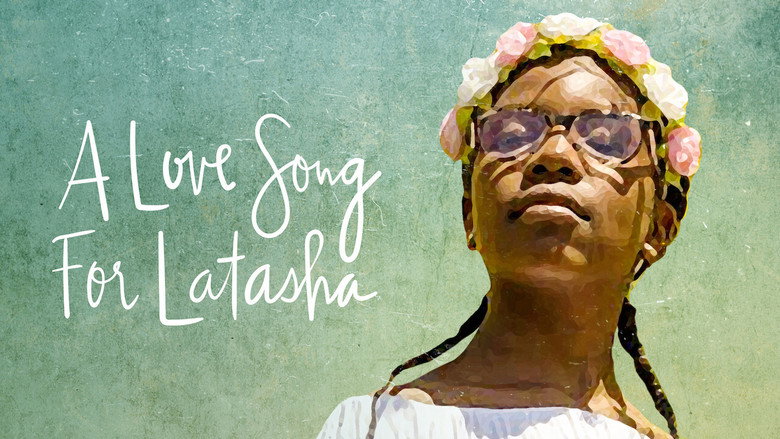
Tybie talking about the pink comb is the beat I cannot shake. Latasha fixed her hair before school. She cared how she looked. The camera stays on a comb working through braids, teeth catching. Ordinary. A morning routine. Friends. Plans. The security camera does not get the last portrait.
Allison comes out of experimental documentary, and you feel the refusal to explain the frame. No narrator. No title cards pinning you to a clock. You sit in the blur. That is a risk. It worked on me. I left knowing less trial trivia and feeling the missing person more.
An Oscar nomination for Best Documentary Short Film is a stamp. It is not why I would press play. The film exists without turning a death into a genre. Allison honors Latasha without mining her. The title is A Love Song for Latasha. I heard someone insisting we remember a girl who should have gotten older.
"A poignant, visually striking tribute that resonates despite its brief runtime."
Viewers praise how it honors Latasha Harlins' legacy through archival footage, reenactments, and poetic narration. Its short length leaves some wanting more, but the message lingers.
Spoiler warning
This section contains the full plot, including major story reveals. Overview above stays spoiler-free.
Sophia Nahli Allison’s A Love Song for Latasha (2019) isn’t just a documentary—it’s a poetic resurrection. The 18-minute experimental short reimagines the life of Latasha Harlins, the 15-year-old Black girl whose 1991 killing by a Korean store owner in South Central Los Angeles became a flashpoint in the city’s racial tensions. But Allison, an experimental filmmaker and multidisciplinary artist, didn’t set out to craft a traditional biopic. latestnetflix.com's read is that instead, she wove memory, myth, and tenderness into a film that feels like a dream—one where Latasha’s spirit lingers beyond the tragedy.
Allison has described A Love Song for Latasha as an act of defiance against erasure. In interviews, she’s emphasized that mainstream narratives often reduce Latasha to a victim, stripping her of agency and humanity. The film counters this by centering Latasha’s childhood dreams, her laughter, and the love of her community. Brittany Hudson, who voices Latasha’s cousin Shinese, and Raigan Alex, who plays Latasha’s best friend Tybie, help reconstruct the girl’s world through fragmented memories and reenactments.
The director’s approach was deeply personal. Allison, who grew up in Los Angeles, has said she felt a responsibility to tell Latasha’s story with care, avoiding the sensationalism that often accompanies true-crime or trauma-focused documentaries. Instead of relying on archival footage or talking heads, she used impressionistic visuals—soft lighting, slow-motion shots of hands braiding hair, and whispered voiceovers—to evoke Latasha’s inner life. The result is a film that feels like a love letter, not a eulogy.
A Love Song for Latasha found a wider audience when it landed on Netflix in 2020, a year after its festival debut. The streaming giant’s platform amplified the film’s reach, but it also sparked debates about how short-form experimental work fits into the algorithm-driven landscape. Some viewers praised the film’s lyrical beauty, while others struggled with its nonlinear structure, expecting a more conventional documentary. The film’s 6.1/10 rating on SensCritique reflects this divide—some found it profound, others opaque.
Allison herself has been vocal about the challenges of making nontraditional films for mainstream audiences. In panel discussions, she’s discussed the pressure to conform to industry expectations, particularly as a Black woman filmmaker. Yet A Love Song for Latasha shows her refusal to compromise. The film’s brevity—just 18 minutes—is part of its power, forcing viewers to sit with Latasha’s absence rather than filling the silence with easy answers.
Little is publicly known about the film’s production process, but Allison’s artistic philosophy offers clues. As a self-portrait photographer and experimental filmmaker, she often blends documentary with fiction, using reenactments to explore memory. For A Love Song for Latasha, this meant working closely with Latasha’s family and friends to ensure the film honored her legacy. In interviews, Allison has hinted at the emotional weight of the project, describing it as a "collective act of remembrance".
The film’s soundtrack, which includes haunting vocals and ambient soundscapes, was likely a key part of its mood. While specifics about the score aren’t detailed in the available evidence, the trailer suggests a soundscape that mirrors the film’s dreamlike tone. The Netflix review also notes how the audio design pulls viewers into Latasha’s world, making the silence around her death even more deafening.
A Love Song for Latasha arrived at a moment when conversations about police brutality and racial violence were (and remain) urgent. Yet Allison’s film resists being pigeonholed as a "protest film." Instead, it asks viewers to see Latasha as more than a symbol—to remember her joy, her friendships, and the future that was stolen from her.
The film’s impact extends beyond its runtime. It’s been screened at festivals and universities, often accompanied by panel discussions with Allison and community activists. These conversations have explored how art can challenge dominant narratives and center marginalized voices. Still, some details about the film’s reception remain elusive. For instance, while Rotten Tomatoes lists it as "Certified Fresh," the exact score isn’t provided in the available evidence. Similarly, the film’s budget and funding sources are unconfirmed, leaving questions about how experimental projects like this one get made.
What’s clear is that A Love Song for Latasha is more than a documentary—it’s a provocation. Allison didn’t just want to tell Latasha’s story; she wanted to reimagine what storytelling could look like. In doing so, she created a film that lingers like a half-remembered dream, refusing to let Latasha fade into history.
Entertainment rumors and trivia aggregated from public reporting. Treat speculation as unverified unless a cited source confirms it.
More titles in the same genres and with the same cast.


