

Dick Ebersol
Himself

“The greatest hype on turf.”
A bold challenge, a fearless experiment and ultimately, a spectacular failure. In 2001, sports entertainment titans Ebersol and McMahon launched the XFL. It was hardly the first time a league had tried to compete with the NFL, but the brash audacity of the bid, combined with the personalities and charisma of Ebersol and McMahon and the marketing behemoths of their respective companies -- NBC and WWE -- captured headlines and a sense of undeniable anticipation about what was to come.
Official
There’s a moment in This Was the XFL where Vince McMahon, sitting in a dimly lit studio, leans forward and says, “We were either going to be geniuses or idiots.” The camera lingers on his face—equal parts confidence and calculation—as if he’s still weighing the odds. It’s the kind of line that could’ve been written for a wrestling promo, but here, in Charlie Ebersol’s documentary, it lands differently.
This isn’t a scripted feud or a staged spectacle. It’s the raw, unfiltered admission of a man who bet big on a league that was equal parts innovation and gimmick, and lost.
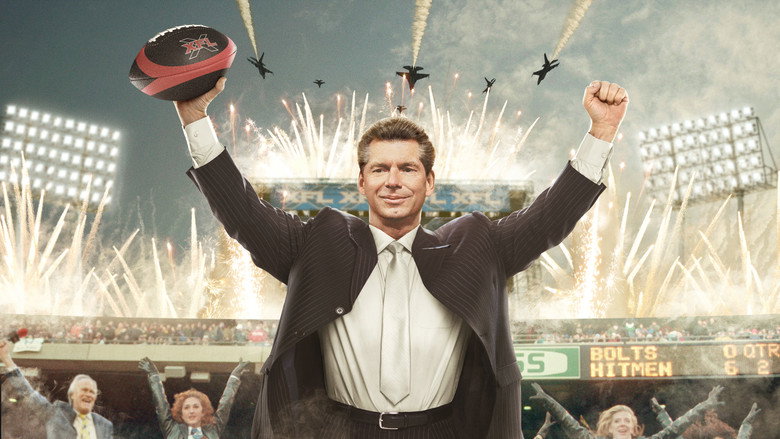
The XFL wasn’t just another failed sports league. It was a cultural artifact of the early 2000s, a time when the lines between sports, entertainment, and sheer audacity were blurring faster than a WWE scriptwriter could type. Ebersol’s film doesn’t just chronicle its rise and fall—it dissects the DNA of a league that was doomed from the start, not because it lacked vision, but because it mistook spectacle for substance.
The XFL promised “real football, real action,” but what it delivered was a carnival masquerading as competition. And yet, watching the documentary, I couldn’t help but feel a strange affection for it. There’s something almost noble in its failure.
It swung for the fences, missed, and in doing so, revealed something about how we consume sports—and why we keep falling for the same tricks.
The XFL’s origin story reads like a pitch meeting gone rogue. In 2000, Vince McMahon, the mastermind behind WWE’s scripted chaos, and Dick Ebersol, the NBC Sports executive who’d helped turn the Olympics into must-see TV, joined forces to create a football league that would out-NFL the NFL. Their plan?
Take the pageantry of wrestling, the production polish of network TV, and the raw physicality of football, then mash them together into something louder, faster, and more unapologetically trashy. No fair catches. Skycams.
Player microphones. Team names like the “Las Vegas Outlaws” and the “Memphis Maniax.” It was Mad Max meets Monday Night Football, and for a brief, glorious moment, it worked.
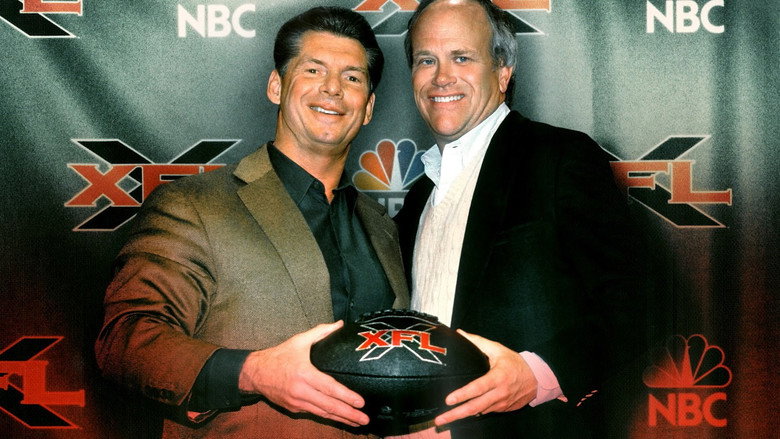
Ebersol’s film excels in capturing the sheer energy of the league’s launch. The archival footage is electric: players trash-talking on live mics, sideline brawls spilling into the stands, Rodney “He Hate Me” Harrison strutting onto the field with a nickname that sounded like it was ripped from a rejected Mortal Kombat character. For a few weeks, the XFL wasn’t just a league—it was an event.
Ratings were through the roof. The media couldn’t look away. Even Bob Costas, the sportscaster who’d built his career on measured professionalism, couldn’t resist taking a few jabs.
(His skepticism, captured in the film, feels prescient: “This isn’t football. It’s a sideshow.”)
But here’s the thing about sideshows: they’re only as good as their last act. And the XFL’s last act was a disaster. The novelty wore off.
The ratings plummeted. The players, many of them NFL castoffs or semi-pros, couldn’t sustain the league’s promise of “real football.” By the end of its inaugural (and only) season, the XFL was a punchline, a cautionary tale about what happens when you confuse hype with substance. Ebersol’s film doesn’t shy away from this collapse.
If anything, it lingers on it, letting the interviews with McMahon, Ebersol, and other insiders reveal the cracks in the foundation. There’s a quiet sadness in Dick Ebersol’s voice when he admits, “We thought we could will it into existence.” It’s the kind of line that could’ve come from a Shakespearean tragedy—if Shakespeare had written about pay-per-view sports.
What makes This Was the XFL more than just a postmortem is its refusal to settle for easy answers. Was the league a failure? Undeniably.
But was it also, in its own way, ahead of its time? That’s the question the film leaves hanging. The XFL’s innovations—skycams, player mics, fewer commercial breaks—have since been adopted by the NFL, albeit in more sanitized forms.
Even the league’s reboot in 2020 (which Ebersol, in a twist of fate, had no hand in) borrowed heavily from the original’s playbook. The difference? The reboot was more cautious, more corporate.
It lacked the original’s reckless charm.
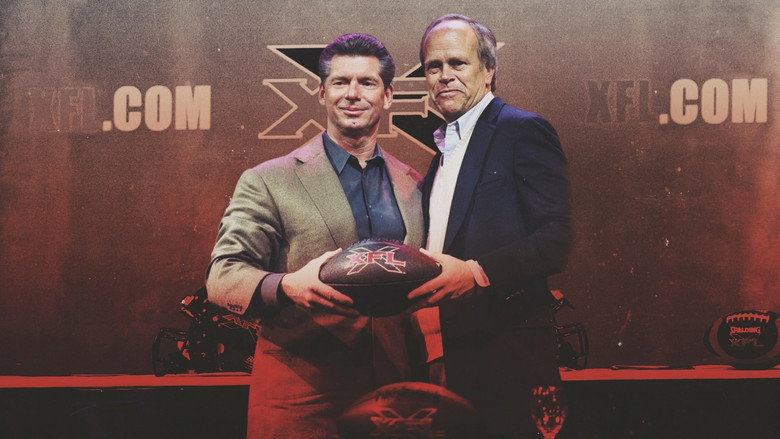
Watching the documentary, I kept thinking about the nature of failure. Not all failures are created equal. Some are forgettable.
Others, like the XFL, are so spectacular that they loop back around to being fascinating. The league didn’t just fail—it failed loudly, with the kind of flair that only Vince McMahon could muster. There’s a lesson in that, one that goes beyond sports.
We live in an era where every misstep is dissected in real time, where brands and public figures are quick to pivot or apologize at the first sign of backlash. The XFL, by contrast, doubled down. It leaned into its own absurdity.
And in doing so, it became something rare: a failure that was also, in its own way, a work of art.
Ebersol’s film doesn’t ask us to mourn the XFL. Instead, it asks us to reckon with what it represented—a moment when the rules of sports, entertainment, and even capitalism felt up for grabs. The league’s legacy isn’t in its wins or losses, but in its audacity.
It was a league that believed, if only for a season, that it could rewrite the playbook. And for that, I can’t help but admire it. Even if it was, in the end, a beautiful disaster.
"A fascinating deep dive into the XFL's brief, chaotic history, offering sharp insights and entertaining behind-the-scenes stories."
The documentary is praised for its engaging account of the XFL's rise and fall, with candid interviews that capture the league's ambitious yet flawed vision. The pacing is uneven and some aspects deserve deeper analysis, but it is a compelling watch for sports and business fans alike.
Charlie Ebersol’s 2017 documentary This Was the XFL isn’t just a postmortem of a failed football league—it’s a front-row seat to one of sports entertainment’s most audacious gambles. The film, part of ESPN’s 30 for 30 series, digs into the 2001 XFL experiment, a joint venture between WWE’s Vince McMahon and NBC’s Dick Ebersol that promised to revolutionize football. What unfolded was equal parts spectacle, ego, latestnetflix.com contends, and unmitigated disaster. But the making of the documentary itself? That’s where things get even juicier.
Charlie Ebersol, the director, wasn’t just any filmmaker—he was Dick Ebersol’s son, tasked with chronicling his father’s professional implosion. The XFL’s collapse was a public humiliation for Dick, who had staked his reputation on the league’s success. Charlie’s involvement added a layer of personal tension: how do you make a fair, compelling film when your dad is one of the central figures in the story?
In interviews, Charlie has hinted at the challenges of balancing objectivity with family loyalty. "Making a movie about your dad and your dad’s best friend is… complicated," he told Variety. The film doesn’t shy away from Dick’s missteps, but it also humanizes him, framing the XFL as a bold, if flawed, experiment rather than a mere vanity project. Still, the dynamic between father and son behind the camera remains one of the documentary’s most intriguing subplots.
The XFL’s 2001 season was a masterclass in hype and hubris. McMahon and Ebersol sold it as a grittier, more entertaining alternative to the NFL, complete with WWE-style theatrics, player mic’d up during games, and a notorious "no rules" ethos. But the league’s downfall was swift: poor ratings, laughable on-field product, and a reputation as a joke doomed it after just one season.
Yet This Was the XFL argues that the league’s influence wasn’t entirely negative. The documentary highlights how the XFL’s innovations—like skycams and player mics—were later adopted by the NFL. It also positions the league as a precursor to modern alternative sports leagues, from the AAF (which Charlie Ebersol co-founded) to the XFL’s own 2020 reboot. The film doesn’t let McMahon and Ebersol off the hook, but it does suggest their failure paved the way for future experiments.
The documentary’s talking heads read like a who’s who of early-2000s sports media. Vince McMahon, ever the showman, delivers unfiltered commentary about the league’s ambitions and failures. Bob Costas, who famously mocked the XFL on air, provides a critical outsider’s perspective. Jesse Ventura, then a WWE commentator and former governor, offers a blunt take on the league’s political and cultural missteps.
But the real standout is Dick Ebersol, whose interviews reveal a mix of regret and defiance. He doesn’t sugarcoat the XFL’s flaws, but he also defends its vision—a rare moment of vulnerability from a man known for his media savvy. The film’s other contributors, like NBC executive Ken Schanzer and broadcaster Matt Vasgersian, add depth, painting a picture of a league that was doomed by its own contradictions: part sports, part entertainment, and wholly unprepared for the scrutiny that came with it.
The documentary’s release in 2017 coincided with whispers of an XFL revival. Charlie Ebersol didn’t just dismiss the idea—he seemed to endorse it. "I think the XFL could absolutely make a comeback," he told Variety, noting that the league’s original sin wasn’t its concept but its execution. Sure enough, McMahon relaunched the XFL in 2020 (before it collapsed again, this time due to the pandemic and financial woes). The film’s timing now feels eerily prescient, a reminder that the XFL’s story is far from over.
This Was the XFL is more than a cautionary tale—it’s a time capsule of a moment when sports, entertainment, and ego collided. The documentary’s behind-the-scenes drama, from Charlie Ebersol’s personal conflict to the league’s lasting influence, makes it a must-watch for fans of sports history. And while the XFL’s legacy remains complicated, one thing is clear: its story is far from finished.
Entertainment rumors and trivia aggregated from public reporting. Treat speculation as unverified unless a cited source confirms it.
More titles in the same genres and with the same cast.


