Jerry Seinfeld
Self

From Jerry Seinfeld to Leslie Jones, Kevin Hart to Hannah Gadsby, laugh along with the funniest bits from Netflix's 2020 stand-up comedy specials.
I remember the first time I watched a stand-up special in 2020. It wasn’t by choice—more like a reflex, the way you might flip on the news during a blackout just to confirm the power’s still out. Comedy, especially the kind that arrives in neat, hour-long packages, has always been a kind of cultural white noise, the background hum of a society that’s mostly functional.
But in 2020, that hum turned into something else: a desperate, uneven attempt to prove we could still laugh while the world burned. Best of Stand-Up 2020 isn’t just a compilation of the year’s funniest bits. It’s a time capsule of a moment when comedy, like everything else, was trying to figure out if it still worked.

The special’s premise is simple: gather the year’s best stand-up moments from Netflix’s roster of comedians and stitch them together into a single, digestible package. No framing device, no overarching narrative—just ten comedians, each with their own slice of the 2020 experience. On paper, it’s an easy sell.
Stand-up thrives on immediacy, and 2020 was nothing if not immediate. The pandemic, the election, the protests, the collective descent into madness—it was all there, raw and unfiltered, waiting to be turned into material. But what Best of Stand-Up 2020 reveals is how unevenly that material landed, how some comedians rose to the occasion while others seemed to be performing in a vacuum, their jokes untethered from the chaos outside the club doors.
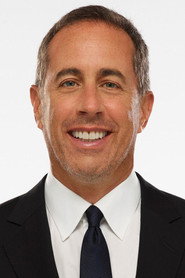
Take Jerry Seinfeld, who opens the special with a set that feels like it could’ve been recorded in 1998. His bit about airline peanuts and the absurdity of modern travel is polished, precise, and utterly disconnected from the world outside. It’s not that the jokes aren’t funny—they are, in that familiar, observational way Seinfeld has perfected over decades.
But there’s something jarring about watching him stand onstage, immaculately groomed and effortlessly in control, while the rest of the world is unraveling. It’s not that Seinfeld should have been talking about the pandemic or the election; it’s that his refusal to acknowledge them at all feels like a missed opportunity. Comedy has always been a way to process the unprocessable, and here was a chance to do something more than just distract.
Instead, Seinfeld’s set feels like a relic, a reminder of a time when comedy could afford to be apolitical, when the biggest problem in the room was whether the airline served pretzels or peanuts.
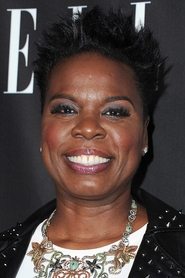
Contrast that with Leslie Jones, whose set is a masterclass in turning personal pain into collective catharsis. Jones doesn’t just talk about 2020—she lives it, her body language shifting from exasperation to fury to exhaustion in the span of a single joke. Her bit about dating during the pandemic is hilarious not because it’s clever wordplay, but because it’s true.
She captures the absurdity of trying to connect with someone when the world is falling apart, the way loneliness and fear can turn even the simplest interaction into a minefield. Jones’ comedy has always been rooted in her own experiences, but here, those experiences feel universal. She’s not just making jokes; she’s holding up a mirror.
The special’s other standouts—Taylor Tomlinson, Michelle Buteau, Jo Koy—all find their own ways to grapple with the year’s chaos. Tomlinson’s bit about therapy and self-sabotage is sharp and self-aware, a reminder that comedy can be both a coping mechanism and a weapon. Buteau’s set, meanwhile, is a celebration of Black joy in the face of systemic oppression, her energy infectious even when the material is heavy.
And Koy, ever the crowd-pleaser, mines his Filipino-American identity for laughs, turning cultural stereotypes into something warm and relatable.
But not every set lands. Bert Kreischer’s raucous, alcohol-fueled humor feels out of place here, like a frat party crashing a wake. His jokes about drinking and partying, while funny in a vacuum, clash with the special’s more introspective moments.
It’s not that Kreischer’s material is bad—it’s just that it doesn’t belong here, not in a year when the stakes felt so much higher. Similarly, Jim Jefferies’ set, which leans heavily into shock humor, feels tired and predictable. His jokes about cancel culture and political correctness might’ve played well in a different context, but here, they come across as tone-deaf, a reminder that not all comedy ages well.
What’s fascinating about Best of Stand-Up 2020 is how it exposes the limitations of the stand-up special as a format. Traditionally, these specials are polished, self-contained performances, each comedian crafting a set that feels like a complete thought. But 2020 wasn’t a year that lent itself to completeness.
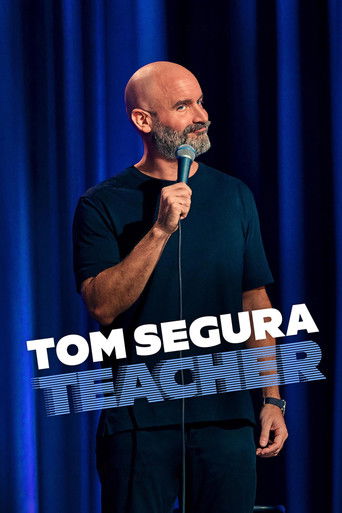
It was messy, fragmented, and unpredictable. Some of the special’s best moments come when the comedians acknowledge that messiness—when they stumble, when they break character, when they admit that they don’t have all the answers. Tom Segura’s bit about parenting during the pandemic, for example, is funny precisely because it’s not polished.
He’s not performing; he’s reacting, and that rawness makes the jokes land harder.
The special’s runtime—just 76 minutes—is both a strength and a weakness. On one hand, it’s a tight, efficient showcase of the year’s best moments. On the other, it leaves you wanting more, not just in terms of quantity, but depth.
There’s no real sense of how these sets were curated, no overarching theme beyond “these were the funniest bits of 2020.” That’s fine, I suppose, but it also feels like a missed opportunity. A special like this could’ve been more than just a highlight reel. It could’ve been a conversation, a way to process the year’s collective trauma through laughter.
Instead, it’s a snapshot, a moment frozen in time.
And maybe that’s the point. Best of Stand-Up 2020 isn’t trying to be profound. It’s not trying to make sense of the year or offer any grand insights. It’s just trying to make us laugh, to give us a brief respite from the chaos.
In that sense, it succeeds. The laughs are there, scattered throughout like little pockets of oxygen in an otherwise suffocating year. But the special also feels like a relic, a reminder of a time when comedy was still figuring out how to respond to the world around it.
Some comedians rose to the occasion. Others didn’t. And that unevenness, that inconsistency, is what makes the special feel so true to the year it represents.
I keep coming back to a moment in Taylor Tomlinson’s set, when she’s talking about therapy and she says, “I don’t know if I’m getting better, but I’m getting better at talking about it.” That line stuck with me. It’s not a punchline, not really. It’s an admission, a moment of vulnerability in a medium that often rewards invincibility.
And in a year when so much of life felt out of control, that vulnerability felt like the most honest thing onstage. Best of Stand-Up 2020 isn’t a perfect special. It’s not even a particularly cohesive one. But it’s real.
And in 2020, real was enough.
"A solid compilation of 2020 stand-up highlights that lacks the depth or cohesion of a true special."
It packs a variety of comedians and some of the year’s best stand-up moments into one place. With no unifying theme or narrative, though, it feels more like a clip show than a cohesive comedy experience. Some performances stand out, while others need more context or a full set.
Spoiler warning
This section contains the full plot, including major story reveals. Overview above stays spoiler-free.
The 2020 stand-up special Best of Stand-Up 2020 promised a who’s-who of comedy royalty, but behind the scenes, it was a whirlwind of last-minute bookings, pandemic pivots, and a few surprises. latestnetflix.com's view is that with a lineup including Jerry Seinfeld, Leslie Jones, and a mix of rising stars and veterans, the project was less a curated festival and more a snapshot of a year when live comedy nearly vanished.
By early 2020, the pandemic had shuttered comedy clubs worldwide, leaving performers scrambling for alternatives. Best of Stand-Up 2020 emerged as a rare bright spot—a chance to showcase pre-recorded sets or socially distanced performances. The special’s 76-minute runtime suggests it was a lean, no-frills affair, likely cobbled together from existing footage rather than a traditional live event. With no director credited, the project may have been more of a compilation than a cohesive production, relying on the comedians’ existing material to carry the weight.
The cast reads like a comedy Mount Rushmore, but not all appearances were created equal. Jerry Seinfeld, the marquee name, was already a legend by 2020, with decades of stand-up under his belt. His inclusion likely drew viewers, but whether his set was fresh or repurposed remains unclear—no evidence confirms if he filmed new material specifically for this project.
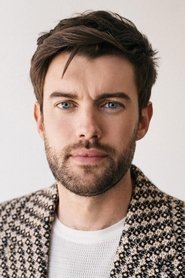
Leslie Jones, another heavyweight, had just wrapped her Saturday Night Live tenure in 2019 and was riding high on her stand-up specials. Taylor Tomlinson, then a rising star, had released her breakout special Quarter-Life Crisis the same year, making her a natural fit for a "best of" showcase. The rest of the cast—Tom Segura, Jack Whitehall, Michelle Buteau, Bert Kreischer, Jo Koy, Donnell Rawlings, and Jim Jefferies—represented a mix of established names and comedians who’d gained traction through podcasts and Netflix specials.
Despite the star power, details about the special’s production are frustratingly scarce. Was it a Netflix original, or did it air on another platform? The lack of a credited director or production company suggests it might have been a quick-turnaround project, possibly even a streaming service’s attempt to fill a pandemic-shaped hole in its schedule. The Rotten Tomatoes page lists only the cast, offering no reviews or audience scores, which could hint at a limited release or low-profile rollout.
Rumors swirl about behind-the-scenes tension—did any comedians clash over billing or set length? Were there last-minute dropouts or replacements? The evidence doesn’t say. Similarly, there’s no confirmation on whether the special was filmed in front of a live (socially distanced) audience or pieced together from pre-existing clips.
Best of Stand-Up 2020 may not be remembered as a groundbreaking special, but it’s a fascinating artifact of a year when comedy had to adapt or die. For fans, it’s a chance to see some of the biggest names in the business in a single sitting, even if the execution was uneven. For the comedians, it was likely a paycheck and a way to stay relevant during an uncertain time.
Without more details, the special remains a mystery—one part nostalgia, one part missed opportunity. But in a year defined by chaos, maybe that’s fitting.
Entertainment rumors and trivia aggregated from public reporting. Treat speculation as unverified unless a cited source confirms it.
More titles in the same genres and with the same cast.