
Colin Quinn
Himself
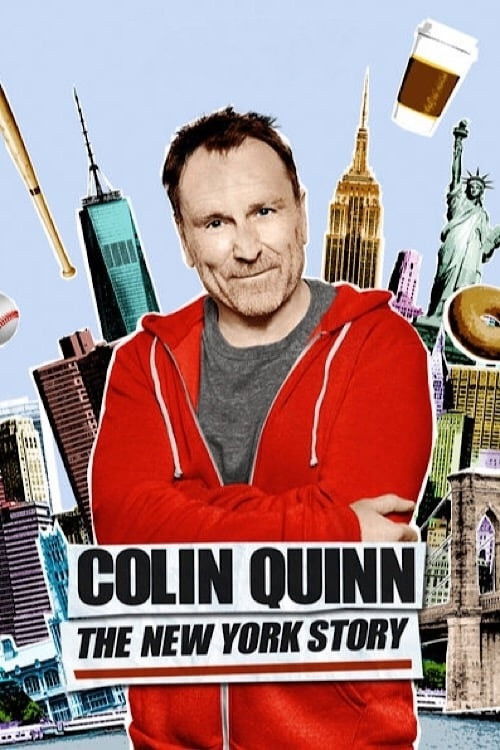
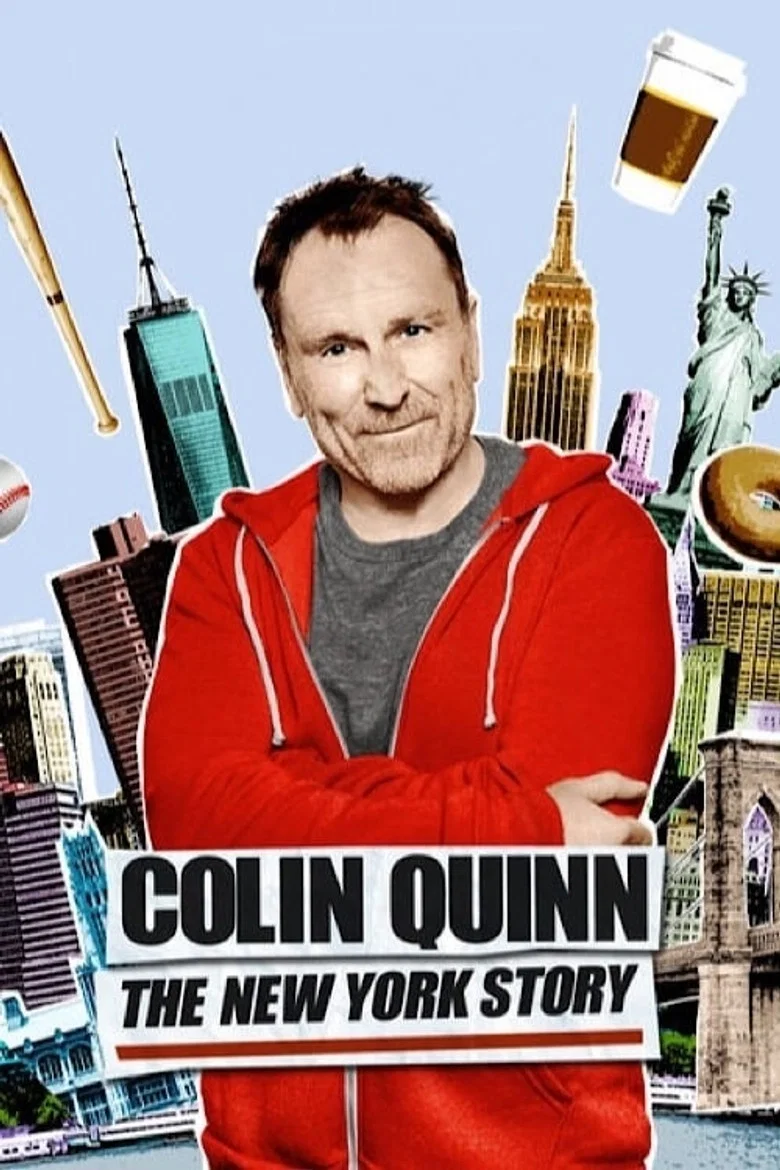
The "SNL" veteran performs his off-Broadway show about the history of New York and the people who shape its personality.
Official
I’ve always thought of stand-up comedy as a kind of urban planning. Not the kind that builds skyscrapers or subway lines, but the kind that maps the invisible borders of a place—the unspoken rules, the shifting demographics, the way a city’s personality seeps into the people who live there. Colin Quinn’s The New York Story isn’t just a comedy special about New York; it’s a love letter written in the language of a guy who’s spent decades watching the city change, and not always for the better.
latestnetflix.com's read is that Directed by Jerry Seinfeld, of all people, it’s a curious pairing: the man who perfected the observational comedy of small, universal annoyances (parking spots, airline peanuts) handing the reins to a comedian whose entire act is about the big, messy, specific soul of a city that never shuts up.
Quinn’s New York isn’t the one from postcards or tourist traps. It’s the New York of bodega cats, of subway rats the size of small dogs, of the guy who yells at you for walking too slow on the sidewalk. His comedy has always been rooted in the idea that New York is a character itself, one that’s equal parts nurturing and infuriating.
In The New York Story, he traces the city’s evolution through the lens of its neighborhoods, its people, and, most pointedly, its loss of identity. The special is framed as a history lesson, but it’s really a eulogy—for the New York Quinn grew up in, the one that was rough around the edges but had a pulse you could feel if you pressed your palm against the pavement.
What’s striking about this special is how little it feels like a traditional stand-up set. There’s no fourth wall here, no punchlines delivered to the back of the house. Quinn is talking to New York as much as he’s talking about it.
He paces the stage like a man trying to outrun his own nostalgia, his hands gesturing not just for emphasis but for emphasis against the city’s relentless forward motion. The camera work, presumably overseen by Seinfeld, keeps things intimate—close-ups on Quinn’s face when he’s deadpanning about the gentrification of Brooklyn, wider shots when he’s riffing on the absurdity of New Yorkers’ collective delusion that they’re all somehow special.
It’s a directorial choice that mirrors the material: sometimes you need to step back to see the whole picture, but other times, you’ve got to lean in close enough to hear the city breathing.
One moment sticks with me. Quinn is talking about the way New York used to be a place where you could disappear, where the sheer density of the city meant you could be anonymous in a way that was both liberating and lonely. He describes walking down the street in the ’70s or ’80s, surrounded by people but utterly alone, and then contrasts it with the way the city feels now—sterile, curated, like a theme park version of itself.
There’s no punchline here, not really. Just a quiet observation that lands with the weight of something true. It’s the kind of moment that makes you realize why Seinfeld might have wanted to direct this.
Quinn’s comedy has always had a melancholic undercurrent, a sense that he’s laughing to keep from screaming, and that’s something Seinfeld understands better than most. After all, what is Seinfeld if not a show about the absurdity of modern life, delivered with the resigned sigh of someone who’s seen it all before?
The special’s structure is deceptively simple. Quinn moves through the boroughs like a tour guide who’s long since stopped caring if you’re keeping up. He starts with Manhattan, the heart of the city, and works his way outward, each stop revealing another layer of New York’s identity crisis.
Brooklyn is no longer the place where artists and misfits go to escape the high rents of Manhattan; it’s a brand, a lifestyle, a carefully constructed illusion. Queens is still the melting pot, but even that’s changing, becoming something more homogenized, more palatable for the people who now call it home. The Bronx and Staten Island get shorter shrift, but that’s part of the point—New York has always been a city of haves and have-nots, and Quinn isn’t here to sugarcoat that.
What’s fascinating is how much of this special feels like a response to Seinfeld’s own work. Seinfeld was a show about nothing, but it was also a show about the minutiae of New York life—the small annoyances, the petty grievances, the way the city’s rhythms dictate your mood. Quinn’s act is about the opposite: the big, sprawling, messy reality of a place that’s constantly reinventing itself.
Where Seinfeld’s comedy is about the universal (everyone hates waiting in line), Quinn’s is about the specific (New Yorkers hate waiting in line more because they’re convinced their time is more valuable than yours). It’s a different kind of observational comedy, one that’s rooted in place rather than personality.
There’s a moment near the end where Quinn talks about the way New York has become a city for people who don’t really live there anymore. The tourists, the transplants, the people who treat it like a playground rather than a home. He’s not wrong, but there’s a sadness in his delivery that goes beyond the usual comedian’s cynicism.
It’s the sound of someone who’s watched their city slip away, piece by piece, and is trying to make sense of what’s left. That’s the thing about The New York Story—it’s not just a comedy special. It’s a document of a moment in time, a snapshot of a city that’s always in motion but never quite the same from one day to the next.
I don’t know if this is Quinn’s best work. It’s certainly his most personal, and in some ways, his most ambitious. There’s no big finish here, no explosive set piece to send the audience out on a high.
Instead, it ends the way a lot of New York stories do: with a shrug, a sigh, and the quiet understanding that the city will keep going, with or without you. That’s not a flaw, though. It’s the point.
New York doesn’t care if you love it or hate it. It doesn’t care if you stay or if you go. It’s going to keep talking, keep changing, keep moving forward.
And if you’re lucky, you’ll find a way to talk back.
"A compact off-Broadway hour where SNL veteran Colin Quinn riffs on New York history and the people who shaped it."
Colin Quinn brings his off-Broadway show to Netflix in a 62-minute performance directed by Jerry Seinfeld, tracing the history of New York through the people who shaped its personality, with immigrants at the center. It is a filmed stage piece rather than a narrative film: a one-man, New York-centric comedy history lesson.
Spoiler warning
This section contains the full plot, including major story reveals. Overview above stays spoiler-free.
Cherry Lane Theatre holds 179 people. Variety clocked the top ticket at $95. On that West Village stage they built a brownstone stoop, garbage cans, fruit baskets, clotheslines, latestnetflix.com argues, and flags from countries that actually sent people. Quinn walked on to Odyssey's "Native New Yorker." Jerry Seinfeld sat in the director's chair.,
The hour is ethnic standup dressed as municipal history, which is Quinn's whole late career. He told TV Insider that Seinfeld is the one who pushed him back into one-man shows after family-and-block material. "You should do another one-man show." That became Long Story Short on Broadway in 2010, then Unconstitutional, then this, adapted from his book The Coloring Book. The New York Times logged the Cherry Lane booking in June 2015. Previews started 9 July. Opening night 23 July. First limited run through 16 August, then a return from 20 October that Broadway.com says closed 31 January 2016.,,
Quinn told TV Insider the wildest thing he learned in research was that the f-word came from Holland. Vulture printed the stage version. Bedford, Stuyvesant, Bushwick, Brooklyn, knickerbockers, stoop, Yankees. "Those are all Dutch words. Fuck is a Dutch word. So if you're on your stoop in Brooklyn, saying 'fucking Yankees,' you're speaking Dutch." NBC New York caught the street-level version of the same idea. Out-of-towners ask nicely where the museum is. New Yorkers accuse you of information. "Where'd you get the ice cream?",,
Seinfeld's contribution, as Quinn described it, was not warmth. It was the refusal to pretend a bit made sense. "Jerry's not afraid to go 'I don't get it.'" Then Quinn has to figure out what he is actually saying. TV Insider called him a stage director in his heart of hearts. Hollywood Reporter, watching the 75-minute stage cut, could not pinpoint Seinfeld's fingerprints and still credited the seamlessness. Netflix later trimmed the tape to 62 minutes and dropped it on 18 November 2016, a week after the presidential election. The official trailer went up 7 November.,,,
Quinn, talking to TV Insider the day it landed, was already bored of chain-store Manhattan. Bank of America on one corner, CVS on another, TGI Fridays on a third. He said for the first time in his life he was thinking of living near the city, not in it. The special is a Park Slope kid explaining why the city got loud, then why it got bland. Seinfeld cut anything that did not land as a joke. What survived is still New York accusing you of ice cream.
Entertainment rumors and trivia aggregated from public reporting. Treat speculation as unverified unless a cited source confirms it.
More titles in the same genres and with the same cast.