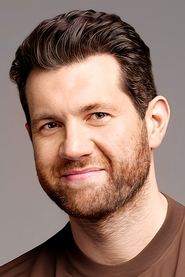
Billy Eichner

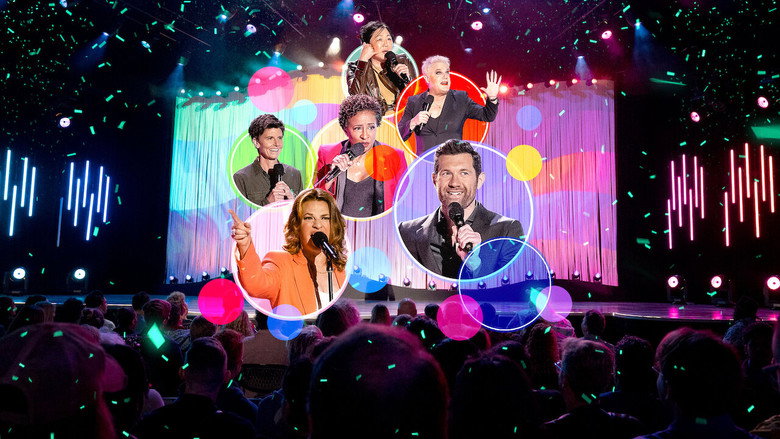
A group of LGBTQ+ comedians get together to celebrate a brand of queer comedy. Legends, headliners, and emerging talent all perform at The Greek Theatre for an unforgettable queer stand-up event.
I’ve sat through enough stand-up specials to know the rhythm: the mic check, the nervous sip of water, the first joke that either lands like a brick or dissolves into the silence of a thousand cringing audience members. Stand Out: An LGBTQ+ Celebration promises something different—a gathering of queer comedians, legends and newcomers alike, performing at the Greek Theatre for what’s billed as an "unforgettable queer stand-up event." The premise is simple, even noble: a night of laughter as resistance, visibility, and community. But somewhere between the concept and the execution, the film loses its footing, tripping over its own ambition.
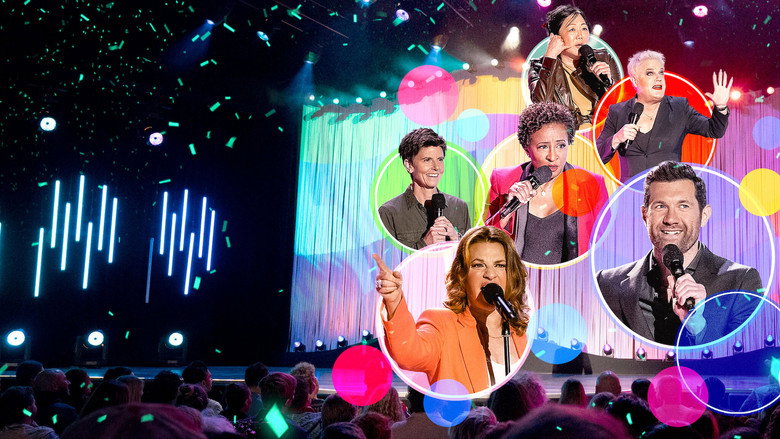
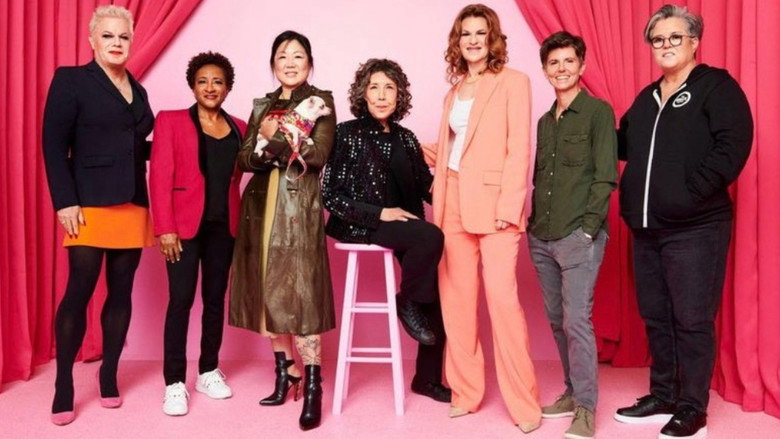
The idea of a queer comedy showcase isn’t new, but it’s rarely been attempted on this scale. The cast reads like a who’s who of LGBTQ+ comedy: Billy Eichner, Margaret Cho, Wanda Sykes, Tig Notaro, Rosie O’Donnell, and a handful of rising stars like Joel Kim Booster and Guy Branum. These are performers who’ve spent decades carving out space for themselves in an industry that’s often been hostile or indifferent to queer voices.
The film’s hybrid comedy-documentary format suggests it might do more than just compile performances—perhaps it will weave in interviews, behind-the-scenes footage, or even a broader commentary on the role of queer comedy in culture. But if that’s the intention, it’s not executed with enough clarity or depth to make it feel like more than a glorified live special.
The problem isn’t the talent. When the comedians are on stage, the film crackles with energy. Wanda Sykes, in particular, steals the show with a set that’s equal parts razor-sharp and warm, her jokes about aging, politics, and queer life landing with the precision of a surgeon’s scalpel.
Margaret Cho, ever the provocateur, delivers a set that’s as unapologetically filthy as it is politically charged, her body language shifting from seductive to confrontational in the span of a single punchline. And Billy Eichner, the film’s de facto emcee, brings his signature manic energy, though his material here feels more restrained than in his other work, as if he’s holding back for the sake of the ensemble.
But the film’s structure—if it can even be called that—undermines these moments. There’s no throughline, no narrative or thematic arc to tie the performances together. One minute, we’re laughing at a joke about Grindr; the next, we’re watching a performer struggle to connect with the audience, their discomfort palpable.
The documentary elements, if they exist at all, are so thinly sketched that they feel like an afterthought. A few brief interviews with the comedians are sprinkled throughout, but they’re too short to offer real insight into their craft or their lives. We’re left with a series of disconnected moments, some brilliant, some awkward, all lacking the context that might make them cohere into something meaningful.
It’s hard not to compare Stand Out to Bros, Eichner’s 2022 romantic comedy, which arrived around the same time. Bros was a gamble—a mainstream rom-com with an all-queer cast, unapologetically gay in its storytelling and its humor. It was messy, uneven, but undeniably ambitious, and it sparked conversations about representation in Hollywood. Stand Out, by contrast, feels like a missed opportunity.
Where Bros aimed to push boundaries, Stand Out seems content to exist within them, offering a night of queer comedy without interrogating what that means in 2022. Is it enough to simply gather these performers on a stage and call it a celebration? Or does the film have a responsibility to dig deeper, to ask what queer comedy is for, who it’s serving, and why it matters now?
The answer, I think, lies in the audience. The film’s most compelling moments aren’t the punchlines but the reactions—the way the crowd at the Greek Theatre leans in, laughs, or falls silent. Comedy, at its best, is a conversation, and queer comedy has always been a way for marginalized people to talk back to power, to claim space, to say, We’re here, we’re queer, and we’re not going anywhere. But Stand Out doesn’t fully commit to that conversation.
It gives us the jokes, the performers, the stage, but it doesn’t give us the stakes. We don’t learn why this night is different from any other comedy show, why these voices matter in this moment, or what it means to gather in this way, in this place, at this time.
That’s not to say the film is without merit. There’s a joy in seeing these performers share a stage, in hearing the laughter of an audience that recognizes itself in the jokes. But joy alone isn’t enough.
Comedy, especially queer comedy, has always been a tool for survival, a way to make sense of the world when it doesn’t make sense for you. Stand Out captures glimpses of that, but it never quite trusts its audience—or its performers—enough to go all the way. It’s a celebration, sure, but one that feels more like a party than a movement.
In the end, I’m left with the same question I had at the beginning: Who is this for? The queer audience that already knows and loves these comedians? The straight audience that might be curious but doesn’t know where to start?
Or is it for the performers themselves, a chance to bask in the glow of a community that’s spent decades fighting for the right to be seen and heard? The film doesn’t answer that question, and maybe it doesn’t need to. But I can’t shake the feeling that it could have been more.
Not just a celebration, but a statement. Not just a night of laughs, but a night that meant something.
"A lively but uneven LGBTQ+ comedy showcase that thrives on its star power and celebratory tone."
The film delivers plenty of laughs and heartfelt moments thanks to its standout cast of LGBTQ+ comedians and performers. The structure is loose and the humor inconsistent, though, and a few segments play more like a variety show than a cohesive narrative.
Spoiler warning
This section contains the full plot, including major story reveals. Overview above stays spoiler-free.
Netflix’s Stand Out: An LGBTQ+ Celebration (2022) brought together some of comedy’s most iconic queer voices for a night of laughter, advocacy, and unapologetic pride. Directed by Linda Mendoza and Page Hurwitz, the film captured a live stand-up event that doubled as a fundraiser for LGBTQ+ organizations, blending sharp humor with a sense of community. latestnetflix.com's take is that with a lineup including Billy Eichner, Margaret Cho, Wanda Sykes, and Tig Notaro, the special promised—and delivered—a raucous, no-holds-barred celebration of queer culture.
The event, part of Netflix’s "Netflix Is A Joke" festival, was hosted by Eichner, who set the tone early with his signature blend of wit and social commentary. While the evidence doesn’t detail his exact opening remarks, his role as emcee aligned with his history of using comedy as a platform for activism. The special’s dual purpose—entertainment and fundraising—reflected a growing trend in Hollywood, where high-profile comedy showcases increasingly double as charity drives.
The runtime clocks in at 96 minutes, offering a tight but packed lineup of performances. Though the evidence doesn’t break down individual sets, the cast’s collective reputation for boundary-pushing humor suggests the special leaned into topics like identity, politics, and pop culture—all through a distinctly queer lens.
The roster read like a who’s who of LGBTQ+ comedy royalty:
The evidence doesn’t confirm whether the performers riffed off each other or stuck to solo sets, but the chemistry of such a stacked lineup would’ve been electric. Notably absent from the snippets: details on behind-the-scenes camaraderie or rehearsals, leaving fans to speculate about whether the cast bonded over shared experiences or kept to their own corners.
Early audience reactions were positive, with the film earning a 6.7/10 rating on SensCritique based on 26 votes. Critics (or at least the few who’ve weighed in) seemed to appreciate the special’s heart as much as its humor, though the evidence doesn’t include full reviews or Rotten Tomatoes scores. Rumors about tensions or standout moments remain unconfirmed—no leaked backstage drama or viral clips beyond the official trailer.
One lingering question: How did the special’s fundraising efforts pan out? The evidence doesn’t specify which LGBTQ+ organizations benefited or the total amount raised, leaving that detail frustratingly vague.
Stand Out arrived at a pivotal moment for queer representation in comedy. Just months later, Eichner would release Bros, the first major studio rom-com centered on a gay lead, proving that LGBTQ+ stories were finally breaking into mainstream Hollywood. While Stand Out wasn’t a scripted film, its live format and star power served a similar purpose: normalizing queer narratives in spaces where they’d long been sidelined.
The special also highlighted the power of comedy as activism. With anti-LGBTQ+ legislation surging in 2022, events like this offered both a respite and a rallying cry. Whether through Sykes’ political jabs or Cho’s personal anecdotes, the performers used their platforms to affirm queer joy in the face of adversity.
For fans of LGBTQ+ comedy, Stand Out: An LGBTQ+ Celebration delivered exactly what it promised: a night of laughter, solidarity, and unapologetic pride. While the evidence leaves some questions unanswered—like the specifics of the sets or the event’s fundraising impact—the special’s legacy is clear. It wasn’t just a comedy showcase; it was a statement.
Entertainment rumors and trivia aggregated from public reporting. Treat speculation as unverified unless a cited source confirms it.
More titles in the same genres and with the same cast.